
You’re probably here because you’ve stood in the pet aisle, looked at a wall of crates, and realized the labels don’t answer the core question. Your dog doesn’t need a crate that sounds about right. Your dog needs one that fits with purpose.
That matters more than most owners realize. A crate can support house training, recovery after grooming, calmer travel, and a more settled home routine. It can also create problems fast if the fit is sloppy. Too small and the dog feels restricted. Too large and the crate stops functioning like a den.
In El Paso, where many pet owners juggle work, family schedules, and year-round pet care needs, details like crate fit get pushed aside until there’s an issue. The disciplined approach is better. Measure first. Match the crate to the dog in front of you. Then use it consistently.
The Foundation of a Disciplined and Comfortable Pet Home
A crate should never be chosen like an afterthought accessory. It’s part of your dog’s daily environment, the same way a bed, leash, or grooming routine is part of long-term care. When the crate fits correctly, the dog can settle, rest, and recover without unnecessary stress.
That’s why dog crate sizing is a standards issue, not just a shopping decision. Good pet care is built on precise habits. Sloppy sizing usually comes from one of two shortcuts: guessing by breed alone or buying the biggest crate you can fit in the room. Neither approach respects how dogs use enclosed space.
Dogs generally do best when the crate feels secure without feeling cramped. The right fit gives enough room to stand, turn, and lie down naturally, but not so much room that the crate loses that den-like structure. That balance is where a lot of chain-store advice falls short. Big-box guidance often starts and ends with a shelf label. Real care requires measuring the actual dog.
Why the crate matters beyond training
Crates play a practical role in more than housebreaking. They can help after a bath, during quiet drying time, while guests are in the home, or when a dog needs a calm reset after a stimulating day. For high-energy dogs, a properly sized crate can support better transitions. For nervous dogs, it can create predictability.
A disciplined home routine usually includes a few fixed points:
- A consistent rest space that the dog recognizes as safe
- A repeatable schedule for feeding, potty breaks, and downtime
- A clean setup with bedding that fits the crate instead of bunching into corners
- A crate location that avoids constant foot traffic and unnecessary noise
Those choices add up. They also reflect the difference between attentive care and convenience-based care.
Practical rule: If a crate feels like a random purchase, it usually functions like one. If it’s selected and used with intention, the dog tends to respond with better habits.
What precision looks like in everyday ownership
Premium pet care isn’t about being flashy. It’s about reducing avoidable problems. A dog that rests comfortably after grooming, settles faster at night, and transitions more smoothly during travel is usually benefiting from a system that was set up correctly from the start.
That same mindset applies whether you’re managing a young puppy, a mature working breed, or a senior dog that needs a little more comfort. The crate isn’t a punishment tool. It’s a piece of infrastructure inside the home. When owners treat it that way, dogs benefit.
How to Measure Your Dog with Professional Precision
Most dog crate sizing mistakes start before the purchase. Owners rely on weight, eyeball the dog, or assume the breed description will cover it. That’s how people end up returning crates or trying to make a poor fit work.
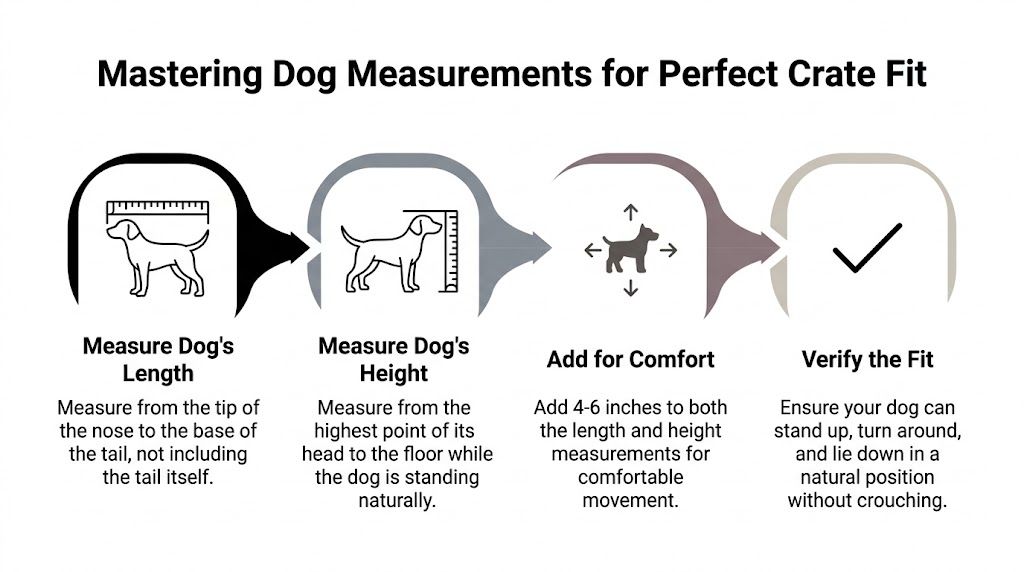
The cleanest method is simple. Measure the dog’s length and standing height, then build in the proper clearance. According to PetMD’s dog crate sizing guidance, the precise methodology starts with standing height and length, then adds 2-4 inches to length for turning room and 4 inches to height for comfortable standing. The same guidance notes that properly sized crates achieve 90%+ house-training success in 4-6 weeks, while oversizing leads to 40-50% higher soiling incidence, and 35% of owners make the mistake of sizing by weight alone.
Take the measurements the right way
Start with your dog standing naturally on a level surface. Don’t measure while the dog is sitting, leaning, or stretching forward for a treat. You want a neutral posture.
Use a soft measuring tape if you have one. If not, use a string and measure that against a ruler afterward.
- Measure length from the tip of the nose to the base of the tail. Don’t include the tail itself.
- Measure height from the floor to the top of the head or ears, whichever point is higher.
- Add clearance to those body measurements rather than guessing from product labels.
- Account for bedding if you plan to use a crate pad or recovery mat.
Apply the fit standard, not the store label
Once you have the raw body measurements, add 2-4 inches to the dog’s length and 4 inches to height. That gives your dog room to turn, stand, and lie down without crowding the crate walls.
Many owners often stumble on this point. They see a crate marked “medium” or “36-inch” and assume that tells the whole story. It doesn’t. Labels simplify retail. Measurements protect the dog.
A good crate fit lets the dog stand without brushing the top, turn without contorting, and lie down without folding into the corners.
If you use bedding, remember that padding changes the interior feel. Even a low-profile crate pad can alter headroom and footing. That same principle applies when choosing clothing and comfort accessories, which is why body measurement matters across pet care categories, not only crates. If you already measure carefully for seasonal gear, this dog sweater size chart shows the same discipline in action.
What to watch while test-fitting
Numbers matter, but behavior confirms the fit. After assembly, let the dog enter the crate calmly and observe what happens.
Look for these signs:
- Comfortable entry: The dog walks in without ducking awkwardly.
- Clean turn: The dog can rotate fully without pressing hard against the sides.
- Relaxed lying posture: The dog can settle on one side without limbs crammed under the body.
- Natural head position: The dog isn’t forced to lower the neck just to remain upright.
A test fit also reveals setup issues the tape measure won’t catch. Thick bedding, raised crate lips, and door placement all affect usability. Long-bodied dogs often need more length than owners expect. Taller dogs need true vertical clearance, not just a generous width.
Precision beats guesswork
Professional standards rely on repeatable process. Measure the dog in a natural stance. Add the right amount of space. Test the fit before assuming you got it right. That’s what works.
Guessing by breed, relying on weight only, or trusting a shelf tag usually doesn’t.
Choosing the Right Crate Using Standard Sizing Charts
Standard sizing charts help you sort through options fast, especially when shelf labels and online listings are all over the place. The mistake is treating a chart like a final answer. In practice, it is a screening tool. Your dog’s measured length, height, build, coat, and daily routine still decide the right crate.
Orvis’ dog crate sizing guidance gives a clean retail reference point for common crate categories by weight. Used properly, that kind of chart helps narrow the field before you compare actual crate dimensions.
Standard crate chart from Orvis weight ranges
| Size Category | Dog Weight (lbs) | Crate Dimensions (L x W x H) |
|---|---|---|
| Small | Up to 40 lbs | 24″ x 18″ x 19″ |
| Medium | 40-70 lbs | 30″ x 19″ x 21″ |
| Large | 70-90 lbs | 36″ x 23″ x 25″ |
| Extra-large | Over 90 lbs | 42″ x 28″ x 30″ |
This chart works best for narrowing choices, not making the purchase on weight alone.
A 55-pound dog can fall into the same retail category as another 55-pound dog and still need a different crate. One may be broad through the chest and sleep curled tight. Another may be longer through the back and stretch flat after grooming. Those details matter in real homes, and they matter even more if you care about recovery, cleanliness, and calm crate behavior.
How to use a standard chart without getting burned by the label
Start with the chart category that matches your dog’s weight. Then verify the listed crate dimensions against your actual measurements. After that, look at the dog in motion and at rest. A dog that settles neatly after a bath, stands without crowding the top, and turns without bumping the sides is usually in the right range.
Body shape changes the call. So does coat.
A heavy-coated doodle, a square-built bully mix, and a lean sporting dog can all sit near the same weight while fitting very differently in the crate. That is one reason experienced handlers and groomers look past the carton label. At Glo More Grooming, we see those differences every day. A crate that works on paper can still be a poor setup if it crowds a freshly brushed coat, traps heat, or makes it harder for the dog to settle after a full groom.
If you are comparing bigger setups, a dedicated large pet crate option makes it easier to review dimensions than relying on vague “large breed” product names.
Use the chart to narrow your options. Use the dog in front of you to make the final call.
Real trade-offs owners should consider
Crate size affects more than training. It affects housekeeping, recovery, placement in the home, and how well the dog uses the space.
Here is where owners usually need to be honest about trade-offs:
- For house training: Too much extra space can make the crate less effective for building clean habits.
- For post-grooming rest: The dog needs enough room to lie comfortably on clean bedding without pressing against damp surfaces or crate walls.
- For compact homes: An oversized crate often gets shoved into a poor location, which creates traffic problems and makes routine less consistent.
- For long-coated or carefully maintained dogs: Proper space helps preserve coat condition and keeps the dog more comfortable between appointments.
That last point gets ignored in chain-store advice. In a premium grooming setting, crate fit is part of whole-pet care. The right crate helps protect coat work, supports better rest, and keeps the home routine cleaner and more predictable. That is the kind of detail serious owners in El Paso appreciate, because good care does not stop at the salon door.
Owners usually spend less in the long run when they buy the right crate once, set it up correctly, and build the routine around it. That leaves room in the budget for things that improve daily care, including better bedding, better nutrition, and grooming services designed around the dog’s actual needs.
Advanced Sizing for Puppies Travel and Special Cases
Puppies, travel dogs, and hard-to-fit breeds require a more careful plan. For these animals, dog crate sizing stops being a basic retail decision and starts becoming a management tool.
A puppy crate that’s too large creates training problems. A travel crate that barely works at home may fail under real movement and stress. Dogs with unusual proportions, such as long backs or tall ears, expose the weakness in generic advice quickly.
Puppies need room to grow, not room to fail
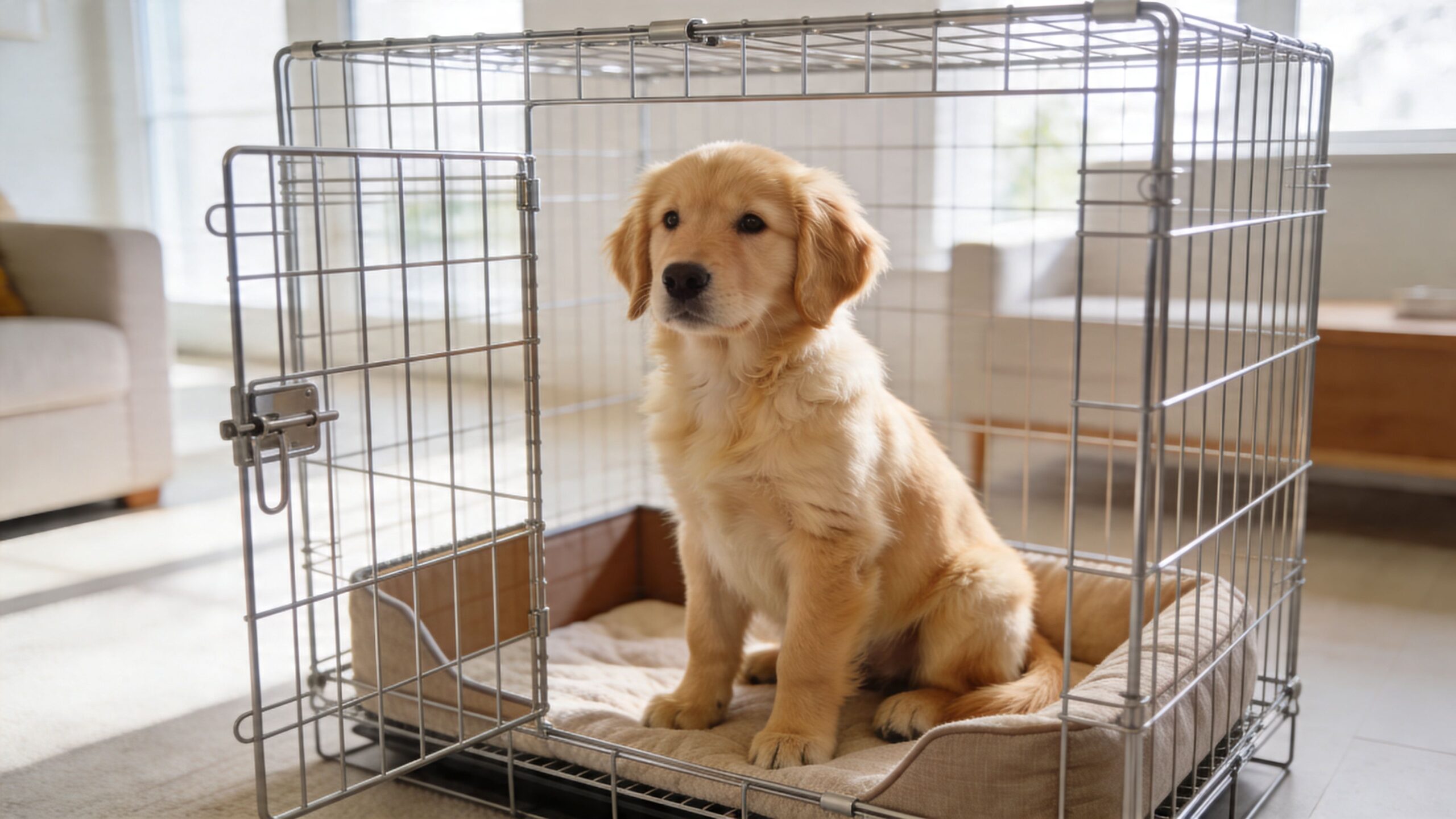
According to Jadore Pet Beds’ crate measuring article, adjustable crates with dividers are standard for the 40-50% of US dogs acquired as puppies. That matters because a young dog may outgrow an early setup fast, and a divider helps you avoid buying multiple crates while still keeping the interior space appropriate. The same article notes that the AKC formalized guidance recommending 3-4 inches of clearance, that similarly labeled crates can vary by 0.5-2 inches across brands, and that too-large crates promote accidents in 25% of cases.
For puppy owners, the best move is usually to buy for expected adult size, then reduce the usable interior with a divider. That approach protects the training phase without forcing a full crate replacement as the dog matures.
A solid puppy plan includes:
- Adult-size forecasting: Use expected adult build, not only current puppy weight.
- Divider use: Keep the active space snug enough for rest and early house training.
- Regular reassessment: Recheck fit as the puppy’s legs, chest, and length change.
- Bedding discipline: Avoid overstuffing the crate with thick pads that erase usable space.
Brand labels can mislead even careful buyers
Owners often assume a crate sold as “36-inch” is a stable measurement category. In practice, that label can shift depending on the brand. A difference that looks minor on paper can matter when your dog is already near the edge of the fit range.
That’s why direct measuring wins. If your dog needs specific interior length or height, compare product dimensions rather than shopping by marketing language. For broad-headed breeds, long-bodied breeds, and mixed breeds with unusual proportions, this step is even more important.
When a dog is close to the cutoff between two sizes, compare the crate’s actual interior dimensions before you buy. The label isn’t the measurement.
Travel changes the sizing conversation
Home crates and travel crates don’t always serve the same purpose. In the car, crate footprint matters alongside fit. For air travel, owners need to think more carefully about movement, ventilation, and the dog’s ability to remain comfortable in a more restrictive environment.
That planning gets easier when owners prepare before the travel date instead of scrambling at the last minute. For a broader travel checklist, this guide on how to fly with a dog is a useful companion to crate selection.
If you want a quick visual refresher before choosing a travel setup, this walkthrough can help:
Special cases that deserve closer attention
Some dogs need more than standard chart logic.
Examples include:
- Long-backed dogs: They may fall into a lighter weight range but still need added length.
- Tall dogs with upright ears: Height becomes the limiting factor, not length.
- Senior dogs: Entry height, footing, and bedding support matter as much as dimensions.
- Recovery situations: After grooming, bathing, or minor procedures, the dog may need a crate setup that prioritizes easy movement and clean rest.
These situations reward owners who think in systems. Measure the dog, compare the true crate dimensions, and choose based on actual use. That’s what prevents frustration later.
Common Crate Sizing Mistakes Pet Owners Make
The most common crate mistake is also the most stubborn one. Owners assume bigger is safer, kinder, or more comfortable. In practice, that often creates the exact problems they were trying to avoid.
A dog doesn’t benefit from wasted space just because the crate looks generous to a human buyer. If the setup is too roomy, the dog may sleep in one end and eliminate in the other. That weakens the structure that makes a crate useful in the first place.
The bigger-is-better myth
This mistake usually comes from good intentions. Owners want the dog to have freedom. The problem is that a crate isn’t meant to function like a playpen. It’s meant to provide controlled comfort.
An oversized crate also creates false confidence. The dog may fit inside, but the setup still isn’t doing its job. If house training stalls or the dog won’t settle, owners often blame temperament when the actual issue is the crate itself.
The too-small problem
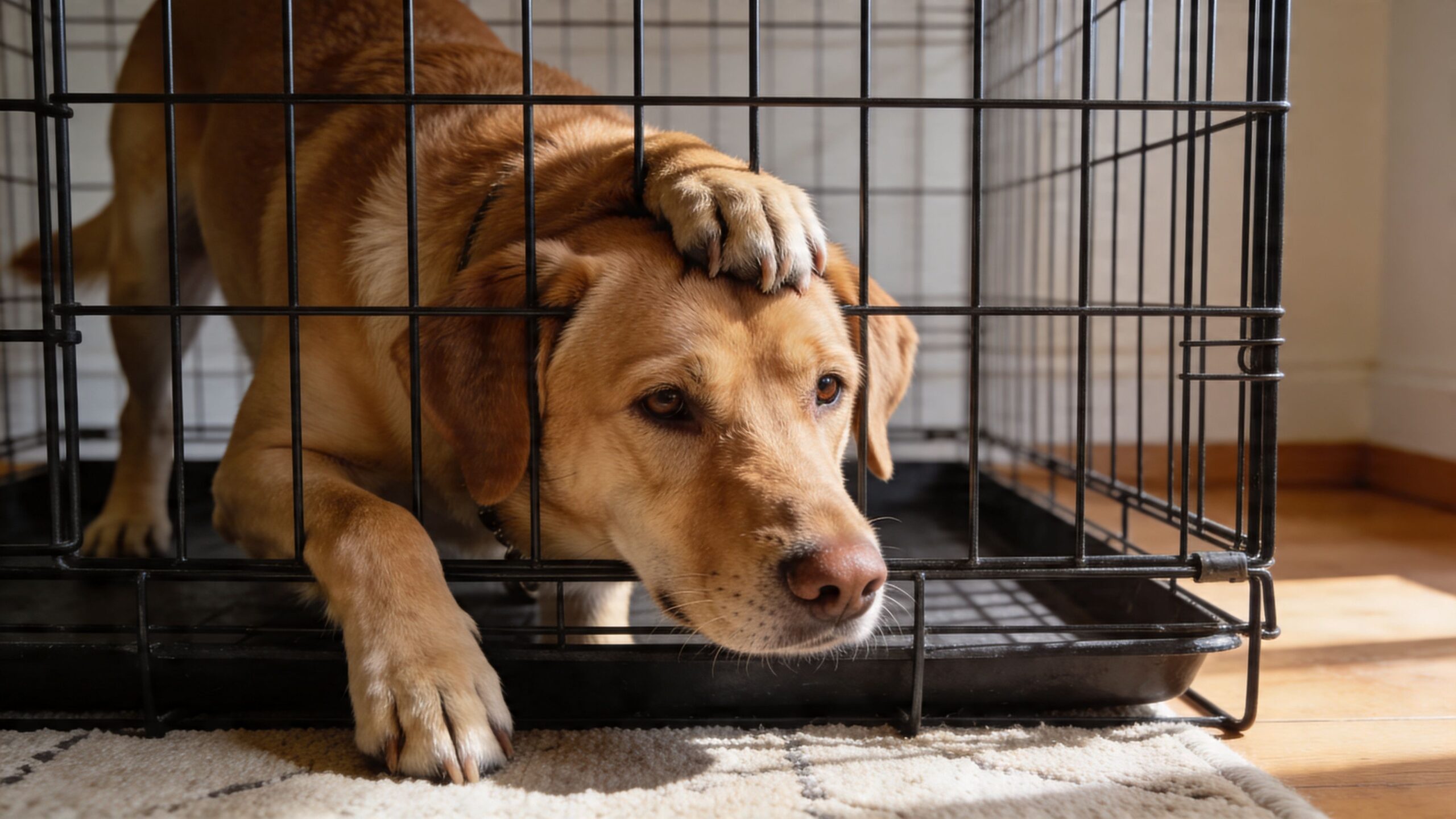
The opposite mistake is just as serious. A dog that can’t stand naturally, turn cleanly, or lie down comfortably won’t use the crate well for rest. That can show up as whining, resistance to entering, repeated repositioning, or visible tension once inside.
Undersizing often happens when owners prioritize room footprint over dog comfort. It also happens when they buy based on current size for a still-growing puppy, then try to stretch the crate’s usefulness past its limit.
Other errors that keep showing up
A few mistakes are less obvious, but they matter:
- Buying by weight only: Body type can change the needed dimensions significantly.
- Ignoring bedding height: Thick pads shrink vertical comfort fast.
- Trusting the label instead of the tape measure: Category names are not exact fit tools.
- Skipping a test fit: Assembly doesn’t mean success.
- Using one crate for every purpose: Home rest, car transport, and air travel may require different features.
A crate that “technically fits” often performs poorly. The standard should be functional comfort, not minimum containment.
Where owners get bad advice
A lot of poor crate decisions come from rushed retail environments. Shelf signage simplifies the choice because speed helps stores move inventory. It doesn’t help dogs. Chains are built for volume. Good pet care is built for fit, observation, and adjustment.
That’s why experienced handlers and careful groomers tend to be more exacting. They’ve seen what happens when a dog arrives stressed, overtired, or poorly acclimated to confinement. Crate sizing isn’t a side issue. It affects behavior, cleanliness, and recovery.
Your Crate Questions Answered by Glo More Grooming
Owners ask good crate questions when they’re thinking beyond the purchase itself. They want to know how crate fit affects grooming, rest, anxiety, and day-to-day comfort. Those are the right questions.
Why use crates during the grooming process
A crate can support a safer, calmer workflow when it’s used correctly. Dogs sometimes need a structured pause before or after part of the grooming process, especially if they’re drying, decompressing, or waiting their turn in a limited-capacity setting.
The key is that the crate must fit the dog and the dog must be handled with intention. A properly sized rest space supports calm. A poorly sized holding space creates agitation. That difference is one reason premium pet grooming relies on process, not volume.
What size crate works if a dog needs quiet recovery after grooming
Use the same measurement-first method covered earlier, then think about what the dog needs immediately after service. A fresh groom often means the dog benefits from clean bedding, dry footing, and enough room to reposition without rubbing constantly against the crate walls.
For owners who schedule regular El Paso dog grooming, this matters at home too. If the dog returns from an appointment and settles into a crate that’s crowded, dirty, or oversized, you lose some of the benefit of a calm handoff.
Can a one-on-one environment reduce crate anxiety
In many cases, yes. Dogs often do better when there are fewer moving parts, fewer unfamiliar animals, and a cleaner rhythm around handling. A calm environment doesn’t cure anxiety by itself, but it lowers unnecessary stimulation.
That’s one of the practical advantages many owners look for in veteran-owned grooming operations. Discipline shows up in the small things. Limited capacity. Cleaner transitions. Less chaos. Better observation.
Should I use the same crate for home and travel
Sometimes, but not automatically. A home crate may fit beautifully and still be awkward in a vehicle. A travel crate may work in the car and feel less ideal for routine rest at home. The right answer depends on your dog’s size, your vehicle, and how often you travel.
If your schedule includes frequent movement, build around the primary use case. Don’t force one crate to do every job poorly.
What if my dog is between sizes
Measure again and compare actual internal dimensions. Don’t break the tie with marketing language. Break it with fit. If the dog is unusually long, tall, or broad for the weight category, body shape should win the decision.
Is premium care only for owners with big budgets
No. Precision and discipline often save money because they reduce trial-and-error purchases. That applies to crates, grooming maintenance, and everyday supplies. Owners who want strong standards without waste usually do best by planning ahead and taking advantage of an affordable grooming promo when it aligns with the dog’s schedule.
Commit to Excellence with Glo More Grooming
The right crate size protects comfort, supports training, and gives your dog a stable place to rest. That isn’t a minor detail. It’s part of responsible ownership.
Measure the dog in front of you. Compare real dimensions. Choose the crate based on fit and use, not guesswork. That approach is cleaner, calmer, and far more effective than buying whatever seems close enough off a shelf.
Pet owners who care about standards usually see the same pattern across every part of care. Better grooming. Better routines. Better equipment choices. Better outcomes for the dog. That’s what long-term quality looks like in practice, especially for families and professionals who want dependable results in El Paso.
If you want the same disciplined approach for your dog’s coat, comfort, and handling, book with Glo More Grooming. This veteran-owned grooming studio delivers premium pet grooming with a calm, limited-capacity approach that stands apart from chain-store volume. If you’ve been waiting for an affordable grooming promo, reserve a spot for Snip & Style Saturday, or reach out for concierge-level support suited for your dog’s routine in El Paso.