
A lot of El Paso dog owners are in the same spot right now. They want better food for their dog, they are tired of vague marketing on bags, and they keep hearing that dog raw chicken is more natural, cleaner, and better for the coat.
I understand the appeal. When you care about your dog’s skin, coat, stool quality, comfort, and day-to-day energy, food matters. Groomers see that reality up close. A dull coat, flaky skin, greasy buildup, chronic loose stool, irritated paws, and poor tolerance for brushing often start long before bath day.
I take a disciplined view. Feed with purpose. Handle food safely. Stop following trends blindly. If you want a dog that looks polished, feels good, and moves through a grooming appointment without unnecessary stress, you need to treat nutrition the same way a premium grooming studio treats sanitation and workflow. Standards first. Opinions second.
A Disciplined Approach to Pet Wellness in El Paso
In El Paso, dedicated owners often try to do more than the basics. They rotate proteins, add toppers, ask about fresh food, and look for ways to support coat health during dry, dusty stretches of the year. That effort is good. The problem is that raw feeding advice online is usually either reckless or overly soft.
A disciplined pet care plan does not work that way. You need clear standards. You also need to understand that appearance is a health signal.
Grooming starts before the appointment
A soft, glossy coat is not created by shampoo alone. It is supported by digestion, hydration, skin condition, and whether the dog’s diet is balanced enough to maintain healthy tissue over time. When a dog walks into a premium grooming setting, the body tells a story.
Some dogs arrive with strong skin and a coat that responds beautifully to a bath and blowout. Others arrive with chronic odor, uneven shedding, irritated skin, or stool issues that point to something deeper. Diet is often part of that picture.
That is why responsible owners look beyond the bowl itself. They also keep preventive care on schedule, including vaccines. If you need a refresher, this dog vaccine schedule guide is a smart place to tighten up your routine.
Why El Paso owners need higher standards
El Paso is not a place for sloppy pet care habits. Heat, dust, active outdoor time, and busy family schedules put pressure on routines. If you are going to feed dog raw chicken, you cannot be casual about sourcing, storage, cleanup, or how the diet affects your dog’s body.
Good grooming is maintenance. Good nutrition is infrastructure.
Independent, veteran-owned businesses understand that standard. Chains move volume. A disciplined local studio builds a calmer process, limits chaos, and pays attention to the whole dog. That same mindset should guide feeding decisions at home.
If you want my direct opinion, it is this. Do not feed raw chicken because it sounds hardcore or natural. Feed only what you can manage safely, consistently, and completely. If you cannot do that, choose a safer path.
The Nutritional Debate Raw Chicken Pros And Cons
A dog can look impressive on raw chicken for a while. Then that same dog shows up on a grooming table with dry skin, a greasy coat, chronic ear debris, weak stool quality, or shedding that never settles down. I see that disconnect often. Owners judge the bowl by hype. Groomers judge it by the body in front of us.
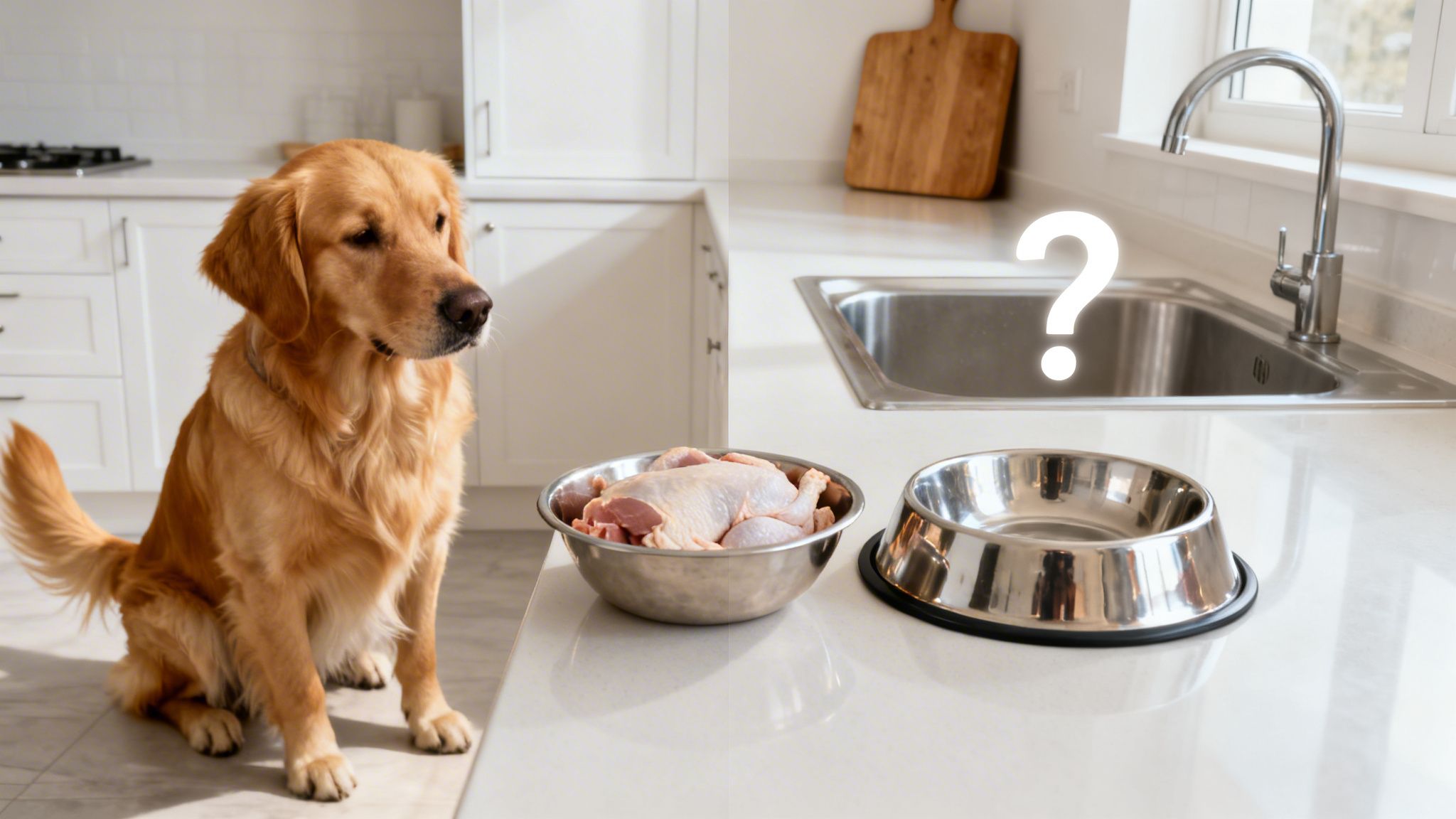
What owners like about raw chicken
The appeal is simple. Raw chicken is easy to buy, relatively affordable, and high in protein. Some dogs also do well on fresh, minimally processed food, especially when the full diet is balanced and the owner tracks results instead of guessing.
That can show up in ways owners notice quickly. Firmer stools. Less stool volume. Good muscle condition. In some dogs, better skin comfort and a coat that feels cleaner and lays flatter after grooming.
Those improvements are real enough to keep the raw feeding debate alive. Owners interested in fresher feeding approaches can compare options in this collection on fresh food for dogs.
From a grooming standpoint, the big question is not whether raw chicken can help. It can. The question is whether the full diet supports skin barrier health, steady oil production, and healthy coat growth over months, not just a brief stretch where the dog seems to do fine.
Where the nutritional case falls apart
Raw chicken by itself does not meet that standard.
Breast meat, thighs, backs, or wings alone do not create a complete diet. Dogs need enough protein, fat, calcium, phosphorus, trace minerals, and vitamins in the right proportions over time. NRC nutrient guidance for dogs makes that plain in its nutrient requirements reference for dogs and cats.
Home feeders get into trouble when they confuse variety with balance. Rotating cuts is not formulation. Tossing in an organ once in a while is not formulation. A shiny coat for two months is not proof that the diet is meeting long-term needs.
Skin and coat usually expose the problem early. I see dull topcoats, flaky skin, lingering odor, excess shedding, and irritation that make the grooming process harder on the dog and the owner. Those signs do not always come from raw feeding, but poorly built raw diets absolutely can contribute.
Pros and cons side by side
| Consideration | Potential upside | Real drawback |
|---|---|---|
| Ingredient control | Owners know exactly what protein is in the bowl | Control means nothing if the diet is unbalanced |
| Stool output | Some dogs produce smaller, firmer stools | Stool quality does not confirm complete nutrition |
| Skin and coat | A well-built fresh diet may support softer skin and better coat texture | Nutrient gaps can show up as shedding, dullness, odor, and irritation |
| Cost and simplicity | Chicken is widely available and familiar | Cheap cuts and guesswork often create expensive health problems later |
My opinion on the raw chicken debate
Raw chicken can work inside a properly built diet. That is the strongest case for it.
My recommendation is blunt. Do not use raw chicken as a shortcut to “clean feeding.” Use it only if you are committed to full nutritional balance, strict sanitation, and close observation of your dog’s skin, coat, stool, energy, and behavior. That last point matters more than people realize. A feeding choice that looks fine in the bowl can still create problems that show up in the coat, in the home, and in severe cases tied to raw poultry contamination, in the nervous system.
If you cannot manage the diet with precision, choose a safer complete food and move on. A healthy dog should look good in the bath, feel good under the brush, and stay sound far beyond mealtime.
Understanding The Serious Safety Risks For Your Dog And Family
The safety risk around dog raw chicken is serious enough that many owners should skip it entirely.
A dog can walk into a grooming appointment looking fine, then tell a different story up close. Greasy coat. Red skin. Loose stool stuck in the rear feathers. Bad odor that is not just a bath issue. Diet problems often show up on the table before they show up in a food bowl debate, and raw chicken adds hazards that reach far beyond nutrition.
The bacterial issue gets the headlines. It should. Raw poultry can expose both dogs and people to Salmonella, Campylobacter, and other pathogens, and the risk is well documented in this evidence review on raw feeding.
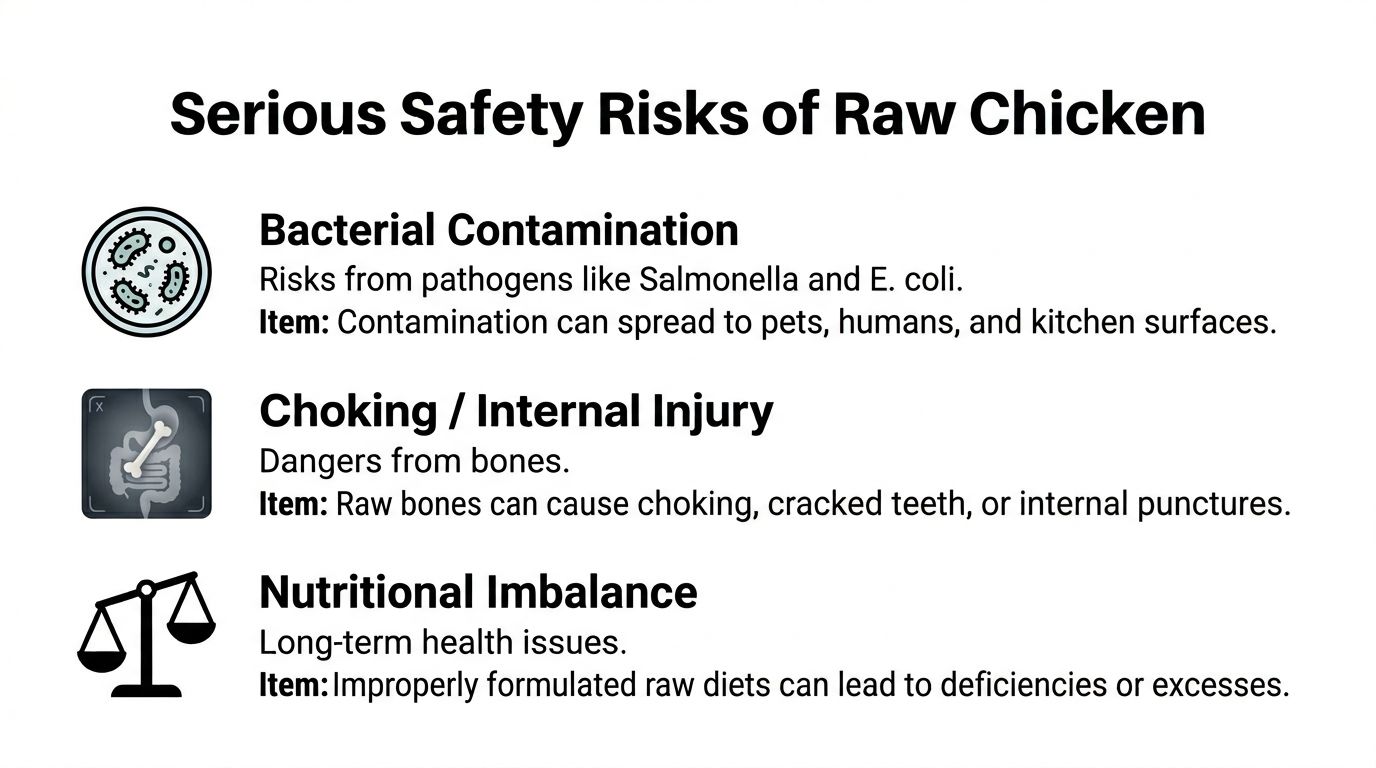
Bacterial contamination can reach the whole home
Raw chicken is not a contained risk. It spreads through prep surfaces, bowls, hands, floors, saliva, and feces. A dog does not need dramatic symptoms to create that problem either. Some dogs carry harmful bacteria and shed them into the home environment.
From a grooming studio perspective, that matters. Dogs bring their skin, coat, paws, mouths, and rear ends into close contact with people and equipment. If a dog is eating a risky raw diet and hygiene at home is sloppy, the result is not just a feeding issue. It becomes a sanitation issue that affects handling, bathing, drying, kennel time, and everyone who comes in contact with that dog.
This is one reason coat quality alone never convinces me a raw chicken routine is safe.
The APN risk deserves far more attention
The most overlooked danger is neurological. Raw chicken has been linked to acute polyradiculoneuritis, or APN, a serious paralyzing illness associated with Campylobacter exposure.
This is the part too many raw feeding discussions barely mention.
Owners usually watch for vomiting or diarrhea. APN can start with weakness, wobbling, voice changes, trouble rising, or a dog that suddenly seems off in the rear. Researchers tied recent raw chicken consumption to APN cases in dogs, as summarized in this veterinary explainer on the risks of feeding raw chicken and this Futurity summary of the University of Melbourne findings.
That risk changes my recommendation immediately. I do not support casual feeding of raw chicken necks, wings, or similar poultry parts as treats or recreational chews.
Here is a short visual overview to reinforce the point:
Human exposure matters too
Families often miss the household side of this. Raw chicken handling can contaminate counters, sinks, towels, leashes, crates, and anything touched before proper cleaning.
If your dog is also due for routine parasite prevention, read this guide to dog deworming medicine for pet owners. Preventive care needs to be tighter, not looser, when foodborne risk is already in the house.
A disciplined owner should assume contamination travels.
- Kitchen surfaces: Raw juices spread fast and are easy to miss.
- Dog saliva and feces: Exposure can move from bowl to body to household.
- Children, seniors, and immunocompromised family members: These people face higher risk from careless raw prep.
- Multi-dog homes: One feeding choice can create exposure for every animal in the house.
Premium hygiene is the baseline when raw poultry enters a home.
If you are not prepared to handle contamination like a controlled procedure, do not feed dog raw chicken.
Safe Sourcing Handling And Storage In El Paso
If you still plan to feed dog raw chicken, your routine has to be tight. Not decent. Tight.
El Paso heat punishes lazy handling. One distracted errand run, one bag left out too long, one cutting board reused for something else, and you have turned a feeding choice into a sanitation problem.
Treat raw feeding like a controlled procedure
Cross-contamination is a major issue in homes with multiple people or pets. Pathogens such as Salmonella and Campylobacter can spread to kitchen surfaces, hands, and other animals, and the University of Georgia confirmed that over 20% of commercially sold chicks carry Salmonella, as summarized in this raw chicken safety article from Hill’s Pet.
That means your process has to be deliberate.
- Buy from a reputable source. Choose chicken that looks fresh, is properly refrigerated, and is packaged cleanly.
- Seal it immediately. Use leak-proof containers or freezer bags.
- Assign dedicated tools. One cutting board, one knife, one prep area if possible.
- Use gloves if you can. Especially in multi-person homes.
- Clean in sequence. Bowl, prep area, sink, handles, floor check.
- Wash hands thoroughly. Before touching anything else.
Storage rules that keep risk down
Do not toss raw chicken into the freezer uncovered and call it good. That is careless.
Use a system:
- Label clearly: Mark the protein and prep date.
- Store low: Keep raw poultry below ready-to-eat food to reduce drips.
- Thaw safely: Use the refrigerator, not the counter.
- Portion ahead: Smaller packs reduce repeated handling.
- Discard if questionable: If you are unsure, throw it out.
El Paso-specific reality
A lot of pet owners here are juggling work, family, errands, sports, and long driving days. That is exactly why discipline matters. Raw feeding falls apart when life gets busy.
If you know your routine gets rushed, choose cooked boneless chicken or a balanced commercial option instead. There is no shame in choosing the safer system. The mistake is pretending you can maintain a raw protocol that your schedule does not support.
The best feeding plan is the one you can execute cleanly every single time.
That is the standard. Anything below that invites trouble.
A Practical Guide To Cuts Bones And Portions
Walk into a grooming appointment with a dog whose stool has been loose for a week, whose coat feels greasy at the base, and whose skin is flaring, and diet becomes part of the conversation fast. Raw chicken choices show up on the table in real ways. They affect digestion, odor, coat condition, and how comfortably a dog gets through brushing, bathing, drying, and clipping.
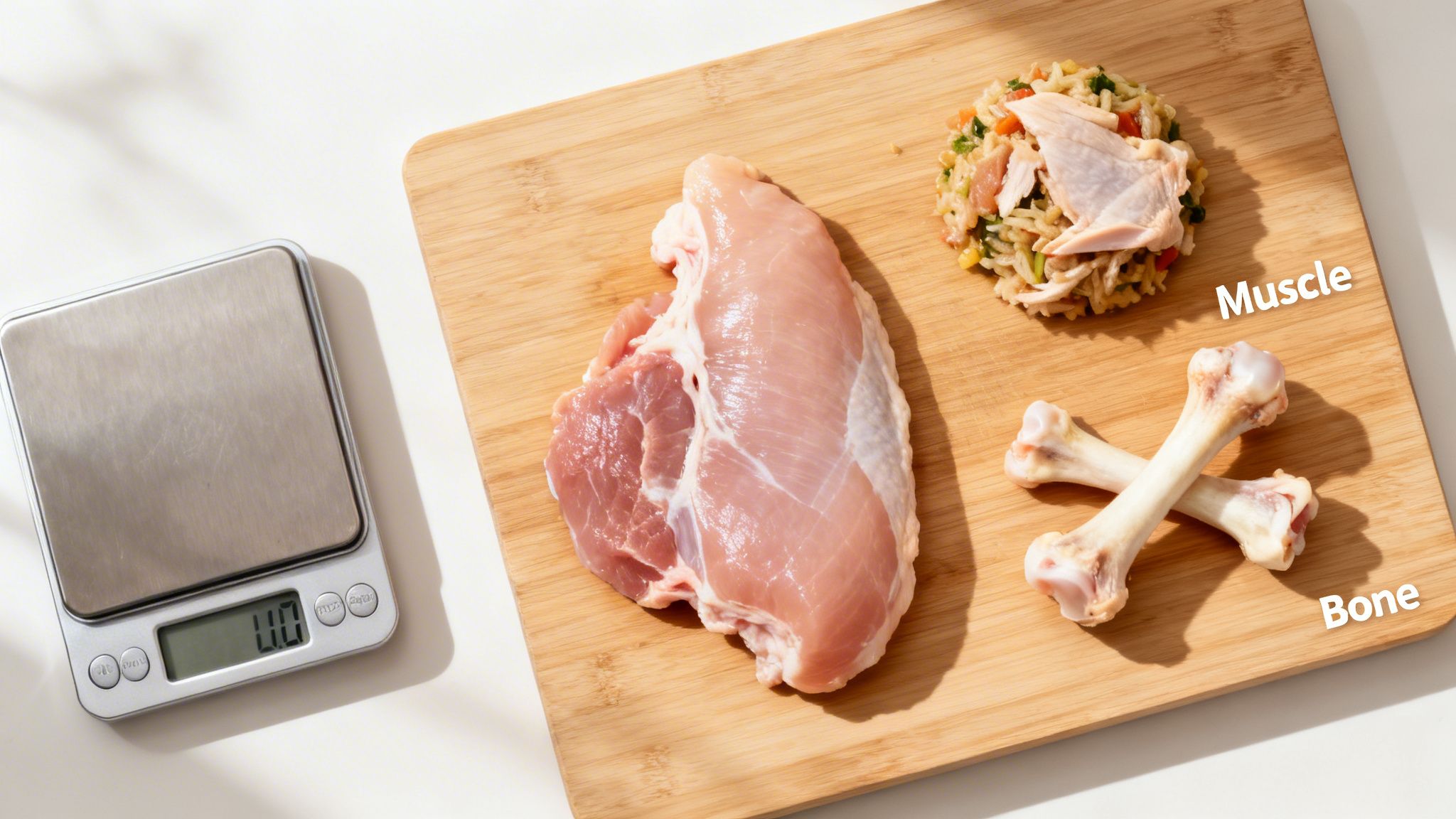
Better choices and worse choices
If someone insists on feeding chicken, boneless muscle meat is the cleanest option to manage inside a balanced plan. It is easier to weigh, easier to portion consistently, and easier to stop if the dog starts showing digestive or skin trouble.
Organs need discipline. A little goes a long way. Overdo them and you often get messy stools, stomach upset, and a dog that does not smell or feel its best by the time it reaches the grooming table.
Chicken necks deserve a hard no from me. Owners are often sold on them as a natural chew, but the APN concern already discussed makes that advice irresponsible. Add the usual choking and tooth risks, and there is no good reason to build a routine around them.
Bone guidance
Use one clear rule. Never feed cooked chicken bones.
Raw bones still come with problems. Dogs crack teeth on them. Some dogs swallow pieces too fast. Others end up with vomiting, constipation, or abdominal discomfort after what the owner thought was a simple chew.
I see the downstream results. A dog with mouth pain fights face handling. A dog with gut irritation may come in tense, restless, or soiled. That does not make grooming impossible, but it makes the dog’s day harder than it needs to be.
Skip bones if your dog gulps food, guards food, has dental disease, or has a sensitive stomach. For many households, the smartest move is to avoid chicken bones altogether.
Portioning with control
Raw feeding falls apart when owners eyeball it.
Start with the dog’s ideal adult weight and measure food consistently. Puppies, seniors, highly active dogs, and overweight dogs all need different calorie targets, so a veterinarian or boarded veterinary nutritionist should help set the plan. That matters even more if coat quality is slipping, because dullness, shedding changes, and flaky skin are not grooming problems alone. They can point back to an unbalanced bowl.
Use this practical approach:
- Portion by weight: Use a kitchen scale, not guesses.
- Feed consistent meals: Keep cuts and amounts steady while you monitor response.
- Watch stool quality: Loose, hard, or mucousy stool means something is off.
- Watch skin and coat: Dry coat, excess oil, dandruff, and increased odor count.
- Adjust in small steps: Big changes create avoidable digestive problems.
Transition carefully
A sudden switch from kibble to raw chicken creates trouble for a lot of dogs. Owners call it a detox. I call it an upset stomach.
Go slowly and keep the plan boring on purpose. Random parts, surprise bones, and rich add-ons make it harder to tell what is helping and what is causing the problem.
| Feeding move | Better practice |
|---|---|
| Switching overnight | Change the diet gradually with veterinary guidance |
| Mixing random raw parts | Use measured portions from a structured recipe |
| Feeding necks for chewing | Skip them and choose a safer chew option |
| Ignoring body response | Track appetite, stool, comfort, skin, and coat |
If you want my direct recommendation, use boneless chicken only if it fits into a complete, professionally balanced diet. Skip raw chicken bones. Skip chicken necks entirely. A feeding plan should support a healthy nervous system, a stable stomach, and a coat that brushes out clean, not create preventable problems that show up in the salon.
Recognizing Illness And When To Consult A Veterinarian
A dog can eat raw chicken at dinner and still walk into the salon the next day looking almost normal. Then the table tells the truth. The dog is nauseated, flat, touchy over the belly, reluctant to stand, and the coat has that dull, greasy look that often shows up when the gut and skin are both under stress.
Do not wait for a dramatic collapse before you take a problem seriously.
Illness after raw chicken exposure can start as routine stomach trouble. It can also show up as weakness, poor balance, or a strange gait. From a grooming studio perspective, those dogs often feel off before owners realize how off they are. They do not brace well on the table. They tire fast. They may resist handling around the hind end, slip more, or seem mentally dull.
Signs you should act on
Call your veterinarian if your dog has any of these after eating raw chicken:
- Vomiting
- Diarrhea
- Loss of appetite
- Low energy
- Dry gums or other signs of dehydration
- Stomach pain
- Repeated digestive trouble after raw meals
Pay attention to skin and coat changes too. A sudden increase in odor, greasy buildup, dandruff, or excessive shedding does not prove raw chicken is the cause, but it does tell you the dog is not thriving on the current plan.
Neurological red flags
The raw chicken debate often stays stuck on diarrhea and bacteria. That is too narrow.
Veterinarians and neurologists have also examined the link between raw chicken exposure and acute polyradiculoneuritis, or APN, a serious nerve disorder that can cause weakness and paralysis. The Australian Veterinary Association discusses those concerns in its guidance on feeding raw chicken and the risk of acute polyradiculoneuritis in dogs.
Get veterinary help promptly if you notice:
- Weakness in the rear legs
- Trouble rising
- Wobbling or loss of coordination
- A sudden change in gait
- Progressive weakness that seems to spread
- Labored breathing or unusual fatigue
APN is not a wait-and-see issue.
When home monitoring is the wrong call
A single stolen bite with no symptoms may only need observation. Ongoing vomiting, diarrhea, weakness, dehydration, pain, or any neurological change needs a veterinarian involved early.
I tell owners to trust what they are seeing, not what social media excuses. If your dog cannot hold posture normally, seems unusually uncomfortable, or looks worse by the hour, make the call. Fast treatment protects more than the stomach. It can protect the nervous system, the coat, the skin barrier, and the dog's ability to get through normal handling without distress.
Keep your veterinarian's number saved now, not after your dog starts stumbling.
An El Paso Owner's Q&A With Glo More Grooming
Raw feeding questions in El Paso are usually practical, not theoretical. People want to know what works in real homes, real schedules, and real heat. Good. That is the right way to think.
Is dog raw chicken worth it if I just want a shinier coat
Usually, not by itself.
A shinier coat comes from overall nutrition, skin health, hydration, grooming frequency, and whether the dog tolerates the diet well. Raw chicken is not a shortcut. If the feeding plan is unbalanced or messy, the coat can look worse, not better.
Does raw chicken affect the grooming appointment
Yes.
Dogs with digestive upset, poor skin condition, or general discomfort often struggle more during a groom. A dog that feels off does not stand well, handle drying as calmly, or tolerate brushing the same way a stable dog does. Premium pet grooming depends on the dog being comfortable from the inside out.
That is one reason many owners seeking El Paso dog grooming at a higher level start paying more attention to food, not just shampoo.
What about small dogs and chicken necks
I do not recommend them.
They are commonly marketed as a natural chew, but the neurological concerns tied to raw chicken exposure should stop owners from treating necks like a harmless staple. Small dogs already have less room for error with portion mistakes, rough chewing habits, and physical stress.
Choose a safer option.
I work long hours. Can I still feed raw safely
Maybe, but be honest.
If your day is packed, your kitchen is busy, and your feeding routine changes from one week to the next, raw poultry may not be the right system for your home. A cooked, balanced plan is often the smarter move. Discipline is not about doing the trendiest thing. It is about doing the right thing consistently.
Does Texas heat change the risk
Absolutely.
Heat exposes weak handling habits fast. Shopping delays, car stops, poor thawing practices, and distracted cleanup all become bigger problems. If you feed raw in El Paso, your storage and sanitation habits need to be tight every single time.
Why do independent studios talk about diet more than chains
Because chains often focus on throughput. Independent shops with standards pay attention to the whole dog.
That difference shows up in the experience. A calmer environment, one-on-one handling, cleaner workflow, and closer observation matter. A veteran-owned grooming business tends to think in systems, accountability, and long-term results. That is a very different standard from a conveyor-belt model.
What if I want better care but still need value
That is where smart scheduling helps.
If you want premium pet grooming without losing sight of budget, watch for an affordable grooming promo like Snip & Style Saturday. A monthly promo gives owners a way to stay on a regular schedule instead of waiting too long between appointments and trying to fix everything at once.
Regular care beats rescue grooming every time.
How does grooming tie into long-term wellness
A good groom does more than make a dog look clean. It helps owners spot coat thinning, skin irritation, odor changes, paw issues, ear debris, and body sensitivity early.
That is why veteran-owned grooming matters to many El Paso families. The best independent studios are not just styling dogs. They are maintaining standards, noticing changes, and helping owners stay ahead of problems.
The right groomer is part of your dog’s wellness routine, not just your dog’s haircut schedule.
If you are weighing dog raw chicken right now, keep it simple. Do not chase internet bravado. Prioritize safety, balance, and a routine you can maintain. Your dog’s coat, comfort, and overall condition will reflect that discipline.
If you want a cleaner coat, a calmer appointment, and care built on discipline instead of volume, book with Glo More Grooming. This is El Paso dog grooming for owners who value standards. From premium pet grooming in a one-on-one setting to a practical affordable grooming promo like Snip & Style Saturday, Glo More delivers the kind of detail, hygiene, and accountability that chain stores rarely match. As a veteran-owned grooming studio, Glo More Grooming is built for long-term trust, not rushed turnover. Reserve your slot now, contact the team, and give your dog the polished care they deserve.