
The silence can be deafening, can't it? The spot where their bed used to be feels incredibly empty, and the leash hanging by the door is a constant, quiet reminder. Losing a dog isn't just losing a pet. It’s the end of a chapter, the loss of a constant companion who offered nothing but unconditional love.
That ache you feel is real. It's valid. And it deserves to be honored.
Acknowledging the Heartbreak of Losing a Dog
Let's be honest: society doesn't always treat the loss of a pet with the same gravity as other losses. You might hear well-meaning but unhelpful comments, or feel pressured to "get over it" quickly. But the bond you shared was powerful and unique, built on years of trust, comfort, and quiet understanding. Don't let anyone make you feel like your grief is misplaced.
Understanding the Depth of Your Grief
If you feel like the pain of losing your dog is as deep as losing a family member, you're not exaggerating. That's a testament to just how much they meant. They were the ones who greeted you at the door, offered a furry shoulder to cry on, and celebrated your best moments with a wagging tail. No judgment, just pure joy in being with you.
That's why it hurts so much.
Science actually backs this up. A significant 85% of dog owners report experiencing grief that's on par with losing a human relative. For many, this isn't a brief sadness; a third of owners still feel that grief six months later. You can learn more about the profound impact of pet loss in a study highlighted by StemCell Vet.
The grief is so painful because it’s the unexpressed love you still have, and will always feel for them. Over time, that pain and that grief does become more manageable.
A Community That Understands
Here in El Paso, we at Glo More Grooming have had the privilege of seeing these incredible bonds up close every single day. We've celebrated first haircuts, milestone birthdays, and countless spa days with your beloved dogs. We've become a small part of their life story, and we cherish every moment.
Because we've seen that connection firsthand, we feel a deep commitment to supporting our community through the hard times, too. This guide is our way of holding out a hand when you need it most. It's the same spirit that led us to create our Petals for Paws tribute—a simple, quiet way to honor a life that brought so much happiness.
You're not alone in this. We're here with you.
Managing the Practical Steps After Your Loss
When your heart is breaking, the last thing you want to deal with is a to-do list. But in the immediate aftermath of losing your dog, a few practical decisions have to be made. It can feel overwhelming, but tackling these things one by one can give you a small sense of control when everything else feels chaotic.
Your first call should be to your veterinarian's office. They've walked this path with countless families and can offer the compassionate guidance you need to navigate the immediate next steps for your dog's final arrangements.
Navigating Final Arrangements
One of the first and most personal decisions is what to do with your dog's remains. There’s no right or wrong answer here—only what feels right for you and your family. The two most common paths are cremation and burial.
Many families in El Paso opt for cremation because it offers flexibility. You can keep your companion's ashes in an urn, scatter them in a place that was special to you both, or even inter them in a pet cemetery.
- Private Cremation: This ensures you receive only your dog's ashes back.
- Communal Cremation: A more affordable choice where your dog is cremated alongside other beloved pets. The ashes are typically scattered respectfully by the service provider.
If you're considering cremation, don't be afraid to ask direct questions. Clarity brings peace of mind.
When you speak with a pet crematorium, ask about their tracking process to ensure you're receiving the correct ashes. Inquire about the timeline and what memorial items, like a clay paw print or a lock of fur, they might offer.
The journey of grief is a process. It starts with the bond, moves through the loss, and then requires us to acknowledge the pain to begin healing.
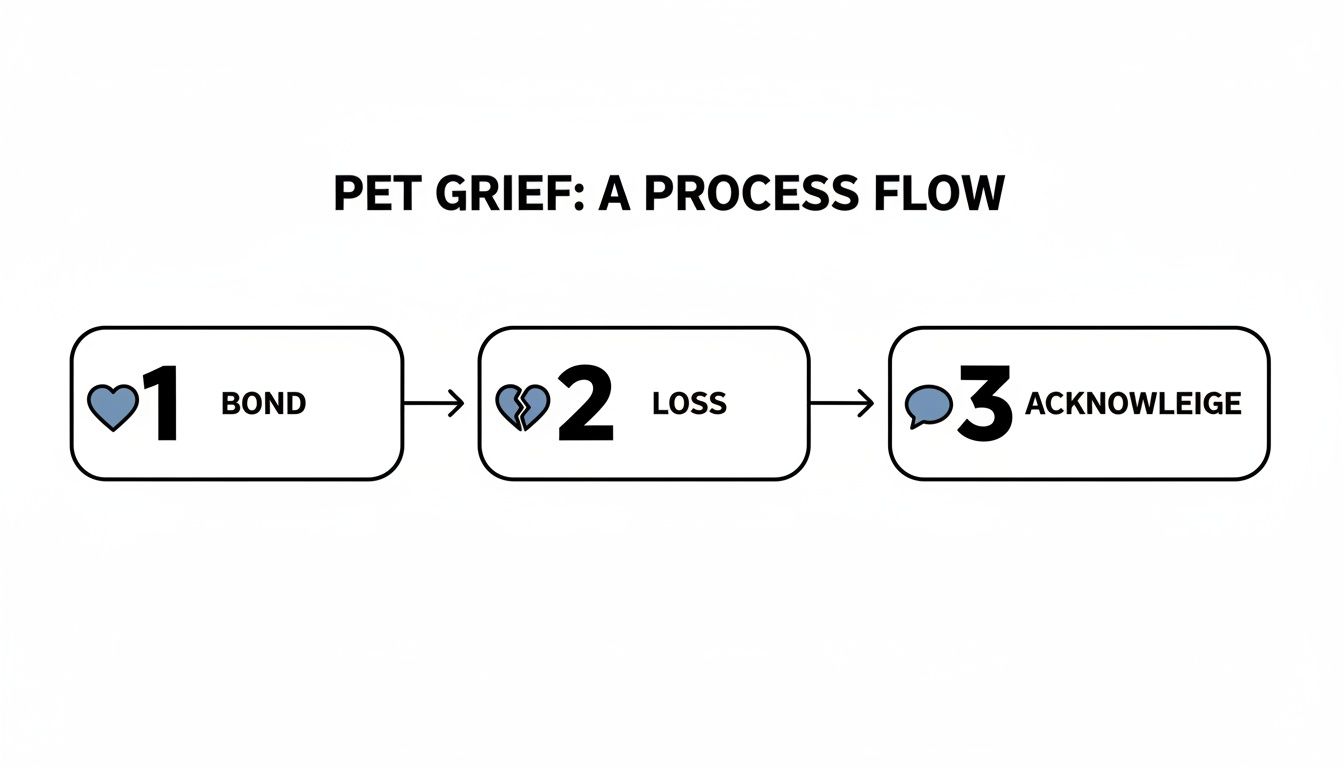
This visual reminds us that fully acknowledging our loss is a critical part of coping with the death of a dog.
A home burial can also be a beautiful and deeply personal ceremony. Just be sure to check local regulations first. A quick call to the City of El Paso or county officials can confirm any ordinances you need to follow to ensure it's done safely and correctly.
Considering In-Home Euthanasia
For many of us, our final act of love is choosing euthanasia to end our dog's suffering. If you know this day is approaching, you might consider an in-home euthanasia service.
Several vets in the El Paso area offer this compassionate option. It allows your dog to pass away peacefully in their favorite spot, surrounded by the people they love most. Thinking ahead about where this will happen and who will be present can free you up to be fully present with your companion in their final moments.
Taking Care of the Small Things
In the midst of your grief, a few administrative loose ends need tying up. They might seem minor, but they can prevent painful reminders down the road.
- Notify the Microchip Company: Call the registry to report your dog has passed away. This prevents any future heartbreak if the chip is ever found and scanned.
- Cancel Pet Insurance: If you have an active policy, you’ll need to contact the provider to cancel it.
- Update Your Service Providers: A quick call or email to your groomer, dog walker, or daycare can save you from receiving appointment reminders. Here at Glo More Grooming, we are always grateful for the notice so we can update our records and offer our condolences.
Taking care of these tasks isn't about "moving on." It’s about clearing the way so you can focus on what really matters: giving yourself the space and grace to grieve.
How to Honor Your Grief and Practice Self-Care
Grief doesn't operate on a schedule. When you're coping with the death of a dog, it’s not a neat, linear process with a clear beginning and end. It’s more like the ocean tide—it comes in waves, sometimes overwhelming you with sadness, anger, or even a sense of disbelief. The most important thing you can do for yourself is to give yourself permission to feel it all, without judgment.

There's a unique kind of pain that comes with losing a canine companion. It’s born from the pure, uncomplicated love they gave so freely. They were your shadow, your confidant, your silent cheerleader. They were woven into the very fabric of your daily life, and the silence they leave behind can feel deafening. It’s completely okay for that reality to feel like too much to bear.
Acknowledging the Complicated Feelings of Pet Loss
Whatever you're feeling right now is valid. Don’t let anyone tell you otherwise. You might find yourself bouncing between different emotions, sometimes all in the span of a single afternoon.
- Denial and Shock: It can feel completely surreal at first. You might catch yourself listening for the jingle of their collar, or glance at their favorite spot on the rug, only for the reality to come crashing back down.
- Anger and Frustration: It’s so common to feel angry. You might be angry at the illness, at the vet, or even at your dog for leaving. This is often just pain wearing a different mask.
- Guilt and Bargaining: The "what ifs" and "if onlys" are a special kind of torture. So many of us second-guess the decisions we made in those final days. Please remember, you acted out of love, with the information you had at the time.
- Deep Sadness and Depression: This is when the true weight of the loss really sinks in. It can bring waves of tears, a profound lack of energy, and an emptiness that seems to fill every corner of your home. This is a natural, necessary part of the grieving process.
There is simply no "right" way to feel. Just accepting each emotion as it comes is a powerful form of self-care. For more on this, we've put together a comprehensive guide on grief support for pet loss.
Practical Self-Care Strategies When You're Grieving
When sadness has you in its grip, even the smallest tasks can feel like climbing a mountain. This isn't about "getting over it"—it's about getting through it. Focusing on small, gentle acts of self-care can be the anchor you need.
Something as simple as maintaining a routine can be incredibly grounding. Just getting up at the same time, making your bed, or fixing a simple meal can bring a sliver of normalcy back into a world that feels completely upside down.
Journaling can also be a powerful release valve for overwhelming emotions. You don't have to be a great writer. Just get the thoughts out of your head and onto paper. Write letters to your dog, jot down your favorite memories, or just describe how you feel in that exact moment.
Grief is not a problem to be solved; it is a process to be honored. Allow yourself the space and time to feel, to remember, and to heal in your own way. This is an act of love, both for the companion you lost and for yourself.
And please, lean on your support system. Reach out to the friends and family who get it—the ones who understand the depth of your bond. Talking about your dog, sharing stories, and laughing at the funny memories can be incredibly healing. It reminds you that you aren't alone in your sorrow.
Building a Foundation for Healing
To give you a starting point, here are a few practical self-care techniques that can offer a bit of stability during the storm of grief.
Actionable Self-Care Strategies for Grieving Pet Owners
This table offers a quick summary of practical techniques to support your emotional well-being as you navigate your loss.
| Strategy | How It Helps | Practical Example |
|---|---|---|
| Maintain a Simple Routine | Provides structure and a sense of normalcy when life feels chaotic and unpredictable. | Continue your morning coffee ritual or a short walk (even without your dog) at the same time each day. |
| Nourish Your Body | Supports physical and emotional resilience. Grief is physically draining. | Keep simple, healthy snacks on hand like fruit, nuts, or yogurt so you don't have to cook complex meals. |
| Engage in Gentle Movement | Releases endorphins and helps process stress that is stored physically in the body. | Go for a quiet walk in a park, do some gentle stretching, or spend time in nature. |
| Connect with Understanding People | Validates your feelings and combats the isolation that often accompanies pet loss. | Schedule a phone call with a friend who has also lost a beloved pet. |
| Allow Yourself to Rest | Grief is exhausting. Giving yourself permission to do less is a vital part of recovery. | If you feel tired, take a nap. Postpone non-essential tasks without feeling guilty. |
Remember, coping with the death of a dog is a journey with no map and no destination. Be patient with yourself. Be kind to yourself. Every memory you cherish and every tear you shed is a testament to the incredible love you shared.
Creating a Lasting Memorial for Your Companion
Finding a way to remember your dog can be one of the most healing things you do. It’s a chance to channel your love and grief into something tangible, something that honors the incredible joy they brought into your life. This isn't about refusing to let go; it's about holding onto the beautiful memories in a way that brings you comfort.
A memorial, big or small, becomes a physical anchor for a bond that time can never erase. It’s a quiet testament to a unique spirit and the love you’ll always carry.
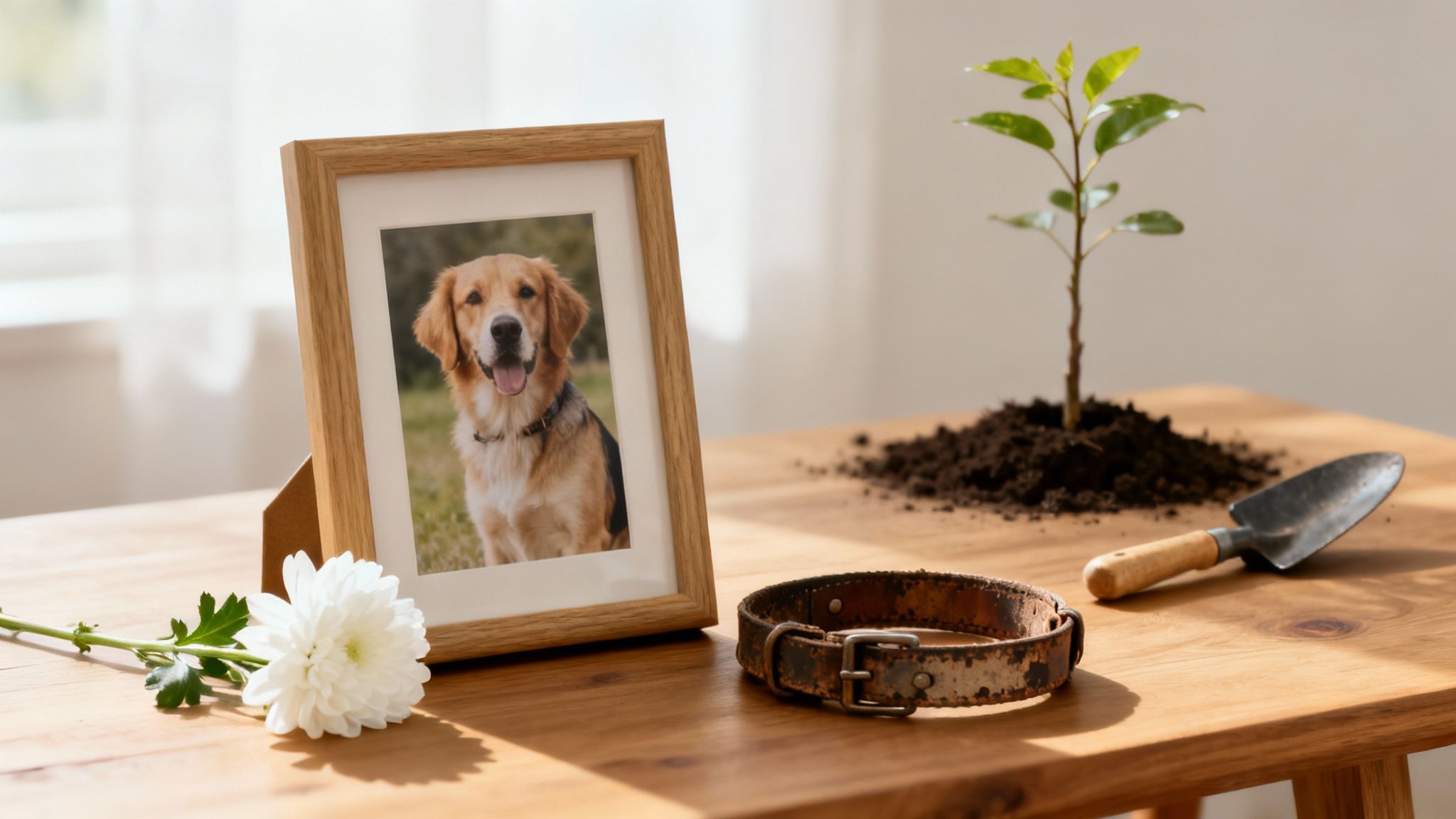
Tangible Tributes to Honor Their Memory
There’s no right or wrong way to create a memorial. The best tributes are the ones that feel right for you and truly reflect the special relationship you shared.
Sometimes, the simplest gestures are the most powerful. You could put together a shadow box with their collar, a well-loved squeaky toy, and your favorite photo. It can become a quiet, dedicated corner in your home for reflection.
If you find peace in nature, planting something in their honor is a beautiful act. A tree in their favorite sunning spot in the yard, or a garden of perennial flowers that comes back each spring, can be a living symbol of your enduring love.
Creating a memorial channels your grief into something constructive and beautiful. It's a way to integrate the loss into your life in a way that inspires connection, remembrance, and hope for healing.
Another deeply personal option is to commission a piece of art. El Paso has so many talented local artists who can paint a custom portrait from a beloved photo, perfectly capturing that goofy grin or soulful look you miss so much. If you're looking for more inspiration, we also have a guide to the best pet memorial gifts that explores other creative and comforting ideas.
Unique Ways to Celebrate Their Life
Memorials don't have to be physical objects. You can also honor your dog's legacy through actions that spread the same kind of love they gave so freely.
- Make a Donation in Their Name: Consider a contribution to a local El Paso animal shelter or a breed-specific rescue. It’s a powerful way to turn your grief into a force for good, helping other animals find their forever homes.
- Create a Photo Album or Scrapbook: Sit down with all your favorite photos. Going through them might be hard at first, but it often becomes a comforting ritual, letting you relive all the happy, silly, and wonderful moments you shared together.
- Light a Candle: On their birthday or the anniversary of their passing, light a special candle. This simple tradition can be a quiet and meaningful way to feel connected.
Introducing Petals for Paws: A Community Tribute
It’s in this spirit that we at Glo More Grooming created our Petals for Paws program. We saw a real need right here in our El Paso community for a gentle, beautiful way to honor the bond we share with our pets after they're gone.
We don't really think of Petals for Paws as a service—it's a community tribute. It’s our way of offering a custom floral arrangement to celebrate the life and spirit of a cherished friend. Each one is thoughtfully designed to be a quiet, beautiful symbol of a love that never fades. It’s just a small gesture, from our hearts to yours, to acknowledge a loss that is felt so deeply and a life that will be remembered always.
Recognizing When You Need Professional Support
Navigating the loss of a dog is a deeply personal journey, and there’s no right or wrong way to feel. The intense sadness, the waves of anger, the hollow emptiness—it’s all a normal, messy part of the process.
But what happens when that grief doesn't just visit, but moves in? Sometimes, the weight becomes so heavy and constant that it disrupts your life. If you're at that point, reaching out for professional help isn't a sign of weakness; it’s a courageous and necessary act of self-care. It's a recognition of just how much your dog meant to you.
Differentiating Deep Grief from Something More
For most of us, the sharpest edges of grief will eventually soften with time. The painful memories start to make room for the happy ones again. But for some, the grief remains debilitating. This is a condition now clinically recognized as prolonged grief disorder (PGD).
This isn't just about feeling sad for a long time. PGD is characterized by a persistent, intense yearning for your dog that makes it hard to function day-to-day, long after the loss occurred. You might feel like a part of your identity is missing or experience an emotional numbness that just won't lift.
If this sounds familiar, you're not alone, and it's not an overreaction. Groundbreaking research is finally validating the severity of pet loss. A Maynooth University study found that 7.5% of people who lost a pet met the clinical criteria for PGD—a rate identical to those who lost a close human friend. This data confirms what pet owners have always known: this kind of loss is real, it's profound, and it deserves to be taken seriously. You can read the full research about these findings on MedicalXpress.com.
Signs It Might Be Time to Seek Help
So, how do you know if you've crossed the line from typical grieving into something that requires professional intervention? It can be a blurry line, but here are a few things to watch for.
- You can't get back to life. Weeks or even months later, are you still struggling just to get through a workday, keep up with household chores, or take care of your own basic needs?
- The guilt is all-consuming. While a little bit of guilt is normal, it becomes a problem when you're constantly trapped in "what if" loops, unable to forgive yourself for decisions you made.
- You've isolated yourself. Are you actively avoiding friends, family, or hobbies you once loved? If the pain feels too big to share or manage around other people, it might be time to talk to someone who can help.
- You can't feel anything positive. The initial shock has passed, but you still feel a complete inability to experience moments of joy, peace, or happiness.
"Seeking help isn't about 'getting over' your dog. It's about learning how to carry their memory with you in a way that allows you to live a full life again. It’s an act of love for yourself and a way to honor the companion you cherished."
Finding the Right Support in El Paso and Beyond
Thankfully, there are more resources than ever for people grieving a pet. Taking that first step can feel overwhelming, but you have options. Our own guide on pet loss grief support offers more insights that might help you on your path.
Here are a few great places to start looking for help:
- Pet Loss Support Hotlines: National hotlines are often staffed by volunteers or veterinary students trained in grief counseling. They provide a free, confidential, and immediate person to talk to when you need it most.
- Therapists Who Specialize in Bereavement: More and more therapists are now specializing in pet loss because they understand the unique power of the human-animal bond. Ask your vet for a referral or search online psychology directories for a professional in El Paso (or one who offers telehealth).
- Support Groups (Local and Online): There is incredible power in sharing your story with others who just get it. Look for pet loss support groups in the El Paso area on social media or through local veterinary clinics. Online forums can also provide a strong sense of community when you need it most.
Remember, the goal is not to erase the pain. It’s about learning to integrate this profound loss into your life. A professional can give you the tools and compassionate guidance to navigate this process, so you don't have to walk this road alone.
Answering the Tough Questions After Losing a Dog
When your dog passes away, a flood of questions and "what-ifs" can feel overwhelming. These are often the thoughts we're afraid to say out loud. Let's walk through some of the most common and difficult questions that come up during this time, with some gentle, straightforward advice.
How Do I Talk to My Kids About This?
This is, without a doubt, one of the toughest conversations you'll have as a parent. The most important thing is to be honest and use simple, clear language that your child can understand.
It's tempting to use euphemisms like "went to sleep" or "went away to a farm," but these can actually create more fear and confusion. A child might become afraid of going to sleep, for instance.
Try saying something like, "Buddy was very old and his body got very sick, and it stopped working." Let them know it's okay to feel sad, mad, or just plain confused. Giving them a way to express themselves can be a huge help—encourage them to draw pictures of their favorite memories or help you pick out a special place in the yard for a memorial stone. It gives them a sense of control and a way to say goodbye.
Is It Normal to Feel So Guilty?
Yes. It is profoundly, gut-wrenchingly normal. Guilt is often an unwelcome and constant companion to grief after losing a pet. You might find your mind replaying their last days over and over, second-guessing every choice you made. Did I act too soon? Did I wait too long? Did I miss a sign?
It’s so important to remember this: You made the best decisions you could with the information you had, and every one of those decisions came from a place of love.
Guilt is a complicated part of grieving, but it doesn't mean you're at fault. Be gentle with yourself and try to focus on the years of happiness and wonderful care you provided.
What About My Other Pets? Are They Grieving Too?
Our other animals absolutely feel the loss. They may not process death the way humans do, but they definitely understand that a member of their pack is suddenly gone. You might see your surviving pet acting withdrawn, searching the house, or seeming anxious.
The best support you can offer them is a sense of stability and extra comfort.
- Stick to the Routine: Keep feeding, walks, and playtime on the same schedule. In a world that feels off-kilter, routine is incredibly grounding for an animal.
- Give Extra Attention: They need your reassurance. A little extra one-on-one time for a cuddle, a quiet grooming session, or just talking to them can help them feel secure.
- Watch Their Health: Just like with people, stress can take a physical toll. Pay close attention to their appetite and behavior, and don't hesitate to call your vet if something seems off.
When Should I Get Another Dog?
There is no magic formula or "right" time for this, and anyone who tells you otherwise is mistaken. This decision is intensely personal, and your timeline is your own.
Some people find that opening their home to another dog sooner rather than later helps them heal. For others, the thought is impossible for months or even years.
The key is to give yourself the space to fully grieve the unique dog you lost. A new dog isn't a replacement; they're the start of a whole new relationship. A good rule of thumb is when the idea of a new furry face in your home sparks more genuine joy than deep sadness, you might be getting close. Trust your own heart to tell you when it's ready.
At Glo More Grooming, we’ve seen the incredible love El Paso families have for their dogs up close. We get to celebrate that bond every day, and our hearts are with you when it's time to say goodbye. Learn more about how we care for our community's pets at https://glomoregrooming.com.