
Losing a pet is a deeply personal and painful experience. The grief that follows is not just real—it’s a powerful testament to the unconditional love and profound bond we share with our animal companions. Their absence leaves a quiet but heavy void in our homes and hearts, and finding the right grief support for pet loss is an essential part of navigating the path toward healing.
Why Losing a Pet Hurts So Much
If you’re here, chances are your heart is broken. The house feels too quiet, and the empty spot where they used to sleep feels immense. The first thing you need to know is that your pain is completely, unequivocally valid. The connection we have with our pets is one of the purest relationships we can experience, built on the simple rhythm of daily routines, unwavering acceptance, and a companionship that needs no words.
When that bond is broken, the grief can be just as intense—and sometimes even more complicated—than losing a human family member. This isn't an overstatement; it's a reality reflected in the growing demand for support. One UK animal charity, for instance, saw requests for its pet loss support services nearly triple in a decade, jumping from 6,240 contacts in 2013 to 17,367 in 2022. This surge shows that we're finally starting to acknowledge a type of pain that for too long was brushed aside. You can discover more insights about this trend and its impact on grieving owners.
Understanding Disenfranchised Grief
One of the cruelest twists of pet loss is something experts call disenfranchised grief. It’s a fancy term for a simple, painful reality: you’re mourning a loss that society doesn't always recognize as legitimate. People, often with the best intentions, might say things like, "It was just a cat," or "You can always get another one." These comments sting because they dismiss the depth of your relationship.
Disenfranchised grief is like having a valid passport to a country no one recognizes. The passport is real and the journey is legitimate, but you can’t get it stamped. This can leave you feeling incredibly isolated, as if you have to hide the true depth of your sadness.
This lack of public validation can make you second-guess your own emotions, piling confusion and loneliness on top of your sorrow. Let me be clear: your grief is not an overreaction. It is the normal, loving response to losing a significant member of your family. Getting through it requires giving yourself permission to feel and finding the right tools to cope, which we’ll explore together.
Common Emotional and Physical Responses to Pet Loss
Grief is not a linear process, and your journey will be as unique as the pet you're missing. There's simply no "right" or "wrong" way to feel. To help you understand what you might be going through, here’s a look at some common reactions. Seeing them laid out can be a comfort, a quiet acknowledgment that you are not alone in this.
Common Emotional and Physical Responses to Pet Loss
| Emotional or Physical Response | What It Can Feel Like | Why It's a Normal Part of Grieving |
|---|---|---|
| Intense Sadness and Crying | Overwhelming waves of sorrow that seem to come out of nowhere, triggered by a memory or a quiet moment. | Crying is a natural physical release for emotional pain. It's a direct, honest expression of how much you loved them. |
| Guilt and Self-Doubt | Endlessly replaying their final days, wondering "what if" or feeling you should have done more. | This is your mind's way of trying to make sense of the loss and regain some feeling of control over a painful, uncontrollable event. |
| Anger or Irritability | Feeling angry at the illness, the vet, or even snapping at people who are just trying to help. | Anger often acts as a shield for deeper, more vulnerable emotions like helplessness, profound sadness, and a sense of injustice. |
| Physical Symptoms | Feeling completely drained, unable to eat, or struggling with headaches and a heavy feeling in your chest. | Grief is a full-body experience. Your emotional distress has a very real and direct impact on your physical well-being. |
| Loneliness and Emptiness | A constant, aching sense of emptiness in your home and daily routines. The silence can feel deafening. | Your pet was a constant presence in your life. Their absence creates a genuine void in your schedule and your heart. |
Remember, these responses are not signs of weakness; they are signs that you loved deeply. Allowing yourself to experience them without judgment is a crucial first step toward healing.
Your Personal Journey Through Grief
Most of us have heard about the "stages of grief," and it’s easy to picture them as a neat, orderly ladder you climb one step at a time. The truth is, grief is much messier than that. It’s more like the ocean—some days are calm, and other days, the waves come crashing down, pulling you under when you least expect it.
When you lose a pet, that journey is uniquely yours. There's no schedule to follow, no "right way" to feel, and absolutely no room for anyone (especially yourself) to judge how you're handling it. The kindest thing you can do right now is give yourself permission to feel whatever comes up. Each emotion is just a reflection of the incredible love you shared.
This is why it hurts so much. The pain we feel is a direct measure of the bond we had, a connection that not everyone understands.
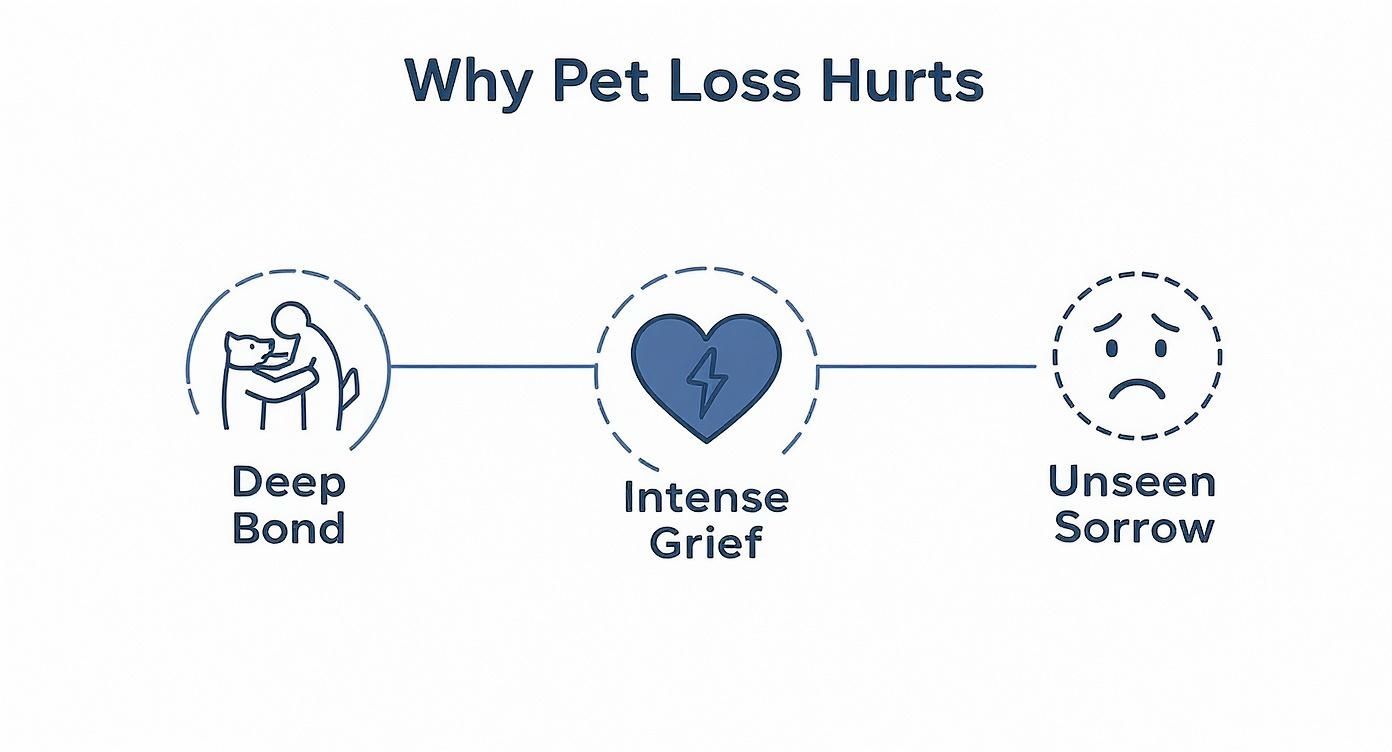
The depth of your heartbreak simply mirrors the depth of your love—a love that was real, powerful, and an integral part of your life.
The Cycle of Emotions in Pet Loss
It’s less of a straight line and more of a cycle. You might find yourself bouncing between denial, anger, and deep sadness, sometimes all in the span of a single afternoon. Each of these feelings has a role to play in helping you process such a monumental loss.
- Denial: This is that phantom feeling of your pet still being there. You might expect them to greet you at the door or find yourself reaching down to scratch their ears before the reality hits. It’s your mind’s way of protecting you, letting the shock sink in slowly instead of all at once.
- Anger: You might feel rage—at the illness, the accident, the vet, or even yourself. Anger often acts as a shield for the intense pain underneath. It can feel much safer to be angry than to confront the full, crushing weight of your sadness.
- Sadness: This is the quiet, aching emptiness that settles in your chest. It’s the raw sorrow that hits you when you realize they aren’t curled up at the foot of your bed. This is the heart of the grief.
Just letting these feelings exist, without trying to rush them or "fix" them, is a powerful act of self-care.
Understanding the Heavy Weight of Guilt
Of all the emotions, guilt is often the most painful and relentless. It’s the cruel inner voice that plays a highlight reel of “what ifs” and “if onlys” on a constant loop. What if I’d noticed something sooner? Did I make the right choice about their treatment? Was it too soon? Was it too late?
This is simply your brain trying to make sense of something that feels senseless and deeply unfair. By searching for a mistake—something you could have done differently—you're trying to reclaim a sense of control in a situation where you ultimately had none.
Guilt isn't a sign that you failed as a pet parent. It's a sign of how much you loved them. That feeling comes from the immense responsibility you felt for their well-being, and the depth of that love is what’s fueling all those painful questions.
Try to see your guilt not as proof of a mistake, but as a painful testament to your devotion. Your mind is just fighting a reality it desperately wishes were different. It’s okay to gently tell yourself that you made the best, most loving decisions you could with the information you had. Your path is your own, and you're doing the best you can.
Practical Ways to Cope with Daily Life
When you’re in the thick of grief, just getting through the day can feel like climbing a mountain. The quiet moments are suddenly deafening, and the familiar routines you shared with your pet now just highlight their absence. This is a time to be incredibly kind to yourself, focusing on small, manageable steps that can bring a little stability back when your world feels like it's been turned upside down.
The idea isn't to pretend the pain isn't there, but to build a gentle structure that can hold you while you hurt. Think of it as an anchor in a stormy sea; the waves will still come, but the anchor can keep you from being completely swept away. A simple, predictable rhythm can restore a much-needed sense of control.

Anchoring Yourself with Simple Routines
Your mind and body are carrying an enormous weight right now, and basic self-care is one of the most practical forms of grief support for pet loss. It’s not about making grand gestures; it’s about small, consistent acts of kindness toward yourself. Start with the basics and go from there.
- Gentle Movement: You don't need to run a marathon. A quiet walk around the block can do wonders for processing emotions and releasing the tension that grief stores in your body. It's a simple way to interrupt the cycle of sadness, even for a few minutes.
- Simple Nutrition: Grief can mess with your appetite, making you not want to eat at all or reach for comfort food. Just focus on giving your body simple, nourishing fuel. You're doing difficult emotional work, and your body needs energy for it.
- Prioritize Sleep: Rest is how we heal, both physically and mentally. If sleep feels impossible, try creating a calming wind-down ritual—maybe sipping some herbal tea or listening to quiet music—to signal to your brain that it's time to rest.
These aren't just distractions. They’re the foundation that helps you carry the weight of your loss without collapsing under it.
Processing Emotions in Healthy Ways
Those big feelings need a place to go. If you bottle them up, they can fester and feel even more overwhelming. Finding an outlet to express what you're feeling, even if it's just for your own eyes, can be a huge relief.
Journaling is a fantastic tool for this. It’s a completely private space where you can be brutally honest without worrying about what anyone else thinks. You don't have to write an essay; sometimes just getting a few sentences out is enough to lighten the load.
Journaling Prompts for Healing
- "One of my favorite memories of you is…"
- "The thing I miss most about our daily routine is…"
- "If I could tell you one more thing, it would be…"
- "Today, a small thing that made me smile was…"
Mindfulness is another powerful technique. It's really just about paying attention to the present moment without judging it. When a wave of grief washes over you, try focusing on your breath for just 60 seconds. That small pause can create a pocket of calm and help you feel more grounded.
Navigating Painful Reminders and Empty Spaces
One of the hardest parts of grieving is dealing with the constant, physical reminders of their absence. The leash hanging by the door. The unused food bowl. That empty spot on the couch where they always slept. These "empty spaces" are like little landmines that can reopen the wound over and over again.
It is absolutely okay to manage these reminders gently. You’re not trying to forget your pet or "get rid of them"—you're just giving your heart a little breathing room to heal without being constantly poked.
- Temporarily Rearrange: Maybe move a plant or a side table to cover the spot where their bed used to be. You can always move it back later when the sight isn't so jarring.
- Create a New Ritual: If your morning always began with letting your dog out, build a new, gentle ritual for yourself. Maybe you stretch for five minutes or just sit with a cup of coffee and look out the window.
- Care for Other Pets: If you have other animals in the house, keeping up with their routines is vital. Tending to their needs, like nail trimming, can provide a welcome sense of purpose and connection. If you need a refresher, our guide on how to cut overgrown dog nails offers some gentle, practical advice.
There’s no right or wrong timeline for this. Be patient with yourself and let yourself adjust at your own speed. Every small step you take is a sign of your resilience and the incredible love you have for the companion you lost.
Creating Meaningful Tributes and Memorials
Finding a way to honor the life you shared with your pet is a profoundly healing step. A tribute isn’t about trying to erase the pain; it’s about creating a space where the love you shared can continue to exist in a real, tangible way. These acts of remembrance give you a healthy way to process your grief, transforming sorrow into a celebration of their one-of-a-kind spirit.
The most important thing is to create something that feels true to your relationship. This is an incredibly personal journey, and there’s no right or wrong way to go about it. Often, the most meaningful memorials are the simplest ones—those that perfectly capture your companion's personality and the incredible joy they brought into your world.
Tangible Acts of Remembrance
For many of us, having a physical memorial creates a focal point for our memories and brings a sense of comfort back into the home. These tributes can be as simple or as elaborate as you feel is right, serving as a beautiful testament to the bond you’ll always have. Just the act of creating it can be incredibly therapeutic.
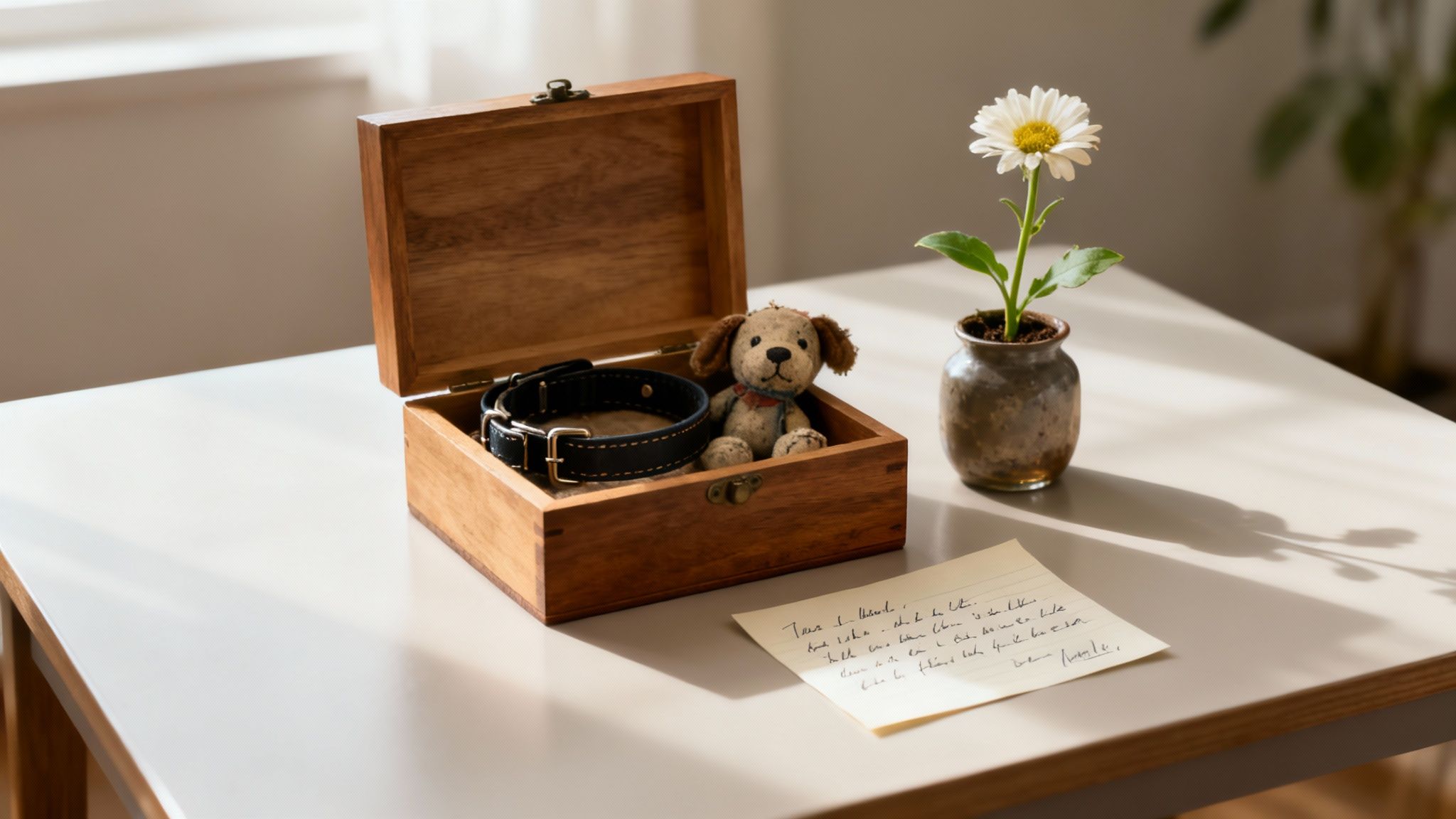
- Create a Legacy Box: Gather their most cherished things—that well-loved squeaky toy, their collar and tags, a favorite blanket—and place them in a special box. This little collection becomes a private, physical link to your happiest memories, something you can hold and revisit whenever you need to feel close to them.
- Commission a Portrait: Finding a local artist to paint or draw a custom portrait of your pet can be so special. Art can capture their unique expression and personality in a way a photograph sometimes can't, turning a beloved memory into a timeless piece of art for your home.
- Plant a Living Memorial: Plant a tree, a rose bush, or a small garden in a sunny spot. As you watch it grow and bloom year after year, it becomes a living, breathing symbol of the love that will always be there for them.
These physical reminders help transform a space of absence into a space of honor.
Memorials Through Words and Actions
Not all memorials have to be physical objects you can touch. Sometimes, the most powerful tributes are the actions we take and the words we share that carry our pet's legacy of love forward. Channeling your grief into acts of service or creativity can be a profound way to process your emotions while making the world a little brighter.
Writing a letter to your pet is a simple yet powerful way to say everything that’s still in your heart. Just pour it all out—your love, your gratitude, your favorite funny memories. This private conversation can bring a real sense of closure and help release emotions you’ve been holding onto.
Honoring your pet’s memory through action allows their spirit of unconditional love to continue making a difference. Donating to a local shelter in their name or volunteering your time helps other animals and transforms your personal grief into a force for good in the community.
Another beautiful idea is to put together a photo album or a digital slideshow set to music. The process of gathering all those happy moments helps shift your focus from the ache of their absence to the joy of their presence in your life. It's a project that lets you relive the good times and reminds you what an incredible gift their companionship truly was. These creative tributes are a testament to a love that never really goes away.
Supporting Children and Other Pets Through Loss
When a pet dies, the loss doesn't just affect you—it sends a quiet shockwave through the entire household. Children and other pets feel the void just as deeply, even if they can't put it into words. Their grief is real, and helping them navigate it is one of the most important parts of the family's healing process.
This takes a lot of honesty, patience, and a little extra attention. For many kids, this is their first real brush with death, making it a powerful and often confusing moment. For the pets left behind, the sudden absence of a companion can upend their world, leaving them anxious and unsettled.
Guiding Children Through Pet Loss
When you talk to your kids about a pet's death, being clear and honest is the kindest thing you can do. It's so tempting to soften the blow, but vague explanations can backfire, creating more fear and confusion later on.
Avoid euphemisms like "went to sleep" or "ran away." A child might suddenly become terrified of bedtime, worrying they won’t wake up either, or spend weeks waiting by the door for a pet that will never return. It’s far better to use simple, direct language they can understand.
For a younger child, you could say something like, "Buddy was very old and his body stopped working. He isn't in pain anymore. We won't see him again, but we will always, always remember how much we love him."
It’s okay to let your children see you cry. When you share your own sadness and favorite memories, you teach them that grieving is a normal, healthy reaction to losing someone you love. It gives them permission to feel their own emotions without shame.
Creating a memorial together is also a wonderfully healing act. Let your child take the lead in deciding how to honor their friend.
- Draw pictures of their favorite moments with their pet.
- Share stories about the funny, silly things their pet always did.
- Make a memory box by gathering a special collar, a beloved toy, or a favorite photo.
These simple rituals give them a way to process their big feelings and keep the memory of their pet close.
Comforting Your Surviving Pets
Don't forget, your other pets are grieving, too. They may not grasp the finality of death, but they absolutely feel the absence of their friend. Their grief often shows up as a change in behavior.
You might see your surviving pet wandering the house, searching for their missing companion. They might lose their appetite, seem withdrawn and listless, or suddenly become extra clingy, needing more reassurance from you.
The best way to help them is with consistency and extra comfort.
- Stick to the Routine: Keep mealtimes, walks, and play sessions on the same schedule. Predictability is a powerful anchor when their world feels chaotic.
- Offer Extra Affection: Spend more time petting, cuddling, or grooming them. Your calm presence is incredibly soothing.
- Encourage Gentle Play: Don't push them, but softly invite them to engage with a favorite toy when they seem ready.
Keeping up with their physical care, like grooming, also provides a sense of normalcy and connection. If you need a few gentle pointers, you can check out our guide on how to groom a dog at home.
The Unique Impact on Older Adults
For older adults, losing a pet can be an especially heavy blow. A companion animal is often a central source of daily routine, unconditional love, and connection to the world.
Recent studies really bring this to light. After losing a pet, 47% of older adults reported a decline in their emotional health, and 38.1% noted a decrease in physical activity. Many also felt they couldn't share their grief, worried that others wouldn't understand. You can read the full research about these findings and their implications.
This just goes to show how vital it is to create a circle of support, making sure no one in the family—whether they have two legs or four—has to walk through their grief alone.
Where to Find Pet Bereavement Support
Trying to make sense of the overwhelming sadness after losing a pet can feel incredibly lonely. But you don't have to go through it by yourself. Reaching out is a sign of strength and a crucial step toward healing, especially when the grief feels too heavy to carry. A whole network of compassionate resources exists specifically to help you through this.
Finding the right kind of help is a very personal decision. What works for one person might not be the right fit for another, and that's okay. The most important thing is to explore the options and find a support system where you feel safe and truly understood. Just taking that first step to connect can bring a surprising amount of relief.
Professional and Community Support
Sometimes, the best way forward is to talk with someone trained to help people untangle complex emotions. The connection we have with our pets is unlike any other, and specialized support services are built on understanding the unique depth of that bond.
- Pet Bereavement Counselors: These therapists specialize in the human-animal bond and genuinely understand the profound pain of pet loss. They provide a safe, non-judgmental space to work through your feelings and find healthy ways to cope.
- Support Groups: There is immense power in connecting with others who just "get it." Whether you find an online forum or a local in-person group, these communities let you share stories, express your sadness, and feel validated by people on the exact same journey.
It's a global phenomenon: researchers have found that roughly 30% of pet owners experience a level of grief so intense it can cause significant psychological distress. This has led to a growing movement for more structured bereavement services, from hotlines to community groups, all designed to give grieving owners the support they deserve. You can learn more about these global pet bereavement findings.
Immediate and Self-Guided Resources
When you need comfort right now or simply prefer to process your grief in a more private way, there are plenty of resources available at your fingertips. These tools can offer immediate solace and guidance whenever you feel you need it most.
Pet loss support hotlines are a fantastic resource for instant, confidential comfort. They are typically staffed by trained volunteers who offer a compassionate ear when you just need to talk things through with someone who understands without judgment.
Finding the right words or even knowing where to start looking for help can feel impossible when you're grieving. Remember that any step you take to find comfort is a beautiful testament to the love you shared. Be kind to yourself as you figure out what feels right.
You can also find countless books and websites dedicated to grief support for pet loss. These self-guided resources let you explore your emotions at your own pace, often filled with expert advice, personal stories, and practical exercises to help you heal.
If you ever need to talk to someone on our team or have questions about our compassionate tribute programs, please don't hesitate to contact us at Glo More Grooming. We are here for our community.
Common Questions About Pet Loss Grief
When you're grieving a pet, your mind can feel like a tangled mess of questions. It's a confusing and deeply painful time, and it’s completely normal to feel lost. Let's walk through some of the questions that come up most often, because knowing you're not alone in asking them can be a small comfort in itself.
How Long Will This Grief Last?
This is the question everyone asks, and the honest answer is, there’s no timeline. Grief isn't a race with a finish line. That raw, all-consuming pain you feel right now won't last forever—it will soften. But how long that takes is different for every single person.
For some, the heaviest feelings might start to lift in a few weeks or months. For others, it can take a year or more to find a new normal. Healing doesn't mean forgetting. It means learning to carry their memory with a sense of love that eventually becomes stronger than the pain of their absence. Please, be patient with yourself.
Should I Get a New Pet Right Away?
This is such a personal decision, and there's a lot of emotion tied up in it. Some people find that caring for a new animal helps soothe their broken heart and gives their love a new place to go. Others feel it would be a betrayal, or they simply don't have the emotional energy to welcome a new companion.
There is no "right" time. A good rule of thumb is to wait until you can welcome a new pet for who they are, not as a stand-in for the one you lost. Rushing into it can sometimes make the grieving process more complicated for you and isn't quite fair to the new animal.
What Should I Do with Their Belongings?
Seeing their favorite toy, their collar on the hook, or their empty bed can feel like a punch to the gut. Deciding what to do with these things is a tough, emotional task. Many people find comfort in creating a special memory box, gathering a few favorite items to keep close.
On the other hand, if seeing their things is just too painful right now, it is 100% okay to pack them away. You can always revisit them later. When you're ready, donating their bed, food, or toys to a local shelter in their name can be a beautiful way to honor their memory. Don't rush this—do what feels right for you, right now.
At Glo More Grooming, we know that the journey with a pet is filled with incredible joy and, sometimes, heartbreaking loss. Our Petals for Paws tribute program was created to offer a small bit of comfort when you need it most. You can learn more about our compassionate services at https://glomoregrooming.com.