
If you've ever watched a small dog gather all its might to leap onto the couch, you know the routine. It might look cute, but that daily jump and the hard landing that follows can take a serious toll over a lifetime. While a quick search for "dog stairs petco" might seem like an easy fix, taking a moment to understand the why behind mobility aids is one of the most responsible things you can do for your pet's long-term health.
Why Your Dog Deserves More Than Just A Jump
For our smaller, short-legged, or senior canine friends, a high bed or car seat isn't just a piece of furniture—it’s a daily obstacle course. Each one of those jarring leaps puts a surprising amount of stress on their delicate joints, spine, and ligaments.
Over months and years, that repetitive impact can quietly contribute to chronic pain, arthritis, and even sudden, expensive injuries. It's a sad reality we see all too often with the dogs that come through our doors here in El Paso for dog grooming. At Glomore Grooming, we see premium pet grooming as just one piece of a much larger puzzle: a commitment to preventative wellness that should extend to every corner of your dog’s life. Investing in the right dog stairs isn't an over-the-top luxury; it's a practical, powerful way to protect their body.
The True Cost of a Leap
Think of it this way: you wouldn't skip your dog's core vaccinations, so why overlook their joint health? Those little daily hops add up to significant micro-traumas, especially for certain dogs:
- Breeds prone to back issues: For Dachshunds, Corgis, and Basset Hounds, a simple jump can risk a devastating spinal injury like IVDD.
- Small and toy breeds: Their tiny frames simply aren't designed to absorb the shock of repeated high-impact landings.
- Senior dogs: Arthritis and general stiffness already make movement a challenge. Every painful jump just makes it worse.
As a veteran-owned grooming studio, we bring a disciplined focus to our work, and we believe in empowering pets to live their best lives. The right set of stairs gives your dog the freedom and independence to safely join you for a cuddle without putting their body on the line. This proactive mindset is what truly separates thoughtful, individualized pet care from a generic, one-size-fits-all approach. You can find more tips on caring for aging pets in our guide to dog grooming for older dogs.
At Glomore Grooming, our vision is to build a community of educated pet owners who make proactive wellness a priority. Choosing the right mobility aid is a perfect example of that commitment in action.
Our disciplined workflow isn't just about a perfect haircut—it's about contributing to a long, comfortable life for your companion. We even offer practical solutions like our affordable grooming promo, "Snip & Style Saturday," to make that premium standard of care accessible. Don't wait for a limp or a yelp of pain to take action. Give your dog the simple support they need to stay safe and comfortable.
Ready to elevate your pet's care with our premium standards? Book a grooming appointment today or contact Glomore Grooming to reserve your slot in our next promo.
How To Choose The Perfect Dog Stairs For Your Companion
Picking out the right set of dog stairs can feel surprisingly complicated, but it's one of the most important decisions you'll make for your dog's long-term joint health and your own peace of mind. It’s easy to just grab the first option you see, but a little bit of know-how goes a long way in finding stairs that are actually safe and effective.
Think of it less like a quick shopping trip and more like getting a custom piece of equipment for your best friend. This guide will walk you through exactly what to look for, so you can feel confident you’re making the right choice.
Start With The Right Measurements
First things first, put down the car keys and pick up a measuring tape. The most common mistake people make is guessing, and that can lead to buying stairs that are totally wrong for the job.
- Measure the height from the floor to the top of the bed or couch cushion your dog wants to get on. This is your magic number.
- The top step of the stairs needs to be either level with or just a hair below this height. This ensures your dog can walk straight onto the surface without having to make that final, awkward little jump that can cause an injury.
A set of stairs that's too short is almost worse than no stairs at all. It forces an unsafe leap and completely defeats the purpose. Getting this one measurement right is the foundation for a good decision.
This flowchart can help you quickly decide if stairs are a good fit for your dog’s situation.
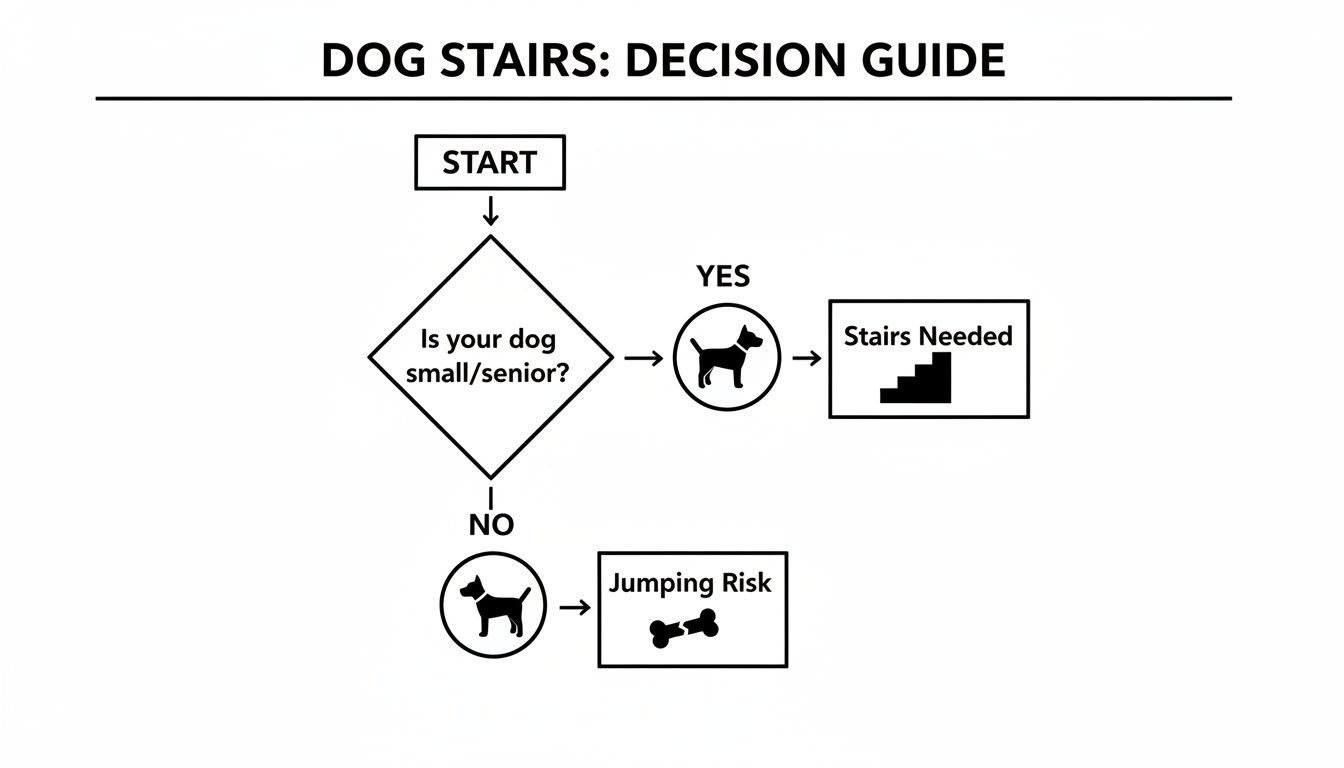
As you can see, small breeds and seniors are obvious candidates, but stairs are a smart move for any dog that’s constantly jumping on and off furniture.
Match The Stairs To Your Dog
With your height measurement in hand, it's time to think about your dog's unique size and build. What’s perfect for a tiny Yorkie could be a total disaster for a stocky Basset Hound.
1. Weight Capacity: This is non-negotiable. Always check the manufacturer's weight rating and choose stairs that can comfortably support your dog. Flimsy stairs can buckle, leading not only to injury but also to a fear of using them in the future.
2. Tread Depth and Rise: These two dimensions are crucial for a confident climb. The "tread" is the flat part your dog steps on, and the "rise" is the vertical height of each step.
- Tread Depth: The tread needs to be deep enough for your dog to place their entire paw securely. If you have a long-bodied dog like a Dachshund or a breed with big feet, you'll want to look for deeper treads.
- Step Rise: The rise should be gradual and easy. A good guideline is to make sure the height of each step is less than the length of your dog’s leg. Anything too steep will cause them to strain, which is exactly what we're trying to avoid.
A common mistake is choosing stairs with narrow, steep steps to save space. These can force your dog into an awkward, hunched posture, putting stress on their back and joints and undermining the entire reason you got them stairs in the first place.
It's clear that owners are more invested than ever in their pets' health. The global market for pet accessories hit $6.71 billion in 2024 and is on track to reach $9.97 billion by 2030. Dogs make up the lion's share of that, accounting for 46.74% of the market in 2024. If you're interested, you can explore more data on the pet accessories market to see these trends.
Compare The Core Materials
Finally, let’s talk about what the stairs are made of. The material affects everything from stability and weight to how easily you can clean them. Each type has its place, so the best one really depends on your dog and your home.
To make it easier, here’s a quick breakdown of the most common options.
Stair Material Comparison For Your Dog
| Material Type | Best For | Pros | Cons |
|---|---|---|---|
| Foam | Small, timid, or senior dogs with achy joints. | Lightweight, soft surface is forgiving on paws, no sharp edges. | Can slip on hard floors without a non-slip base, may not feel stable for larger or rowdy dogs. |
| Plastic | Most dogs in a budget-conscious home. | Affordable, lightweight, and very easy to wipe clean. | Can feel less sturdy than other materials, may have lower weight limits, can be slippery without good grips. |
| Wood | Large breeds or for owners wanting a durable, stylish option. | Extremely stable and durable, often has a high weight capacity, can look like real furniture. | Heavy and harder to move, typically more expensive. |
Whether you go for soft foam or sturdy wood, the goal is to find a set of stairs that gives your dog a safe and reliable way to stay close to you. Taking the time to choose wisely is a small investment that pays off big in your dog’s comfort and health for years to come.
What to Look for in a Great Set of Dog Stairs
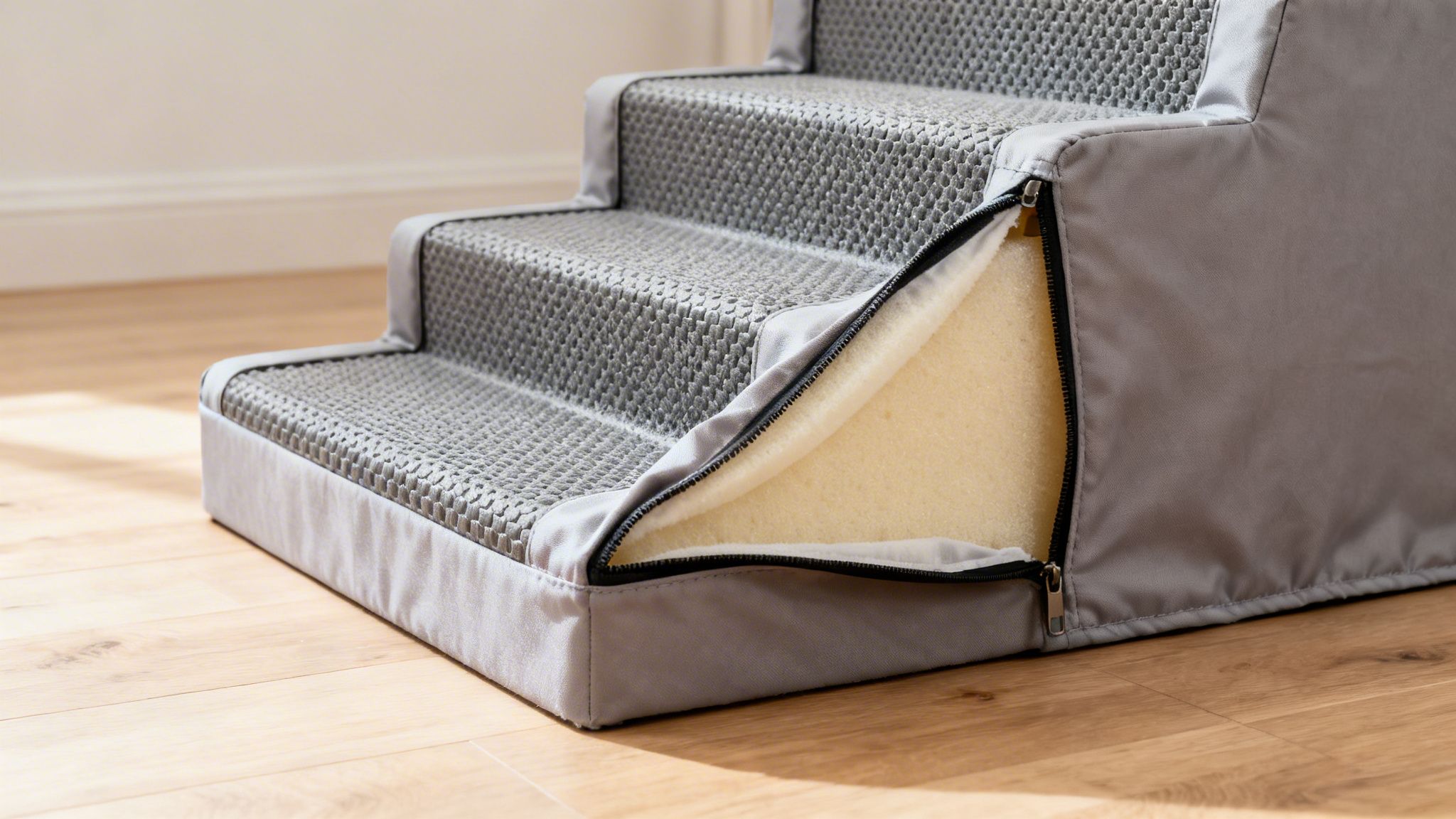
If you’ve ever typed "dog stairs petco" into a search bar, you know how overwhelming the options can be. At first glance, they all look pretty much the same. But the good stuff—the stairs that are actually safe and that your dog will use—is all in the details.
Knowing what makes a quality set of stairs helps you see past the marketing spin and choose something that genuinely puts your dog's safety first. It’s the same philosophy we have at Glomore Grooming; just as we insist on premium standards for grooming, we think your dog’s gear should meet a high bar, too.
Stability: The Non-Negotiable Foundation
Above all else, dog stairs must be stable. Period. If they wobble, slide, or even shift slightly when your dog steps on them, they won’t be trusted. A shaky set of stairs is worse than no stairs at all, as it can cause a fall, leading to injury and a long-lasting fear of any mobility help.
Here’s what to look for to ensure a rock-solid base:
- A Wide Base: The best designs are wider at the bottom than the top, almost like a pyramid. This simple shape makes them much harder to tip over.
- Non-Slip Bottom: Check for rubber grips or a full non-skid pad on the underside. This is crucial for preventing the stairs from shooting out on smooth surfaces like the hardwood or tile floors common in El Paso homes.
- Sturdy Construction: Give it a good push. Whether it's high-density foam, strong plastic, or wood, the frame shouldn't bend or creak. It should feel like it can easily handle much more than your dog's weight.
This is what really sets a thoughtfully designed product apart from the cheaper options you might find at big-box stores like Petco or PetSmart.
Safety Through Sure Footing
Once you've confirmed the stairs are stable, zoom in on the steps themselves. Your dog needs to feel confident with every paw placement, especially on the way down. A slippery surface is an open invitation for a misstep.
Think of it this way: a dog's confidence is built on trust. Non-slip treads are how stairs earn that trust, giving your dog the secure footing they need to feel safe and in control.
These features are essential for good traction:
- Textured Treads: Each step should be covered in something that offers grip. Low-pile carpeting is a popular and effective choice, but any textured, non-slip material will do.
- Deep Steps: The steps need to be deep enough for your dog to comfortably place their entire paw. If their paws are hanging off the edge, it creates an awkward and unsafe climb.
The Often-Overlooked Details: Hygiene and Convenience
At Glomore Grooming, we run a tight ship, and a huge part of our disciplined process is hygiene. We believe your pet’s accessories deserve the same attention. Let's be honest—dog stairs get dirty, collecting fur, dander, and whatever your dog tracks in.
A truly well-made set of stairs will always have a removable and machine-washable cover. It’s a simple feature that makes a world of difference in keeping your home smelling fresh and your pet’s space clean. Some of the best models are also foldable or lightweight, making them easy to tuck away or move between the couch and the bed.
As a veteran-owned grooming business, we have a deep appreciation for things that are built with purpose and designed to last. By focusing on stability, traction, and easy maintenance, you can find stairs that reflect that same commitment to quality—and give your dog the safe, independent access they deserve.
For premium grooming care that lives up to your standards, book your next appointment with Glomore Grooming.
Training Your Dog To Use Stairs Safely And Confidently
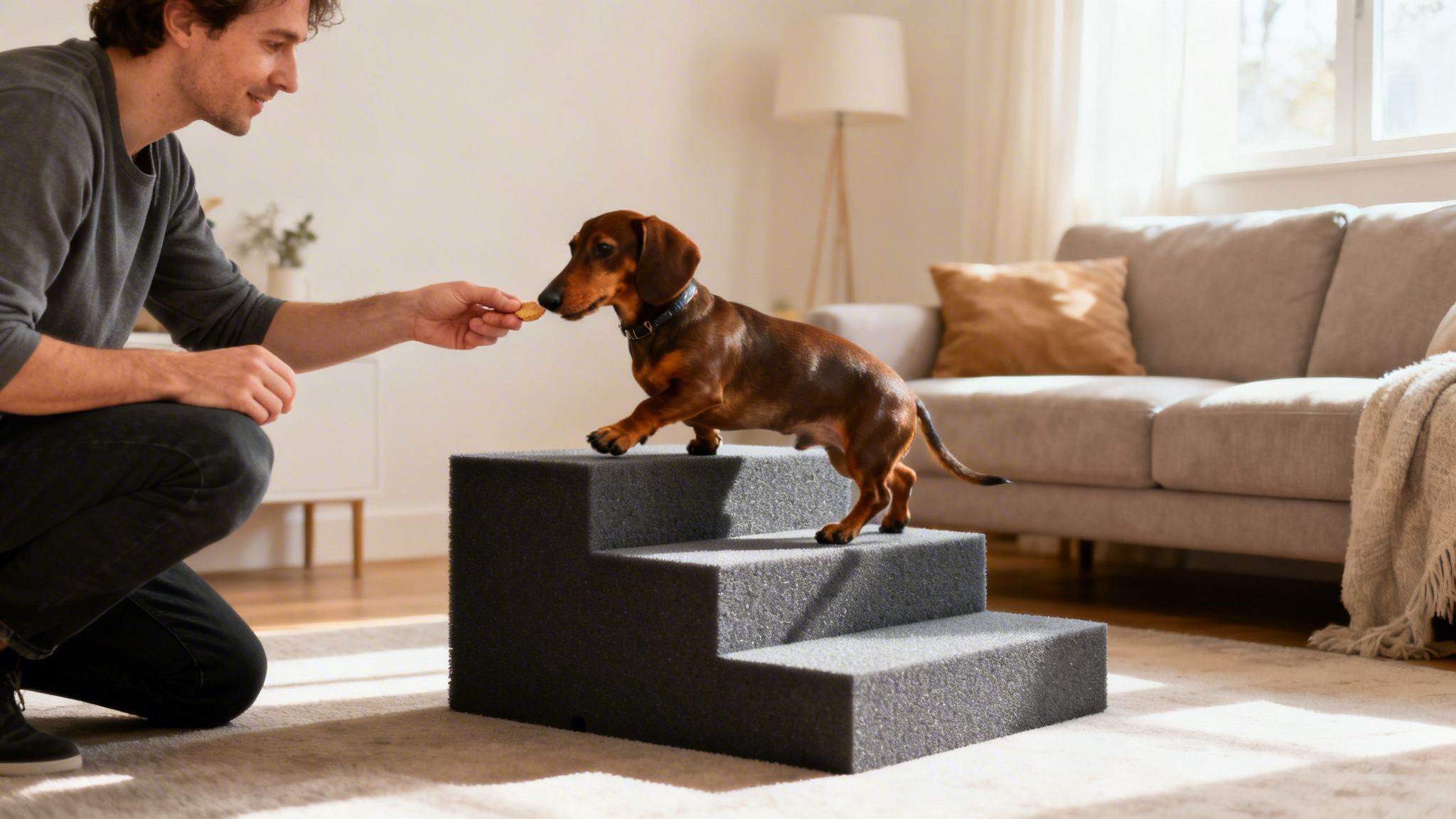
So you’ve brought home a new set of dog stairs to protect your buddy's joints, but instead of gratitude, you’re getting a suspicious side-eye. It happens. To a timid or older dog, this new piece of furniture can look strange, maybe even a little threatening. The secret isn't to force it; it's to earn their trust with patience and positive reinforcement, the same way we approach our work in our veteran-owned grooming studio.
Think of this as a mission to build confidence, not a race to the top. At Glomore Grooming, our disciplined process is all about creating a calm, positive experience for every dog that comes through our doors. You’ll want to adopt that exact same mindset here. By breaking it down into a few simple phases, you can turn that hesitation into confident climbing.
Phase 1: The Introduction
Before you even worry about getting them to climb, just let your dog get used to the stairs simply existing. Place them in the room near the couch or bed, but not pushed right up against it yet. Let your dog sniff and investigate on their own terms, without any pressure from you.
Scatter a few high-value treats (think tiny bits of cheese or chicken) on and around the base of the stairs. This simple trick starts building a positive association right away. When they get close or show any curiosity, reward them with a happy "Good boy!" and a gentle pat. Keep these first interactions short, sweet, and always positive.
Phase 2: Building Confidence, Step By Step
Once your dog seems comfortable just being near the new stairs, it’s time to encourage that first brave step. This is where your patience really shines, especially with anxious pets. If you're dealing with a particularly nervous dog, you might find some helpful advice in our guide on ways to calm an anxious dog.
- Lure to the First Step: Put a really good treat on the very first step. With an encouraging voice, praise them the second a paw touches that step to get their reward.
- Reward and Repeat: Let them grab the treat and step back down. Do this several times until they are confidently putting one or two paws on the bottom step without a second thought.
- Gradual Progression: When they've mastered the first step, place a treat on the second one. Lure them up one step at a time, celebrating each new level they reach.
- No Pushing or Forcing: Never physically place your dog on the stairs. This will only create fear and completely undermine the trust you're trying to build. The goal is for them to choose to use the stairs because they feel safe.
The most resilient bond with a dog is built on trust, not commands. By using positive reinforcement, you’re not just teaching them to use stairs; you’re teaching them that new experiences can be rewarding and safe when they’re with you.
This approach mirrors the premium standards we stick to. We’d never rush a nervous dog into a bath; we earn their trust first. Apply that same disciplined mindset here, and you'll see results.
Phase 3: Mastering The Full Ascent And Descent
Going up is often the easy part. The trip back down can feel much more intimidating for a dog, so be ready to spend a little extra time on this part of the training. Use the same luring technique with treats, placing them on each step to guide them down safely and slowly.
As their confidence grows, you can start using a verbal cue like “Up” or “Stairs” when they use them. This helps turn the action into a learned behavior. Before you know it, they’ll be trotting up and down on their own, enjoying their newfound independence. The demand for these mobility aids is skyrocketing, with the global dog stair market now valued at approximately $2 billion. It's a clear sign that owners are becoming more proactive about their pets’ long-term health.
For our neighbors in the El Paso area who want that same level of dedicated care for their pet's grooming, our affordable grooming promo, “Snip & Style Saturday,” is a perfect opportunity to see what our premium service is all about. We believe every part of your dog’s life, from mobility to grooming, deserves a touch of excellence.
Dog Ramps Vs Dog Stairs Which Is Right For Your Pet
So, you're looking at ramps and stairs, wondering which one is best for your dog. It's a common crossroads for pet owners, and the truth is, there’s no single right answer. The best choice comes down to your dog’s health, your home, and what they specifically need to stay mobile and safe.
Think of it this way: stairs are like a standard staircase, while a ramp is more like a smooth, accessible walkway. Both get your dog where they need to go, but one requires more physical work, while the other offers a gentler journey.
When a Ramp is the Right Call
A ramp's biggest strength is its single, uninterrupted incline. This smooth path is a lifesaver for dogs who find the up-and-down motion of climbing painful or difficult.
A ramp is almost always the better choice for these situations:
- Dogs with Serious Arthritis or Joint Pain: For a dog whose joints ache, lifting their legs for each step can be agonizing. A ramp provides one continuous, low-impact movement from the floor to the furniture.
- Long-Bodied Breeds: If you have a Dachshund, Corgi, or another "low rider," you know how fragile their backs can be. Ramps help keep their spine aligned, preventing the dangerous twisting and arching that stairs can cause.
- Post-Surgery Recovery: After any major operation, your vet will likely insist on a ramp. It's the safest way to prevent jarring motions that could disrupt stitches or slow down the healing process.
Ramps are also the clear winner for getting dogs in and out of vehicles. Their gradual slope is much easier and safer to navigate than trying to position a set of stairs next to a car door. For dogs with other health concerns, like vision loss, a ramp’s simple, straight path can be a huge confidence booster. We cover more ways to support visually impaired pets in our guide on blind dog accessories.
A ramp is all about providing the path of least resistance. For a dog in pain or recovering from an injury, that gentle, straight line is a lifeline to comfort and freedom.
When Dog Stairs Are the Better Fit
While ramps are essential for certain dogs, don't overlook stairs. For many households, they are the more practical and effective solution. Their biggest advantage is that they are incredibly space-efficient, which is a huge benefit if you're in a smaller home or apartment in the El Paso area.
Stairs really shine in these scenarios:
- Agile Dogs Needing a Boost: For a small but otherwise healthy and spry dog, stairs are perfect. They give them an easy way to get up and down from the couch or bed without the impact of jumping.
- Dogs with Good Mobility: If your dog is currently healthy but you’re thinking about the future, stairs are a fantastic preventative tool. Getting them used to stairs now can help protect their joints from the strain of jumping for years to come.
- Tight Spaces: A ramp needs a lot of floor space to achieve a safe, gradual incline. Stairs can provide access to the same height using a much smaller footprint.
A quick search for "dog stairs petco" will give you an idea of the sheer variety out there, but remember, it’s all about finding the right fit for your dog's needs. Stairs work wonders as long as your dog is healthy enough to manage the stepping motion without any pain.
Dog Stairs Vs Ramps At a Glance
Making the final call between stairs and a ramp can feel overwhelming, but breaking it down by key factors makes the decision much clearer. Use this quick comparison to see which option aligns best with your dog's needs and your home's layout.
| Factor | Dog Stairs | Dog Ramps |
|---|---|---|
| Best For | Agile small dogs, preventative care, healthy seniors | Dogs with arthritis, back problems, or post-surgery |
| Space | Compact, fits well in smaller rooms | Requires a larger footprint for a gentle slope |
| Motion | Requires individual leg lifting and stepping | Provides one smooth, continuous incline |
| Primary Use | Beds, couches, indoor furniture | Cars, decks, dogs with severe mobility issues |
Ultimately, taking a moment to honestly assess your dog's physical condition and the space you have will point you toward the right solution. Whether you land on a ramp or stairs, you're making a kind and thoughtful investment in your pet's long-term health and happiness—a core value we champion here at Glomore Grooming.
Beyond Big Box: Finding Quality and Value
So, where should you actually look for a good set of dog stairs? Your first instinct might be a quick search for "dog stairs petco" or a trip to the nearest big-box store. And while that's certainly convenient, it helps to think a bit more like a seasoned shopper. Large retailers are built for volume, but real quality and lasting value often hide in places that prioritize expertise over mass production.
It's about applying the same care to your shopping that you'd want from any premium pet service. You wouldn't want a rushed, one-size-fits-all approach for your dog's health, and the same principle applies to the gear you buy for them.
Why Independent and Specialized Stores Can Stand Out
There's no denying that chain stores like Petco and PetSmart are titans of the pet industry. The entire pet care market ballooned to $261 billion in 2022, and these two retailers command nearly 40% of the retail space and about half of all online pet product sales. You can read more about the pet retail market dynamics to get a sense of their massive footprint.
But that incredible scale can sometimes lead to a very generalized product selection. In contrast, independent pet boutiques and specialized online stores often offer a different experience:
- A Curated Selection: Smaller retailers usually hand-pick their inventory. They've already done some of the quality control for you, focusing on products made with better materials and sturdier construction.
- Real-World Expertise: The people running these shops are often true pet fanatics with a deep well of product knowledge. They can give you personalized advice based on your dog's specific size, age, and mobility challenges.
- Unique Finds: You're much more likely to discover innovative designs or specialty brands that simply aren't stocked on the shelves of a national chain.
Think of it this way: a big store has to carry something for everyone, while a smaller, specialized shop focuses on carrying the best something for a specific need.
Choosing a retailer that values quality over sheer quantity can make a huge difference. You're not just another sale; you're a pet owner looking for a genuine solution, and the best retailers recognize that.
Actionable Tips for Smart Shoppers
No matter where you decide to shop, you should hold the products to the same high standards we've been talking about. Whether you're browsing online or walking into a local store, here are a few practical tips to help you find the best value for your money.
- Read Reviews with a Critical Eye: Don't just look at the star rating. Dig into reviews that talk about how the stairs held up after six months or a year. Comments on long-term durability and stability are worth their weight in gold.
- Check the Return Policy: A company that’s confident in its product isn't afraid of returns. Look for a clear, fair, and straightforward return policy. It’s a good sign that they stand behind their quality.
- Prioritize Safety Features: Always circle back to the fundamentals. Does it have a non-slip surface? Is the base wide and stable? These are the features that define a superior, safe product.
Ultimately, picking the right stairs is a real investment in your dog’s long-term health and comfort. By seeking out businesses that have a clear commitment to quality, you’re not just buying an object—you’re contributing to a culture of excellence and care in the pet world.
Your Questions About Dog Stairs Answered
We get a lot of questions from dog owners trying to figure out the best way to help their furry friends get around. To help you feel confident in your choice, let's walk through some of the most common ones we hear at Glomore Grooming. Our goal is to share what we've learned so you can keep your pet happy and healthy, both in our studio and at home.
Are Foam Or Plastic Dog Stairs Better?
Honestly, the best material comes down to your specific dog. Soft, high-density foam stairs are a great choice for smaller or senior dogs. They’re much easier on aging joints and provide a gentle landing. That said, a big, boisterous dog might find them a bit wobbly.
On the other hand, stairs made from hard plastic or wood give larger breeds the solid, sturdy feel they need to feel secure. The best designs often blend these two ideas: a strong frame with carpeted, non-slip treads for the perfect mix of safety and comfort.
How Do I Know If The Steps Are The Right Size?
Getting the size right is everything—it's the key to making your dog feel safe. First off, the total height of the stairs needs to line up with the furniture. You want to create a seamless walkway, not a staircase that leaves them with one last awkward jump to the top.
Next, look at the individual steps themselves. The step height should be low enough for your dog to walk up comfortably, not climb. The tread depth is just as important; their entire paw should fit on the step. If their paws are hanging off the edge, they're never going to feel stable.
My Dog Is Scared Of The Stairs What Should I Do?
If your dog is hesitant, the two most powerful tools you have are patience and positive reinforcement. Never force your dog onto the stairs. Pushing them will only create fear and break their trust in you and the new object. Instead, make it a positive experience.
Start small. Use their favorite high-value treats to lure them toward the very first step, praising them enthusiastically for just sniffing or touching it. Keep your training sessions short and upbeat. This gentle, consistent approach is the best way to build their confidence and help them see the stairs as a helpful tool, not something to be afraid of.
As a veteran-owned grooming business, we know that trust is built through a steady, compassionate process. Whether we're introducing clippers or you're introducing stairs, a foundation of positive reinforcement makes all the difference.
Why Choose Independent Grooming Over Big Chains?
Choosing an independent groomer like Glomore Grooming is about choosing a personal partner in your pet’s care. Unlike big-box chains like Petco or PetSmart, we offer a level of one-on-one attention, a careful workflow, and premium pet grooming that just isn't possible on a massive scale. We get to know our clients and their pets by name.
When you bring your dog to our El Paso dog grooming studio, you're not just getting a service; you're supporting a local business that's deeply committed to quality. You can see our high standards for yourself with our affordable grooming promo, “Snip & Style Saturday.”
Ready to give your pet the one-on-one attention and premium care they deserve? Contact Glo More Grooming today to book your next appointment or to reserve a slot for our next Snip & Style Saturday.