
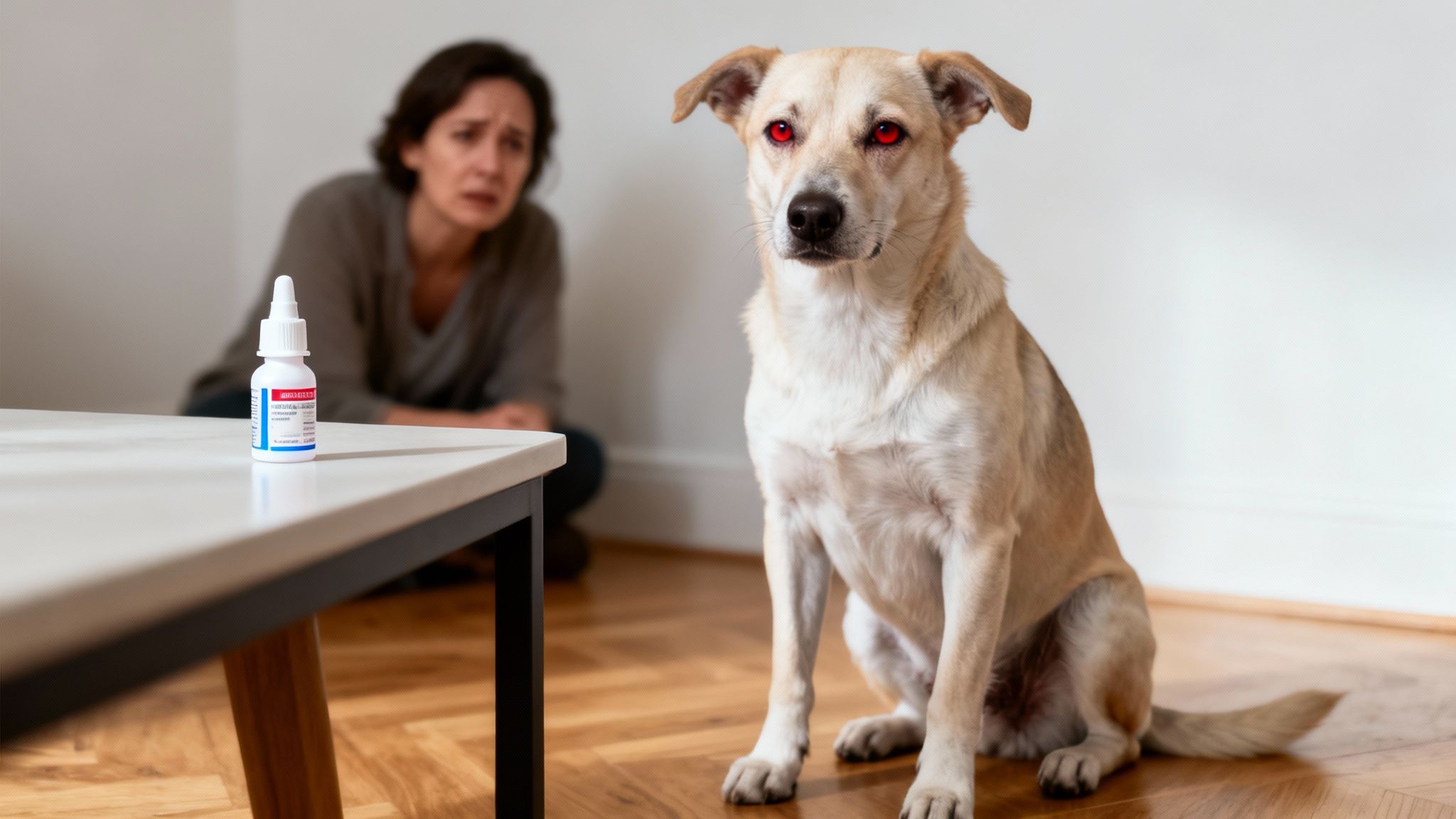
Let's get straight to it: No, you should never, ever use Visine on your dog. It might seem like an easy way to clear up red, irritated eyes, but what’s a harmless fix for us can be a full-blown medical emergency for our dogs.
Why Are Human Eye Drops So Dangerous for Dogs?
When your dog's eyes are red, that's a signal that something else is going on—it’s a symptom, not the root cause. Grabbing a bottle of Visine is a common mistake because we don’t realize that a dog’s system is wired completely differently than ours.
The real danger comes from a class of ingredients called vasoconstrictors. The one you’ll find in many redness-relief drops is tetrahydrozoline. In humans, this chemical works by shrinking the tiny blood vessels in our eyes, which makes the redness disappear.
But when a dog is exposed to it—either by licking a dropped bottle or having the drops put in their eyes—the chemical doesn't just stay local. It gets absorbed into their bloodstream and sets off a chain reaction throughout their entire body. Even a tiny amount can trigger a severe toxic response, leading to a frightening drop in heart rate, dangerously low blood pressure, and a sharp fall in body temperature.
The Professional Groomer's Perspective
At Glomore Grooming, our entire process is built around one core principle: safety first. As a proud, independent, veteran-owned grooming studio here in El Paso, we run a tight ship. Our disciplined workflow and premium grooming standards mean we would never dream of using a human product on your pet, and we strongly urge you not to at home, either. We’re in the business of promoting your pet’s long-term health, not just masking a symptom with a quick (and dangerous) fix.
Veterinarians are crystal clear on this: human eye drops for redness are not approved for dogs. The active ingredients can make existing eye problems much worse or, as we've seen, cause systemic poisoning. The only human product ever considered safe for a quick flush of debris is a basic isotonic saline solution. For anything else, a vet needs to make the call.
If you want to learn more about keeping your pets safe, the Pet Poison Helpline is an invaluable resource. This is exactly why our El Paso dog grooming services stick exclusively to professional-grade, pet-safe products. No exceptions.
At Glomore Grooming, we're all about proactive, professional care. Our mission is to deliver a safe, premium pet grooming experience that the big-box chains like PetSmart or Petco just can't replicate. We treat your pet with the honor and resilience they deserve.
To make the distinction clear, here’s a quick breakdown of why you should always stick with vet-approved care.
Human Eye Drops vs Safe Canine Eye Care Quick Guide
| Concern | Visine (Human Eye Drops) | Veterinarian-Approved Care |
|---|---|---|
| Active Ingredients | Contains vasoconstrictors like tetrahydrozoline, which are highly toxic to dogs. | Uses ingredients specifically formulated and tested for canine safety, like sterile saline or vet-prescribed medications. |
| Risk of Toxicity | High. Even a few drops can cause a systemic toxic reaction if absorbed or ingested. | Extremely low to non-existent when used as directed by a veterinarian. |
| Treating the Cause | Only masks the symptom of redness and can worsen the underlying condition. | Addresses the root cause, whether it's an infection, allergy, injury, or dry eye. |
| Overall Safety | Considered a poison for dogs and can lead to a medical emergency. | The only safe and effective approach to treating your dog's eye issues. |
As you can see, the choice is simple. Reaching for that bottle of Visine just isn't worth the risk to your best friend's health.
Why Visine Is So Dangerous for Dogs
To really get why that little bottle of Visine is a major red flag for your dog, we have to look past the promise of "getting the red out" and focus on the powerful chemical doing the work. Here at Glomore Grooming, our whole philosophy is built on disciplined, premium pet grooming standards, and that includes helping our El Paso clients understand what’s happening inside their pet’s body.
The culprit is a class of chemicals called imidazolines. In Visine and similar products, the specific ingredient is usually tetrahydrozoline. For us humans, this chemical is a vasoconstrictor. It works by shrinking the tiny, inflamed blood vessels on the surface of our eyes, which is what makes them look less red. It’s a localized, temporary fix.
But a dog’s body doesn't process it that way at all. When a dog gets exposed to tetrahydrozoline—whether a drop goes in their eye, they lick a spill, or they chew on the bottle—it doesn't just stay local. Their system absorbs it, and it goes body-wide. What's a minor fix for us becomes a full-blown systemic emergency for them.
What's Happening Inside Their Body?
Here’s a simple way to think about it: in a human eye, using Visine is like flipping a single light switch to turn off one red lamp. In a dog, that same switch is wired directly to the main circuit breaker for the whole house, shutting down critical systems without warning.
This body-wide absorption triggers a dangerous and rapid chain reaction. Veterinary toxicology reports are clear: when a dog ingests an imidazoline decongestant, the effects are severe and incredibly fast. Signs of poisoning can show up in as little as 15 to 60 minutes and can last for up to 36 hours if you don't get immediate veterinary help. The Pet Poison Helpline offers a detailed guide that dives deeper into these urgent timelines.
This is exactly why our veteran-owned grooming studio in El Paso is so strict about its disciplined workflow and use of only professional, pet-specific products. There are no shortcuts when an animal's life is on the line.
Key Symptoms of Visine Poisoning in Dogs
Knowing what to look for is everything. An accidental exposure is a true medical emergency, and spotting these signs means you can act fast.
- Severe Lethargy: Your dog might seem incredibly sleepy, weak, or just completely out of it.
- Bradycardia (Slow Heart Rate): The poison can cause a life-threatening drop in their heart rate.
- Hypotension (Low Blood Pressure): A dangerous dip in blood pressure can lead to collapse.
- Vomiting: Often the body's first line of defense to get the poison out.
- Hypothermia (Low Body Temperature): They might feel cold and start shivering as their body temperature plummets.
At Glomore Grooming, we see education as the cornerstone of great pet ownership. Understanding risks like these makes it crystal clear why premium grooming standards—which means absolutely no human products—are essential for your pet's safety.
Unlike big-box chains like PetSmart or Petco that focus on volume, our independent, one-on-one sessions are all about your dog’s health. We're committed to providing the kind of meticulous, informed care that reflects our long-term vision for the El Paso pet community. If you ever have a question about product safety, we’re always here to talk it through.
Emergency Steps if Your Dog Is Exposed to Visine
If you discover your dog got into a bottle of Visine, whether they drank it or got it in their eyes, the key is to act fast—but don't panic. At Glomore Grooming, our veteran-owned discipline has taught us the value of having a clear plan for everything, and this is a situation where a calm, immediate response can make all the difference.
First things first: get the Visine bottle and anything it may have spilled on away from your dog immediately. It's also crucial that you do not try to make your dog vomit unless a vet or poison control expert specifically tells you to. Forcing it can sometimes do more harm than good.
Your Immediate Action Plan
Once the Visine is out of reach, it's time to get professional help. The ingredients in these drops work fast, so you need to move faster.
- Call for Help Immediately: Don't wait for symptoms to show up. Phone your veterinarian, a local El Paso animal emergency clinic, or the Pet Poison Helpline at (855) 764-7661 right away.
- Gather Key Information: When you call, have the bottle handy. You'll need to provide the exact product name (like Visine Red Eye Comfort), the list of active ingredients, your dog’s approximate weight, and your best guess as to how much they ingested or were exposed to.
- Follow Professional Orders: The expert on the other end of the line will give you precise instructions. In almost every case, this will involve getting your dog to a veterinary clinic for immediate care.
This flowchart breaks down exactly why reaching for Visine is a bad idea and why calling the vet is always the right move for red eyes.
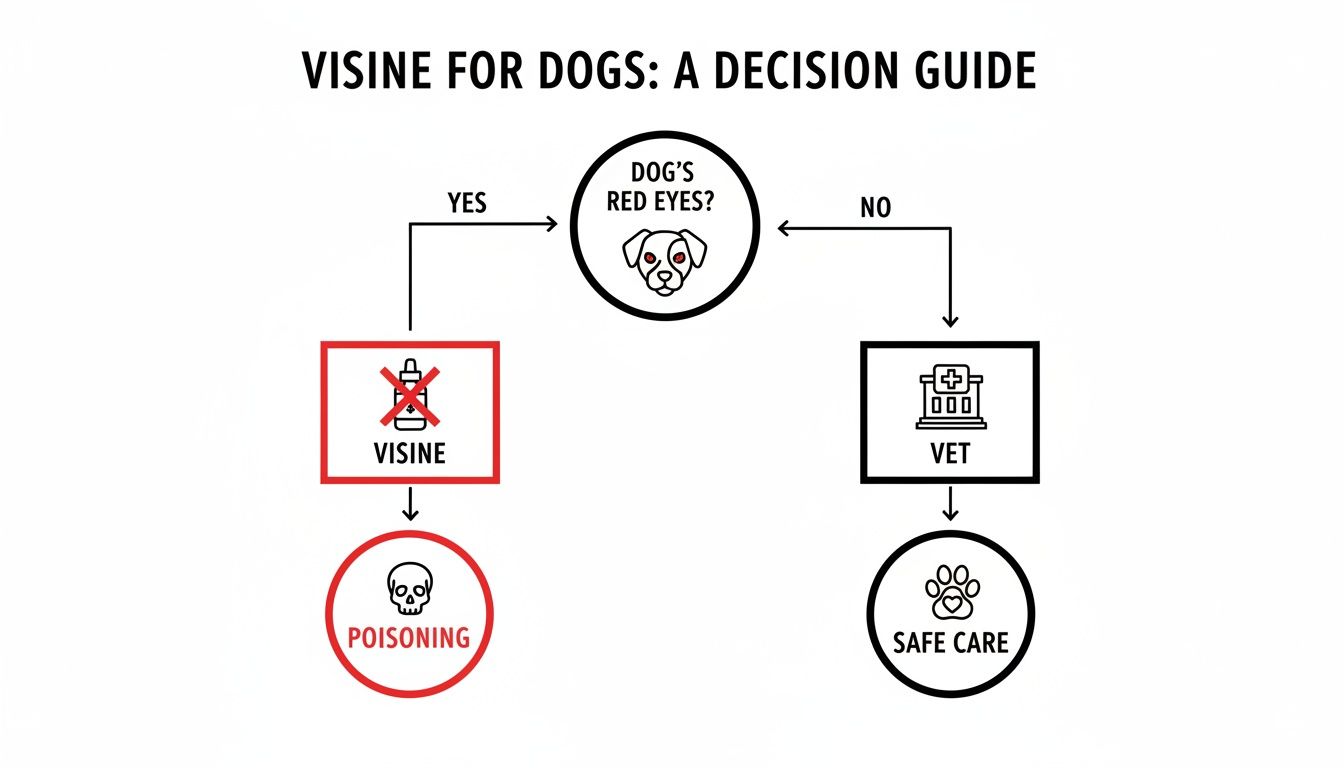
As you can see, trying to treat your dog yourself with human products can lead straight to poisoning. The only safe path is through professional veterinary care. For more tips on keeping your pet safe, feel free to check out our other comprehensive dog safety topics.
What to Expect at the Vet
When you get to the clinic, the veterinary team will jump into action to stabilize your dog. Since there's no direct antidote, treatment is all about supportive care—managing the symptoms until the toxins are out of your dog's system.
This usually involves IV fluids to maintain blood pressure and hydration, medications to bring their heart rate back up to a safe level, and careful monitoring of all their vital signs. Your dog will be kept under close watch until they're clearly out of the woods.
At Glomore Grooming, our promise is to deliver premium pet grooming where your pet’s health and safety always come first. Knowing these emergency steps helps you protect your dog with the same level of care and preparedness we bring to our studio every single day.
Finding the Real Cause of Your Dog's Red Eyes
When you notice your dog's eyes are red and irritated, your first instinct is probably to find a quick fix. But reaching for a human product like Visine is like putting a piece of tape over a warning light on your car's dashboard. Sure, it hides the blinking light, but it does absolutely nothing to fix the engine trouble.
A dog's red eyes are just a symptom, not the actual problem.
At Glomore Grooming, our veteran-owned discipline shapes how we approach everything. We don’t believe in shortcuts; we believe in identifying the root cause with pride and resilience. This mindset is absolutely critical in pet care, especially when you're dealing with something as precious as your dog's sight. Ignoring what’s really going on can escalate a minor irritation into a serious, vision-threatening condition.
The redness is your dog's body trying to tell you something is wrong. The first step toward a safe and effective solution is learning to listen.
Common Culprits Behind Canine Red Eyes
So, what could be causing the redness? It could be anything from a simple speck of dust to a more complex medical issue. As a premier El Paso dog grooming provider, we see firsthand how local environmental factors, like our notorious dust and seasonal allergens, can impact pets in our area.
Here are some of the most common things a veterinarian will look for:
- Allergies: Just like us, dogs can get red, itchy eyes from allergic reactions to pollen, dust, mold, and even certain food ingredients.
- Irritants: Our dry El Paso climate keeps plenty of dust and debris in the air. A tiny grain of sand or a bit of grass under the eyelid can cause a surprising amount of irritation.
- Corneal Scratches or Ulcers: A playful swat from another dog or a run-in with a sharp branch can easily scratch the surface of the eye, causing pain and redness.
- Conjunctivitis ("Pink Eye"): This is an inflammation of the tissue lining the eye. It can be caused by bacterial or viral infections and is often contagious.
True resilience isn't about finding the quickest fix; it's about having the discipline to address the problem correctly. This philosophy is at the heart of our premium pet grooming services—we focus on your pet’s long-term health, not temporary solutions.
When Red Eyes Signal a Deeper Problem
While the issues above are fairly common, red eyes can sometimes be a red flag for a much more serious condition. These situations require immediate veterinary attention, making a professional diagnosis completely non-negotiable.
More severe causes include:
- Glaucoma: This is a dangerous increase in pressure inside the eye. It’s extremely painful and can lead to blindness in a very short amount of time.
- Dry Eye (Keratoconjunctivitis Sicca): The medical term for when a dog’s eyes don't produce enough tears. This causes chronic pain, irritation, and can eventually damage vision.
- Uveitis: A painful inflammation inside the eye, which is often a symptom of a larger, body-wide disease.
- Structural Abnormalities: Conditions like "cherry eye" (where a gland in the eyelid pops out) or entropion (where the eyelids roll inward, causing lashes to rub the cornea) lead to constant irritation.
In the end, only a veterinarian has the tools and expertise to tell the difference between a minor irritation and a sight-threatening emergency. This is where Glomore Grooming’s commitment to your pet’s total well-being sets us apart from big-box chains like Petco or PetSmart. We will always refer you to a vet for medical issues, because your pet's health comes first. Ready to experience our disciplined, caring approach? Book your pet's next appointment with us today.
What Can I Use Instead? Safe and Veterinarian-Approved Alternatives for Your Dog's Eyes
Now that we’ve established why reaching for your own medicine cabinet is a bad idea, let's talk about the right way to handle your dog's eye care. At Glomore Grooming, our veteran-owned roots mean we operate with precision and discipline. Protecting your dog’s vision isn't something we guess at—we follow proven, safe protocols every single time.
Sticking to veterinarian-approved solutions is the only way to safeguard your dog’s health.
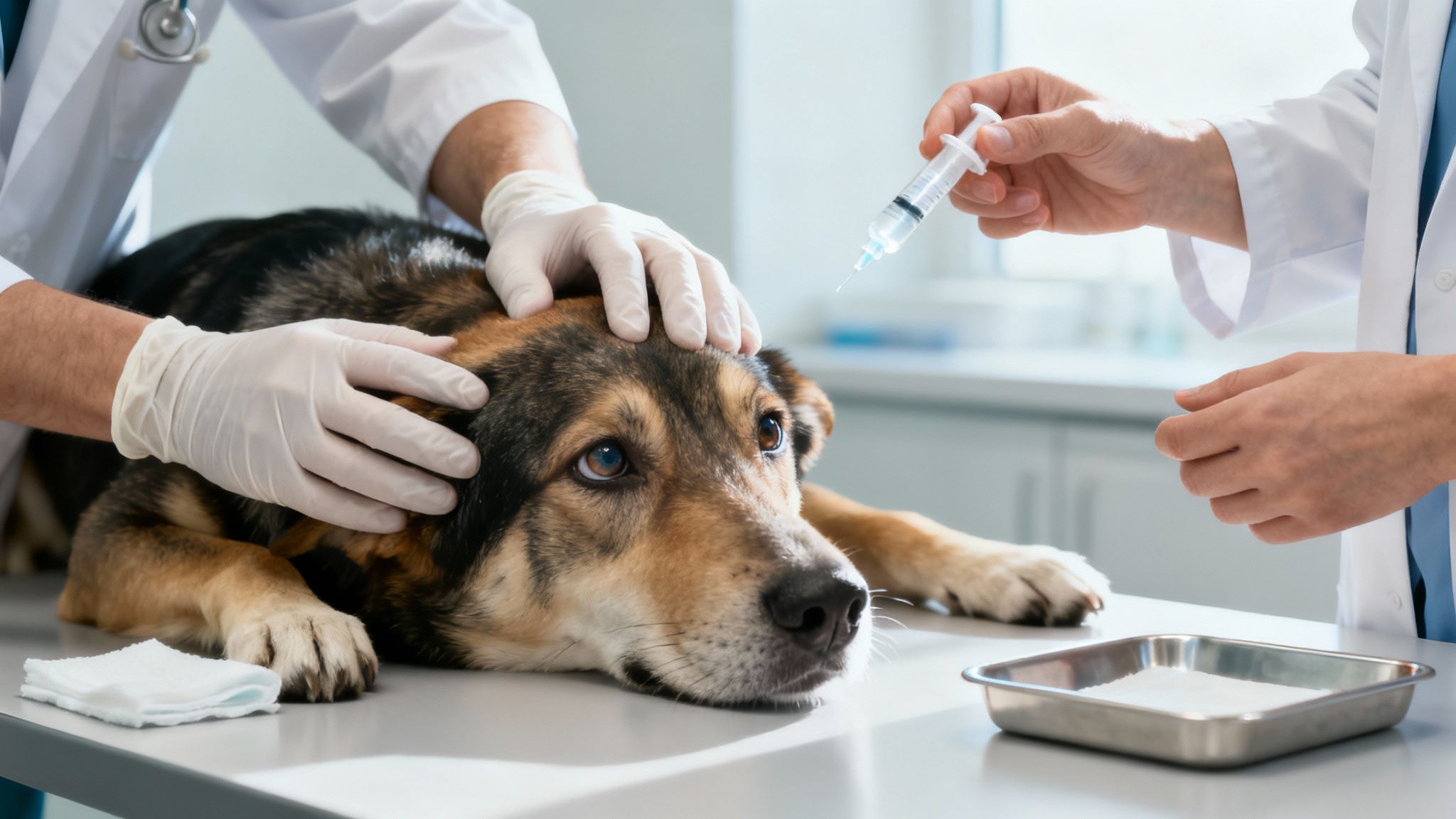
This proactive, by-the-book mindset is what separates our premium pet grooming service from the high-volume approach you might see at big-box chains. It’s about doing things correctly and safely, without compromise.
The Only Safe Over-the-Counter Flush
When it comes to your dog's eyes, the simplest solution is always the safest. The only human product that gets a green light from vets is a sterile saline eye wash. But let’s be clear: this is not a treatment. It’s a flushing tool, plain and simple.
Think of it like rinsing a dusty dish under the faucet before you actually wash it. A good sterile saline solution can gently wash away minor irritants—a bit of dust, a grass seed, or some pollen that’s found its way onto the surface of the eye. Before you buy, check the label. It should contain only sodium chloride and purified water, with zero added preservatives or other chemicals.
Here's an actionable tip for proper eye flushing:
- Gently hold your dog’s head steady, tilting it back just a bit.
- With one hand, carefully pull the lower eyelid down to create a little pocket.
- Squeeze a gentle but steady stream of the saline into the eye, letting the liquid flush everything out.
Remember, this is a first-aid step for minor stuff only. If the redness, squinting, or irritation continues, your next stop is the vet’s office. No exceptions.
When You Absolutely Need Your Vet
For anything beyond a speck of dust, your veterinarian is your command center. They have the tools and expertise to figure out what's really going on behind that redness and prescribe the right treatment.
Depending on the diagnosis, this could include:
- Medicated Eye Drops: These are targeted treatments, like antibiotics for an infection (think canine pink eye), anti-inflammatory drops for an allergic reaction, or even specialized medications for serious conditions like glaucoma.
- Lubricating Gels or Ointments: For chronic issues like canine dry eye (KCS), your vet will prescribe specific artificial tears or ointments to keep the eye properly hydrated and comfortable.
Applying these treatments requires a calm and gentle hand. Just pull down the lower eyelid and apply the prescribed number of drops or a small "ribbon" of ointment. The most important rule? Never let the applicator tip touch the eye itself to avoid contamination or injury.
To make things clearer, here’s a quick guide to some of the safe, vet-approved products you might encounter.
Veterinarian-Approved Canine Eye Care Options
| Product Type | Primary Use | When to Use | Important Note |
|---|---|---|---|
| Sterile Saline Solution | Flushing out debris | To remove minor irritants like dust, pollen, or sand immediately after exposure. | A temporary, first-aid measure only. Contains only sodium chloride and water. |
| Veterinary Eye Wipes | Routine cleaning | For daily or weekly removal of gunk, tear stains, and buildup around the eyes. | Great for preventative grooming, especially for breeds prone to staining. |
| Artificial Tears (Vet-Formulated) | Lubricating dry eyes | As prescribed by a vet for conditions like Keratoconjunctivitis Sicca (KCS) or chronic dryness. | Do not use human lubricating drops; use only products made for dogs. |
| Antibiotic Eye Drops/Ointment | Treating bacterial infections | Only when prescribed by a vet to treat diagnosed infections like bacterial conjunctivitis. | Requires a veterinary diagnosis. Misuse can cause harm. |
| Steroid Eye Drops | Reducing inflammation | Only when prescribed by a vet for severe allergies or non-infectious inflammatory conditions. | Can make some conditions (like corneal ulcers) much worse if used improperly. |
Ultimately, choosing the right product is about getting the right diagnosis first. Never play a guessing game with your dog's vision.
Proactive Grooming Makes a Difference
Preventative care is a core part of our disciplined grooming process. It's amazing how much simple grooming habits can do to prevent eye irritation from ever starting. For example, our Snip & Style Saturday is a great affordable grooming promo that focuses on essential upkeep like face and eye-area trims.
Keeping the fur around your dog’s eyes neatly trimmed is one of the best things you can do. This stops stray hairs from poking, scratching, or constantly irritating the cornea. For daily upkeep, a pet-safe eye wipe can gently clean away tear stains and crusty buildup, which is especially helpful for breeds like Poodles, Shih Tzus, and Maltese.
If you’re interested in building these habits at home, our guide on how to groom a dog at home provides more actionable insights for creating a safe and effective routine.
Preventing Accidental Poisoning and Eye Issues
When it comes to your dog's eyes, the old saying holds true: an ounce of prevention is worth a pound of cure. The best way to handle an eye-related emergency is to stop it from ever happening in the first place. This means being smart about how you store things at home and staying on top of a solid grooming routine.
Believe it or not, accidental poisoning from human eye drops is a real and surprisingly common problem. Veterinary toxicologists see these cases all the time. The small, often soft plastic bottles of products like Visine can seem like a perfect chew toy to a curious dog, and they're frequently left on low nightstands or bathroom counters—right at nose level. You can learn more about everyday dangers from the ASPCA's detailed pet poison resources.
Proactive Steps for Home and Grooming
Your first line of defense is simply securing your home. Treat all human medications, including seemingly harmless eye drops, as if they are poison. That means storing them safely inside a closed medicine cabinet or a high-up drawer where your dog absolutely can't get to them.
Beyond that, a consistent grooming schedule is one of the best tools you have for spotting eye trouble before it gets serious. This is a core part of our philosophy at our El Paso dog grooming studio, and it’s something every dog owner can do at home.
-
Daily Eye Checks: Make it a habit to glance at your dog’s eyes every day. Are they clear and bright? Or do you see any new redness, cloudiness, or funky discharge? Catching it early makes all the difference. This is a key part of responsible seasonal care.
-
Keep Fur Trimmed: If you have a long-haired dog, keeping the fur around their eyes trimmed short is non-negotiable. This simple snip prevents hair from poking and scratching the cornea, which can lead to painful irritation or even infections. Our monthly promos often feature trims specifically for this purpose.
-
Gentle Cleaning: A soft, damp cloth or a wipe made specifically for dogs is perfect for cleaning away gunk and tear stains from the corners of the eyes. This quick wipe-down helps stop bacteria from building up.
At Glomore Grooming, our premium pet grooming service is about more than just a stylish cut. It’s about building those fundamental health habits that contribute to your pet's overall well-being for years to come.
Ready to get your dog on a routine that puts their health and safety first? Book an appointment with us today and see how our disciplined, expert care makes a difference.
Your Top Dog Eye Care Questions Answered
Can I really use human saline solution on my dog's eyes?
Yes, but you have to be incredibly careful about which one you grab. A simple, sterile saline solution—the kind that contains only sodium chloride and purified water—is generally safe for a quick, gentle flush to get a speck of dust or dirt out.
Think of it as a simple rinse, not a treatment. Never, ever reach for contact lens solution. Those contain preservatives and other chemicals that are far too harsh for a dog's sensitive eyes. If you're dealing with anything more than a bit of dust, like ongoing redness or signs of an infection, saline isn't the answer—a vet visit is.
How do I know if my dog's red eyes are a real emergency?
You have to look past just the redness and observe your dog's behavior. Is your dog squinting hard, like they can barely keep their eye open? Are they pawing desperately at their face or suddenly acting withdrawn and in pain? These are huge red flags.
Any visible injury to the eyeball itself, a sudden cloudy appearance, or any thick, colored discharge (like yellow or green goo) means you need to get to an emergency vet immediately. Don't "wait and see" with eyes; their vision could be on the line.
What's the safest way to clean my dog's eyes at home?
For routine cleaning, simple is always best. A soft washcloth dampened with warm water or a gentle, pet-specific eye wipe is all you need.
Just carefully wipe away any "eye boogers" or tear stains from the corners. The goal is just to keep the area clean and prevent buildup, which can lead to irritation or skin infections over time. This is a great daily routine to support your dog’s eye health.
At Glomore Grooming, our veteran-owned discipline means we never cut corners on safety, especially when it comes to El Paso dog grooming. We exclusively use professional-grade, pet-safe products to protect your dog’s eyes, skin, and overall health, standing apart with our pride, resilience, and long-term vision for pet care in our community. Ready for a premium pet grooming experience built on precision and trust? Contact Glomore Grooming to reserve a slot in our next Snip & Style Saturday promo or book your appointment online today.