
Embarking on the journey to bring a new pet into your home is a significant mission, one built on commitment, loyalty, and the promise of unconditional companionship. For first-time owners in El Paso, choosing the right animal is crucial for establishing a successful, lifelong bond. This guide is your strategic briefing, designed to equip you with the actionable intelligence needed to select from the best pets for beginners. We will move beyond generic advice, offering a disciplined look at what it truly takes to care for each animal, from their specific environmental and dietary needs to their unique grooming requirements.
This isn't just about picking a cute companion; it's about understanding the responsibility and rewards that come with ownership. Here, we honor the G.L.O. principles of Greatness, Loyalty, and Ownership, preparing you to build a resilient, fulfilling relationship. As a veteran-owned business, Glomore Grooming understands that precision and preparation are key to any successful operation. That’s why we emphasize meticulous, premium grooming standards and a disciplined workflow in everything we do, setting us apart from the rushed, assembly-line approach of chains like PetSmart or Petco. Our pride and resilience are channeled into every service.
Our guide provides a comprehensive overview of ten excellent first pets, detailing the time, financial, and emotional investment each requires. We will equip you with practical checklists and actionable insights to avoid common pitfalls. For our El Paso community, this means not only finding the perfect pet but also knowing you have a local, premium grooming partner ready to support you. Let’s find the companion that perfectly fits your lifestyle and prepare you for the rewarding mission of pet ownership.
1. Goldfish
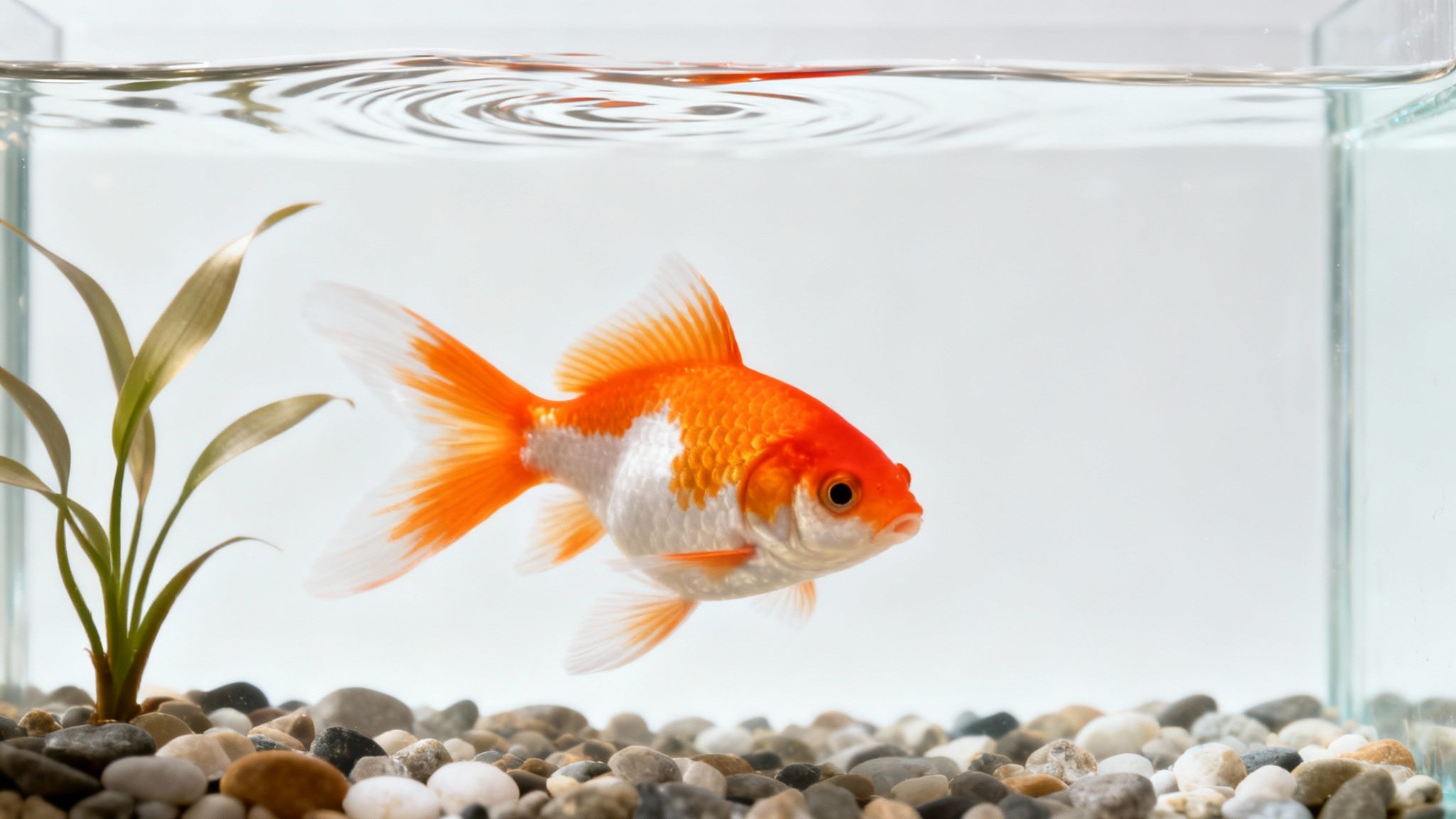
Often the first pet many of us ever have, the goldfish is a classic choice for a reason. These hardy freshwater fish are relatively forgiving of minor care mistakes, making them one of the best pets for beginners. While the image of a single goldfish in a small bowl is common, proper care unlocks a surprisingly long lifespan of 10-20 years and reveals a creature with more personality than you might expect.
Why Goldfish Make Great Starter Pets
Goldfish offer a low-stakes entry into the responsibilities of pet ownership. Their daily needs are simple, teaching routine and observation skills without the intensive time commitment of a dog or cat. They are also relatively inexpensive to acquire and set up, allowing you to learn the fundamentals of aquatic care without a significant financial investment.
Goldfish Care Checklist
Setting up a goldfish for a long, healthy life is straightforward. Forget the tiny bowl and start with a proper tank to ensure your new friend thrives.
- Tank Size: A 10-gallon tank is a good minimum starting point for a single common goldfish. Fancy varieties like Ryukins or Fantails may require 20 gallons or more.
- Filtration: Even small tanks need a basic filter. This is non-negotiable for maintaining water quality and removing waste.
- Water Changes: Perform a 25% water change weekly to keep ammonia and nitrate levels in check.
- Feeding: Feed small amounts once a day. Overfeeding is a common beginner mistake that pollutes the water and can harm the fish.
- Temperature: Maintain a stable water temperature between 65-72°F. While they don't always need a heater in El Paso's climate, monitoring for drastic temperature swings is key.
Key Takeaway: The single most important factor for goldfish health is a clean, stable environment. A properly sized, filtered tank is the foundation of responsible goldfish ownership.
While we specialize in expert dog grooming, understanding the basics of all pet care is part of our philosophy. For more foundational knowledge, you can explore detailed guides on our pet care basics section.
2. Betta Fish
Known for their jewel-toned colors and dramatic fins, Betta fish (or Siamese Fighting Fish) are captivating aquatic pets. These intelligent, interactive fish pack a lot of personality into a small package, often recognizing their owners and reacting to their presence. Their manageable size and hardiness make them excellent pets for beginners looking for an engaging yet low-maintenance companion.
Why Betta Fish Make Great Starter Pets
Betta fish offer a fantastic introduction to the world of fishkeeping without requiring a massive, complex setup. Their care teaches the importance of environmental stability and routine feeding on a small scale. Unlike more reclusive fish, bettas are often curious and engaging, providing a rewarding interactive experience for new pet owners. Their relatively low initial cost also makes them an accessible choice.
Betta Fish Care Checklist
Proper care helps your betta live a full 3-5 years. Ditching the tiny cup for a heated, filtered environment is the key to seeing their vibrant personality shine.
- Tank Size: A minimum of a 5-gallon tank is crucial for a single betta to have adequate swimming space and stable water parameters.
- Heater: Bettas are tropical fish and require a consistent water temperature between 75-80°F. A reliable aquarium heater is essential.
- Filtration: A gentle, low-flow filter is needed to keep the water clean without creating a current that is too strong for their long fins.
- Water Changes: Perform a 25-50% water change weekly using a water conditioner to remove chlorine and chloramine.
- Feeding: Feed a high-quality betta pellet or flake once daily, providing only what they can consume in two minutes to prevent overfeeding.
- Enrichment: Provide silk or live plants and small caves for hiding and exploration. Avoid plastic plants with sharp edges that can tear delicate fins.
Key Takeaway: The two most critical factors for a healthy betta are a heated tank and clean water. Maintaining a stable, warm environment is non-negotiable for these tropical fish.
While we focus on canine styling, the principles of a clean, safe, and stable environment are universal to responsible pet care. For more tips on creating a healthy home for any pet, check out our pet care basics section.
3. Guinea Pig
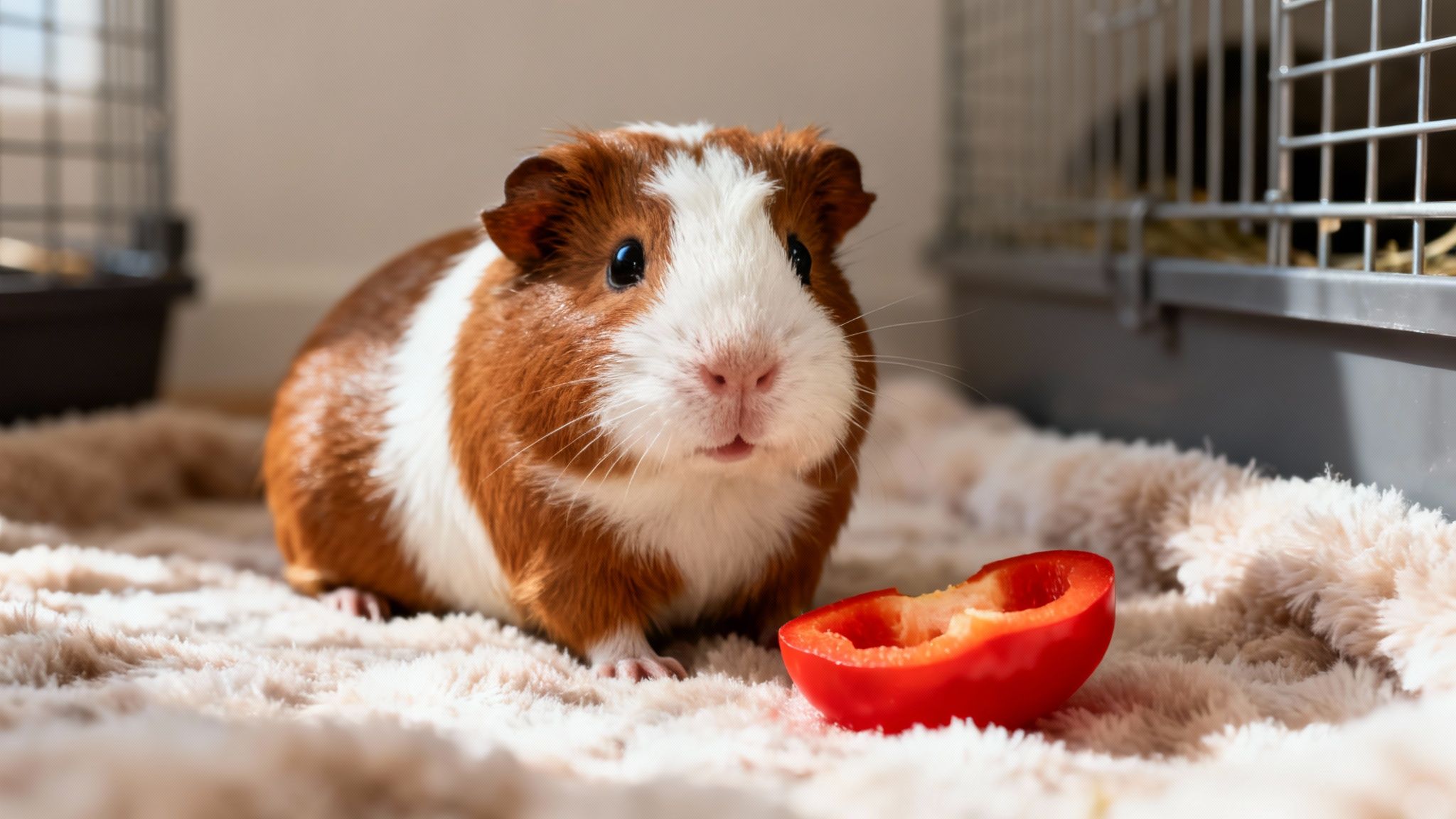
For those seeking a small mammal with a big personality, the guinea pig is a delightful choice. These gentle, social rodents are diurnal (active during the day), which means their schedule aligns perfectly with most families. Unlike smaller rodents, they are robust, enjoy being handled, and communicate with an endearing array of squeaks, purrs, and "wheeks," making them one of the most interactive and rewarding pets for beginners.
Why Guinea Pigs Make Great Starter Pets
Guinea pigs offer a hands-on pet experience without the high-energy demands of a puppy. They teach responsibility through daily feeding and cleaning routines, and their sociable nature helps children learn about gentle handling and animal communication. Their 5-7 year lifespan makes them a significant but not overwhelming long-term commitment for a first-time owner.
Guinea Pig Care Checklist
Proper care ensures your guinea pig, or "cavy," lives a happy, healthy life. Their needs are specific but easy to manage once you establish a routine.
- Housing: Provide a large, flat-bottomed cage. A minimum of 7.5 square feet is essential for a single pig, but they thrive in pairs or groups, so plan for more space.
- Social Needs: Guinea pigs are highly social. It is strongly recommended to keep them in same-sex pairs or small groups to prevent loneliness and stress.
- Diet: Unlimited access to high-quality timothy hay is crucial for their dental and digestive health. Supplement with guinea pig pellets and a daily serving of fresh vegetables rich in Vitamin C, like bell peppers.
- Health: Vitamin C is a non-negotiable part of their diet as they cannot produce it themselves. Lack of it can lead to scurvy.
- Grooming: Long-haired breeds require regular brushing to prevent matting. All guinea pigs need their nails trimmed every few weeks, a precise task our groomers perform with the same discipline and care we use on our canine clients.
Key Takeaway: The social and dietary needs of a guinea pig are paramount. Always house them with a companion and provide a constant supply of timothy hay and a daily source of Vitamin C.
Understanding the specific needs of every pet is central to our veteran-owned philosophy. To explore more foundational knowledge, you can review our collection of pet care tips.
4. Leopard Gecko
For those interested in the world of reptiles, the leopard gecko is often the perfect starting point. These small, docile lizards are known for their calm temperaments and manageable care needs, making them one of the most recommended reptilian pets for beginners. With their charming "smiles" and a lifespan of 10-20 years, they offer a unique and engaging pet experience without the complexity of many other exotic animals.
Why Leopard Geckos Make Great Starter Pets
Leopard geckos provide a fantastic introduction to reptile husbandry. Their needs are well-documented and relatively simple, teaching owners about habitat management, temperature gradients, and live feeding on a small scale. Unlike many reptiles, they do not require extensive or highly specialized habitats, and their gentle nature makes them easy to handle once acclimated.
Leopard Gecko Care Checklist
Creating the right environment is crucial for a leopard gecko's health. Their desert origins dictate specific needs for temperature and shelter that are easy to replicate at home.
- Tank Size: A 20-gallon long tank is the recommended minimum for a single adult. More space is always better to allow for distinct warm and cool zones.
- Heating: An under-tank heating pad regulated by a thermostat is essential. The warm side of the enclosure should maintain a ground temperature of 88-92°F.
- Hides: Provide at least three hides: one on the warm side, one on the cool side, and a "humid hide" with moist substrate to aid in shedding.
- Feeding: Adults should be fed appropriately sized live insects (like crickets, dubia roaches, or mealworms) 2-3 times per week.
- Supplementation: Dust insects with a calcium powder (with D3) at most feedings and a multivitamin supplement once a week to prevent metabolic bone disease.
Key Takeaway: The most critical aspect of leopard gecko care is providing a proper temperature gradient. This allows them to self-regulate their body temperature, which is vital for digestion and overall health.
While we are experts in canine coat care, we believe that understanding the fundamentals of all pet wellness is important. For more insights into creating healthy routines, explore our pet care basics section.
5. Corn Snake
For those interested in the world of reptiles, the corn snake is widely regarded as the ultimate starting point. These docile, medium-sized North American snakes are incredibly hardy and have straightforward care requirements, making them excellent pets for beginners. With dozens of stunning color morphs available, from bright red "Amels" to deep "Bloodreds," they offer the appeal of an exotic pet without the complex demands of more advanced species.
Why Corn Snakes Make Great Starter Pets
Corn snakes provide a fascinating and low-maintenance entry into reptile husbandry. Their calm temperament makes them tolerant of handling, and their needs are simple to meet, teaching vital lessons about creating and maintaining a specific environment. Unlike a high-energy puppy, a corn snake’s needs are met within its enclosure, offering a unique and rewarding pet experience without requiring constant attention or walks.
Corn Snake Care Checklist
A proper setup is crucial for a corn snake’s health and well-being. Meeting their environmental needs is simple and ensures your reptile will thrive for its 15-20 year lifespan.
- Tank Size: A 20-gallon long tank is suitable for a juvenile, but an adult will eventually need a 40-gallon breeder tank or larger.
- Heating: Create a temperature gradient with a warm side (85-90°F) using an under-tank heater and a cool side in the mid-70s. Always use a thermostat to prevent burns.
- Hides: Provide at least two secure hide boxes, one on the warm side and one on the cool side, so the snake can self-regulate its temperature.
- Feeding: Offer frozen-thawed prey to avoid potential injury from live rodents. Juveniles eat pinky mice every 5-7 days, while adults eat appropriately sized adult mice every 10-14 days.
- Substrate: Aspen shavings or cypress mulch are excellent choices as they allow for natural burrowing behavior.
Key Takeaway: The most critical element for a healthy corn snake is a secure enclosure with a proper temperature gradient. This allows the snake to thermoregulate, which is essential for its digestion and overall health.
While we focus on canine and feline grooming, we admire the discipline required to care for all animals. For expert grooming that reflects our meticulous standards, explore our premium grooming packages for your furry family members.
6. Dwarf Hamster
For those seeking a small, independent, and entertaining companion, the dwarf hamster is an excellent choice. These tiny rodents, typically measuring just 2-4 inches, are relatively self-sufficient and require minimal space, making them one of the most popular pets for beginners, especially in apartments. While often solitary, their busy nocturnal antics and potential for gentle taming offer a rewarding pet ownership experience within a 2-3 year lifespan.
Why Dwarf Hamsters Make Great Starter Pets
Dwarf hamsters provide a fantastic introduction to small mammal care. Their needs are straightforward, and their cage-based life teaches the importance of habitat enrichment and routine cleaning without the intensive training demands of a dog. They are also affordable to set up and maintain, allowing new owners to learn about animal behavior and responsibility on a smaller scale.
Dwarf Hamster Care Checklist
Creating a stimulating and safe environment is key to a happy hamster. Proper housing and enrichment prevent stress and promote natural behaviors like burrowing and foraging.
- Tank Size: A 40-gallon tank or a bin cage of equivalent size (at least 600 square inches of floor space) is the minimum. This allows for deep bedding and prevents bar-climbing injuries.
- Bedding: Use at least 6-8 inches of aspen shavings or unscented paper-based bedding to allow for natural burrowing behavior. Avoid pine and cedar shavings.
- Enrichment: A solid-surface wheel (8 inches or larger) is essential for exercise. Provide plenty of hideouts, tunnels, and chew toys to keep them engaged.
- Feeding: Offer a high-quality commercial hamster food mix daily, supplemented with small amounts of fresh vegetables like broccoli or carrots a few times a week.
- Handling: Tame your hamster by offering treats from your hand and handling it gently for short periods. Consistent, calm interaction builds trust.
Key Takeaway: The most critical factor for a dwarf hamster's well-being is a large, enriched habitat that allows for natural behaviors. Space and deep bedding are more important than a multi-level cage.
While we focus on meticulous dog grooming, we believe that responsible care for any pet starts with a proper environment. To learn more about creating foundational routines for any new pet, visit our pet care basics section.
7. Bearded Dragon
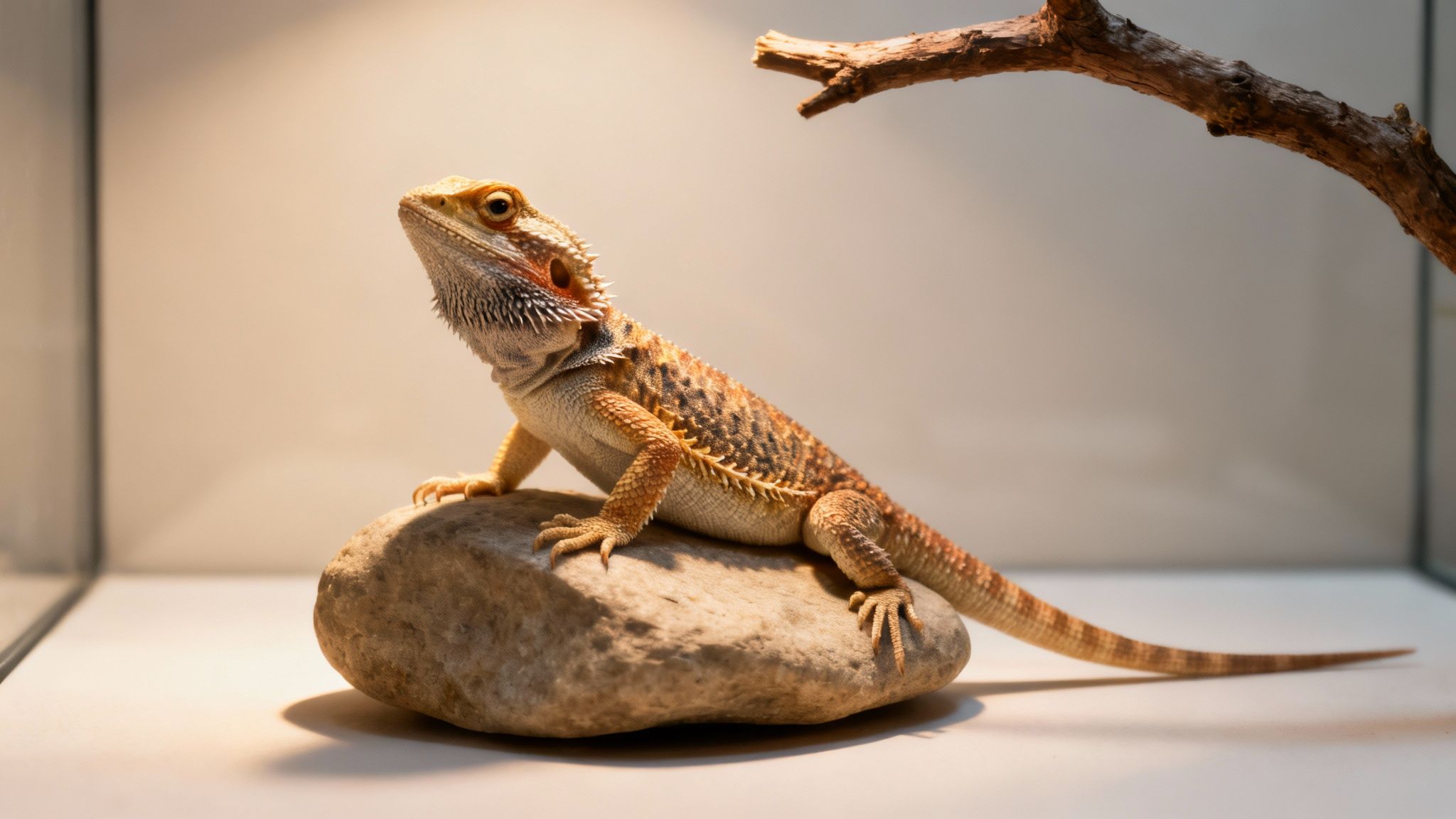
For those intrigued by the world of reptiles, the bearded dragon is an unparalleled starting point. Hailing from Australia, these medium-sized lizards are known for their docile, curious personalities and tolerance for handling, making them one of the most interactive and engaging pets for beginners in the reptile category. With proper care, they can live for 10-15 years, becoming a long-term, fascinating companion.
Why Bearded Dragons Make Great Starter Pets
Bearded dragons offer a rewarding experience for new reptile keepers due to their manageable size and calm temperament. Unlike more skittish reptiles, they often enjoy being held and can form noticeable bonds with their owners. Their care routine, while specific, is consistent and teaches a beginner the critical importance of environment control, a fundamental skill in herpetology.
Bearded Dragon Care Checklist
Creating the correct desert-like environment is the key to a happy bearded dragon. Their setup requires more initial investment than a fish, but once established, daily care is straightforward.
- Tank Size: A 40-gallon breeder tank is the minimum for one adult. Bigger is always better to provide ample room for roaming and temperature gradients.
- Lighting: This is crucial. A high-quality UVB 10.0 tube light is non-negotiable for vitamin D3 synthesis and calcium absorption. You will also need a separate basking heat lamp.
- Temperature: Maintain a basking spot of 95-105°F on one side of the tank, with the cooler side remaining around 75-80°F.
- Diet: Adults thrive on a diet of roughly 50% insects (like dubia roaches or crickets) and 50% vegetables (like collard greens, mustard greens, and squash).
- Substrate: Use a solid substrate like tile or reptile carpet. Loose substrates like sand pose a risk of impaction if ingested.
- Enrichment: Provide branches for climbing and a basking rock directly under the heat lamp.
Key Takeaway: The most critical elements for a healthy bearded dragon are proper UVB lighting and a correct temperature gradient. These two factors prevent the most common health issues, such as Metabolic Bone Disease.
While we focus on the highest standards of dog grooming here in El Paso, we believe in promoting responsible care for all pets. Understanding an animal's specific environmental needs is the first step to being a great owner.
8. Budgerigar (Budgie/Parakeet)
Often called budgies or parakeets, these small, intelligent parrots are a fantastic entry into the world of bird ownership. Originating from Australia, their cheerful chirps, playful antics, and potential to mimic speech make them one of the most engaging and rewarding pets for beginners. With proper care and social interaction, these vibrant companions can live for over 7 years, forming strong bonds with their human family.
Why Budgies Make Great Starter Pets
Budgies provide a unique level of interaction that many small pets cannot offer. Their intelligence allows for training and taming, teaching a new owner about positive reinforcement and patience. Their care routines are consistent but not overwhelming, helping to build responsible habits without the intensive physical demands of larger pets. They are a good fit for smaller living spaces where a dog or cat might not be practical.
Budgie Care Checklist
Creating a stimulating and safe environment is key to a happy and healthy budgie. These social birds thrive on routine and enrichment, so setting them up for success from day one is crucial.
- Cage Size: A single budgie needs a cage that is at least 18x18x24 inches, but bigger is always better. For pairs, provide an even larger space.
- Enrichment: Offer multiple natural wood perches of varying diameters to exercise their feet. Include a variety of toys like bells, swings, and mirrors to prevent boredom.
- Diet: A balanced diet consists of high-quality pellets, fresh vegetables like dark leafy greens, and a small amount of seed mix as a treat.
- Socialization: Allow at least 2-4 hours of supervised out-of-cage time daily for exercise and bonding. Consistent, gentle handling is vital for taming.
- Grooming: Budgies require occasional nail trims and beak checks. While we specialize in canine care, we can recommend avian specialists in El Paso for these delicate grooming needs.
Key Takeaway: A budgie's mental and physical health depends on social interaction and a stimulating environment. Daily engagement is just as important as providing a proper diet and clean cage.
Understanding the specific needs of every pet is central to our philosophy at Glomore Grooming. For more foundational knowledge, you can explore our pet care basics section.
9. Crested Gecko
For those interested in the world of reptiles, the Crested Gecko offers a fascinating and manageable entry point. These small, arboreal lizards from New Caledonia are known for their unique eyelash-like crests and surprisingly simple care requirements. As one of the more handleable and docile lizard species, they are excellent pets for beginners looking to explore reptile ownership without the complexity of advanced lighting or live insect diets.
Why Crested Geckos Make Great Starter Pets
Crested geckos are low-maintenance compared to many other reptiles. They are nocturnal, thrive at room temperature, and do not require supplemental heating unless your home is consistently cold. A key advantage for beginners is their diet; they primarily eat a pre-packaged powdered meal replacement, which simplifies feeding and removes the need to keep live insects on hand.
Crested Gecko Care Checklist
Creating a suitable habitat is key to a happy gecko. Their arboreal nature means they need more vertical space than horizontal floor space.
- Tank Size: A vertical 20-gallon tall glass terrarium is the minimum for a single adult.
- Habitat Setup: Provide plenty of branches, cork bark, and live or artificial plants (like pothos) for climbing and hiding. Use a substrate like coconut husk or cypress mulch that holds humidity well.
- Humidity: Maintain a humidity level of 70-80% by misting the enclosure thoroughly once or twice daily. This is crucial for their shedding and overall health.
- Feeding: Offer a commercial powdered crested gecko diet mixed with water 2-3 times per week. You can supplement with gut-loaded crickets or dubia roaches occasionally as a treat.
- Handling: Handle them gently and infrequently to avoid stress, which can cause them to drop their tails. Unlike some lizards, their tails do not grow back.
Key Takeaway: The most critical elements for crested gecko care are maintaining high humidity through daily misting and providing a vertically-oriented enclosure filled with climbing opportunities.
While we focus on canine and feline grooming, our commitment to animal wellness extends to all pets. For foundational knowledge on all types of pet care, you can explore detailed guides on our pet care basics section.
10. Rat
Challenging outdated stereotypes, the domestic rat is a surprisingly clean, affectionate, and highly intelligent companion. These social rodents form strong bonds with their owners, are very trainable, and offer a level of interaction often compared to that of a small dog. With a lifespan of 2-3 years, they are one of the most engaging and rewarding pets for beginners looking for a small mammal.
Why Rats Make Great Starter Pets
Rats offer a rich and interactive pet ownership experience without the long-term commitment of larger animals. Their intelligence makes them easy to litter train and teach tricks, while their social nature means they genuinely enjoy human company. They are relatively quiet and their housing needs, while specific, are manageable within most home environments, making them ideal for apartment living.
Rat Care Checklist
Creating a stimulating and healthy environment is key to unlocking a rat's friendly and curious personality. A proper setup ensures they are happy, active, and social.
- Companionship: Never keep a single rat. They are highly social and thrive in same-sex pairs or small groups.
- Housing: Provide a large, multi-level wire cage with a solid floor. The minimum is 2.5 cubic feet per rat, but bigger is always better.
- Enrichment: Fill their space with hammocks, ropes, tubes, hideouts, and chew toys to keep their active minds engaged.
- Feeding: Offer high-quality rat-specific pellets as a staple, supplemented with small amounts of fresh vegetables and occasional fruits.
- Socialization: Allow at least one hour of supervised free-roam time outside the cage daily for exercise and bonding. Regular, gentle handling is crucial.
Key Takeaway: The most critical aspect of rat ownership is providing social interaction and mental stimulation. A lone, bored rat is an unhappy one; companionship and an enriched environment are non-negotiable.
While rats are diligent self-groomers, understanding their basic needs is part of responsible pet ownership. For general tips that apply to keeping any pet clean and healthy, check out our pet grooming tips section.
Top 10 Beginner Pets Comparison
| Pet | 🔄 Care Complexity | ⚡ Resource Requirements | ⭐ Expected Outcomes | 📊 Ideal Use Cases | 💡 Key Advantages / Tips |
|---|---|---|---|---|---|
| Goldfish | Very Low — basic filtration & weekly water changes | Low initial cost ($20–$100); filter, tank (20+ gal) | Long-lived visual pet (10–20+ yrs) | Beginners, small homes, low-interaction owners | Affordable; avoid overstocking; 25% weekly water changes |
| Betta Fish | Low — solitary housing and stable temp required | Low cost; 5–10 gal, heater, regular water changes | Colorful, interactive fish (3–5 yrs) | Desktop/small-space pet, visual interest | Keep males alone; 75–80°F; quality pellets; hiding spots |
| Guinea Pig | Moderate — daily feeding, social care, larger housing | Higher ongoing cost; large cage (7.5+ sq ft), fresh veg, hay | Social, hands-on companion (5–7 yrs) | Families, children, owners wanting tactile pets | House in pairs; provide vitamin C, hay, daily social time |
| Leopard Gecko | Moderate — heating, live insects, supplements | Moderate cost; 20 gal, UTH, UVB, live feeder insects | Docile, handleable reptile (10–20 yrs) | Beginner reptile owners preferring terrestrial pet | Use under-tank heat, calcium+D3, feed insects 3–4×/wk |
| Corn Snake | Low-Moderate — heating, secure enclosure, feeding schedule | Moderate initial cost; 40+ gal, secure lid, frozen-thawed prey | Calm, handleable snake (15–20+ yrs) | Beginners wanting larger, easy-to-handle snake | Feed frozen-thawed; provide temp gradient & hides |
| Dwarf Hamster | Very Low — simple daily care, nocturnal habits | Very low cost; compact housing, wheel, bedding | Entertaining, short-lived pet (2–3 yrs) | Budget-conscious owners, very limited space | House singly; large wheel; weekly cage cleaning; gentle handling |
| Bearded Dragon | Moderate-High — complex heating, UVB, varied diet | High initial & ongoing cost; large tank, strong UVB, energy use | Social, trainable reptile (10–15 yrs) | Dedicated owners wanting interactive diurnal reptile | High-quality UVB, 95–105°F basking, tile substrate, varied diet |
| Budgerigar (Budgie) | Moderate — daily interaction, training, noise management | Moderate cost; cage (18×18×24+), toys, varied diet | Highly interactive, can mimic (7–10+ yrs) | Owners wanting social, vocal, trainable bird | Provide daily out-of-cage time, pellets+veg, varied perches |
| Crested Gecko | Low-Moderate — humidity management, minimal heat | Affordable setup; vertical 20 gal tall, misting, prepared diet | Unique, low-heat arboreal pet (10+ yrs) | Owners wanting arboreal, low-heating reptile | Maintain 70–80% humidity, use prepared diet, minimal handling |
| Rat | Moderate — daily enrichment, social housing, training | Moderate cost; large cage, toys, vet care | Intelligent, trainable companion (2–3 yrs) | Owners wanting affectionate, trainable small mammal | Keep in pairs, large multi-level cage, daily play & training |
Execute Your Plan with El Paso's Premier Grooming Partner
You've explored a diverse lineup of potential companions, from the low-maintenance charm of a leopard gecko to the social intelligence of a pair of rats. This guide was designed to equip you with the foundational knowledge needed to select the right animal for your lifestyle, budget, and home environment. Understanding the distinct needs of each species is the first critical step, but true success in pet ownership lies in consistent, high-quality care throughout your companion's life. This journey from consideration to commitment is where your choice in partners becomes paramount.
Choosing one of these pets for beginners means embracing a new set of responsibilities. Whether it's the regular nail trims for a guinea pig, the careful shedding assistance for a bearded dragon, or simply maintaining a clean and healthy environment for a betta fish, your dedication directly impacts their well-being. This principle of dedicated care is the very core of our philosophy.
Why Your Choice of Partner Matters
While many of the animals on this list may not require traditional grooming, the principles of professional care, hygiene, and wellness are universal. For those who choose a small mammal or are planning for a future dog or cat, your choice of groomer sets the standard. At Glo More Grooming, we distinguish ourselves from the high-volume, impersonal model of big-box chains like PetSmart or Petco. As a proud, veteran-owned El Paso business, we bring a disciplined workflow and an unwavering commitment to premium grooming standards to every appointment.
Our approach is built on a foundation of precision and trust. We believe every pet deserves focused, one-on-one attention in a calm and controlled setting. This methodology minimizes stress and allows us to deliver meticulous results, whether it's a simple nail trim or a full-body groom. We are not just a service provider; we are a long-term partner invested in your pet’s health and happiness. Our vision is to build a lasting relationship with you and your companion, offering guidance and support from the very beginning.
Your Actionable Next Steps to Responsible Pet Ownership
Your mission, should you choose to accept it, is to move from planning to action. The intelligence gathered from this article is your strategic advantage. Now, it's time to execute.
- Finalize Your Choice: Revisit the profiles and honestly assess which pet's needs align best with your daily routine, financial capacity, and living situation.
- Prepare the Habitat: Before bringing your new pet home, set up their enclosure, tank, or cage completely. Ensure temperatures, substrate, and enrichment items are all in place.
- Locate a Veterinarian: Find a local El Paso veterinarian with experience in your chosen species. For reptiles and small mammals, this may require seeking out an exotics specialist.
- Establish a Wellness Plan: For pets requiring grooming, such as guinea pigs, or for those planning to add a dog to their family later, establishing a relationship with a trusted professional is key. Connect with a partner who values precision and individualized care.
We reinforce this commitment to accessible, premium care through our exclusive promotions. Our affordable grooming promo, 'Snip & Style Saturday,' offers a comprehensive full groom at an exceptional value, making top-tier services available to more families in our community. This is more than a discount; it's our pledge to elevate the standard of El Paso dog grooming.
The bond you build with your first pet is a resilient and powerful one. It’s a journey of loyalty, learning, and mutual respect. By choosing partners who share your commitment to excellence, you ensure that journey starts on the strongest possible foundation. Your mission is clear. The time to act is now.
Ready to partner with a grooming service that prioritizes precision, discipline, and your pet’s well-being? Whether you're preparing for a new puppy or need expert care for your current companion, Glo More Grooming is your dedicated El Paso ally. Book a consultation or reserve your 'Snip & Style Saturday' slot at Glo More Grooming today.