
Losing a dog is a devastating loss, a disciplined and resilient heart strained by sorrow. The grief that follows is real, it's valid, and it's uniquely yours. We build our lives around their unconditional love and constant presence, and when they're gone, the silence can be deafening. At Glomore Grooming, a veteran-owned business built on a long-term vision of community care, we understand that this pain is a testament to an unbreakable bond. The first, and most important, step toward healing is simply allowing yourself to feel that intense sorrow with pride and resilience.
Why Losing a Dog Hurts So Much
When you lose a dog, you’re not just losing a pet—you’re losing a member of your family. They’re part of the rhythm of your day, from that first sleepy morning walk to the last cuddle on the sofa at night. That kind of constant, quiet companionship creates a bond that’s unlike any other. This is why Glomore Grooming stands apart from large chains like PetSmart or Petco; we see pets as family and build lasting relationships with every client who walks through our doors.
They’re our confidants who listen without judgment, our buddies who comfort us with a wet nose or a paw on the knee. Their love is simple and pure in a world that often feels complicated. That’s why the grief can feel so overwhelming, and at times, so incredibly lonely.
A Love Woven Into Our Daily Lives
The relationship we have with our dogs is one of deep connection. They count on us for everything—from proper nutrition to premium pet grooming—and in return, we come to rely on them for emotional support, a steady routine, and pure, simple joy. This is why our disciplined workflow ensures every pet receives the highest standard of care, reflecting the love you give them at home.
When they’re gone, that dynamic is shattered. The house feels too quiet. The daily patterns are broken. A constant source of love has suddenly vanished, leaving an emptiness that echoes through every corner of your day.
Your intense sorrow is not an overreaction—it's a natural and valid response to losing a cherished family member. The depth of your grief is a testament to the depth of your love.
This isn't just a feeling; it's an experience shared worldwide. In fact, research shows that about 85% of dog guardians experience grief symptoms similar to those felt after losing a close human relative. The pain can linger, too. A third of grieving dog owners still feel that loss six months later, and for nearly a quarter, the grief is still present after a full year. You can learn more about these studies on the emotional impact of pet loss.
Finding a Way Through the Pain
Understanding why this hurts so much is the first real step toward healing. Your feelings aren't just justified—they're shared by millions of people who have walked this same tough road. By acknowledging the incredible role your dog played in your life, you can begin to process the pain and move forward.
We’ve created this guide to offer some comfort and practical support as you find your way. We’ll walk through:
- Understanding Your Emotions: Recognizing the common stages and feelings of grief.
- Practical Coping Strategies: Small, gentle steps to help you get through each day.
- Honoring Their Memory: Finding meaningful ways to create a tribute, like our El Paso community’s Petals for Paws program.
- Supporting Your Family: How to help children and other pets through their own grief.
Please remember, you are not alone in this. The path forward is about understanding your grief, being kind to yourself, and finding beautiful ways to honor the incredible love you and your dog shared.
Navigating the Emotional Landscape of Grief
The path through grief after losing a dog is rarely a straight line. It’s messy and unpredictable, more like a winding coastal trail than a paved road. One day might feel clear and calm, allowing for gentle reflection, and the next can bring a sudden, overwhelming storm of sorrow. The first step in navigating this journey is simply understanding its nature—and giving yourself grace along the way.
Many of us have heard of the “stages” of grief, but it’s more realistic to think of them as shifting emotional states, not a checklist to complete. You don’t graduate from one to the next. Instead, you might feel a sharp sting of anger one moment and a deep, quiet sadness the next. Your experience is entirely your own, and there is no right or wrong way to feel.
Identifying the Emotional States
Putting a name to what you’re feeling can make the whole experience feel a little less chaotic. When you can identify an emotion—be it guilt, anger, or profound sadness—it helps you understand that these are normal, expected reactions to losing such an important member of your family.
These feelings will ebb and flow, sometimes crashing into each other all at once. The goal isn't to push through them or get over them faster. It’s about making space for them, acknowledging their presence, and allowing yourself to process the immense pain of your loss.
The deep connection we share with our dogs is woven into the very fabric of our daily lives, which is why their absence leaves such a gaping hole.
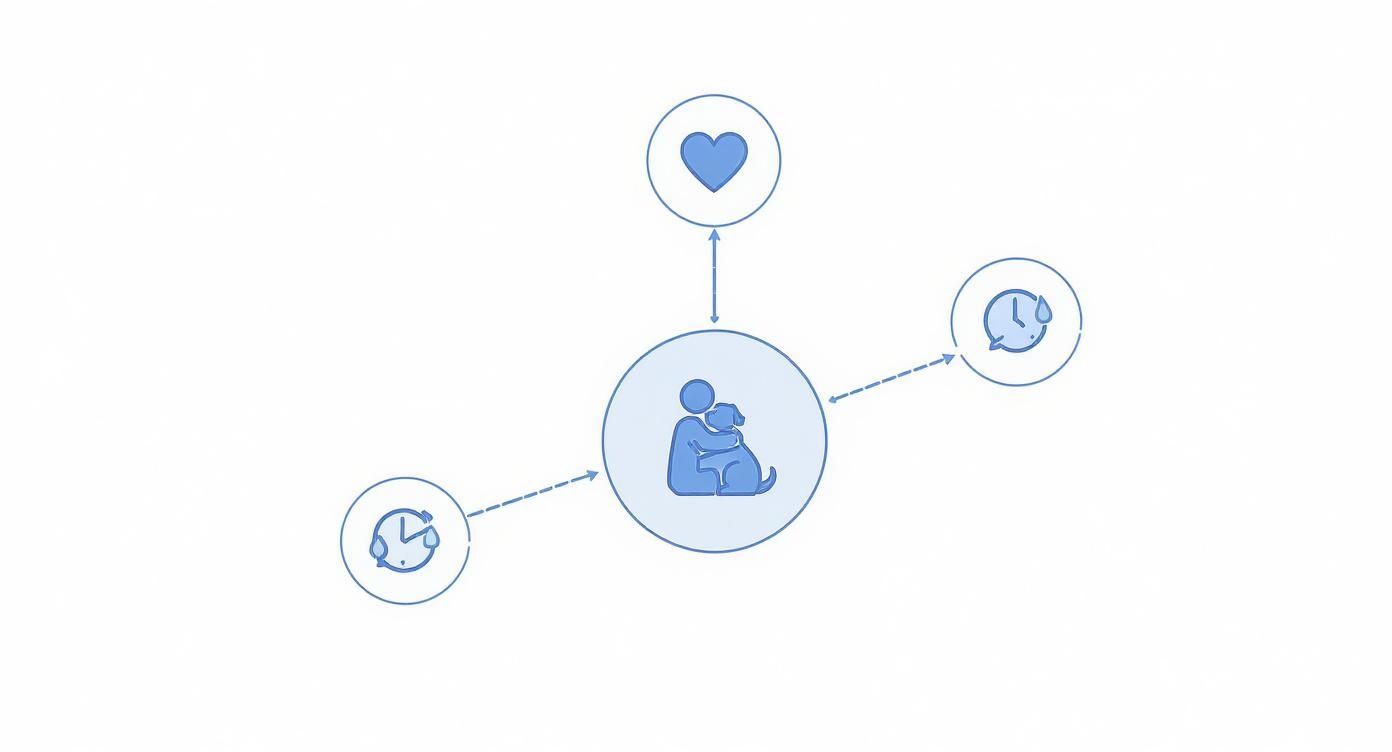
This image really gets to the heart of it—the loss isn’t just emotional. It’s a disruption of our routines, our sense of home, and our daily rhythm, which is what makes the grief feel so all-encompassing.
Common Grief Reactions and What They Mean
Let's walk through some of the most common reactions you might be experiencing. Seeing them laid out like this can be a relief, helping to normalize what you're going through and remind you that you are not alone in this.
| Grief Reaction | What It Might Look Like | A Compassionate Perspective |
|---|---|---|
| Denial & Shock | You catch yourself listening for the jingle of their collar or instinctively dropping a piece of food on the floor for them. The house feels strangely normal, yet eerily empty. | This is your mind’s way of protecting you. It’s a natural emotional buffer that gives you time to process the unbearable reality of the loss bit by bit, rather than all at once. |
| Anger | You might feel a flash of fury at the vet, at a well-meaning friend, or even at your dog for leaving. Hearing someone complain about a minor pet peeve can feel infuriating. | This anger is almost always a mask for the profound hurt and helplessness you feel underneath. It’s a powerful emotion that shows just how deeply you cared. |
| Guilt | You find yourself replaying their last days over and over, wondering, "Did I do enough?" or "Did I make the right decision?" This is an especially painful part of grief after losing a dog. | These feelings are a testament to your love and sense of responsibility. You wanted the absolute best for your friend, and it's natural to question yourself during such a difficult time. |
| Depression & Sadness | A heavy, persistent sorrow settles in. The silence feels deafening. Walking past their favorite spot in the park is agonizing. Joy feels distant, maybe even impossible. | This deep sadness is a direct reflection of the deep love you shared. The pain you feel is proportional to the happiness they brought into your life. It’s okay to be sad. |
| Acceptance | You can finally recall a funny memory without bursting into tears. You start to find a new routine. You’re not "over it," but you’re learning to carry the loss with you. | Acceptance isn't about forgetting; it’s about integrating their memory into your life in a new way. It's the beginning of finding a way to live with the reality of their absence. |
Seeing your feelings in this table might help you feel less isolated. Remember, these are not steps on a ladder but colors on a palette; they can mix and reappear at any time.
Grief is like the ocean; it comes in waves, ebbing and flowing. Sometimes the water is calm, and sometimes it is overwhelming. All we can do is learn to swim.
– Vicki Harrison
There’s simply no timeline for this process. The waves of grief will keep coming, and some will be bigger than others for a long, long time. The most important thing you can do is be patient with yourself. Your feelings are valid, and your journey through this emotional landscape is a testament to the incredible bond you and your dog shared.
Practical Coping Strategies for Everyday Life
When you're walking through the thick fog of grief after losing a dog, just getting through the day can feel impossible. The familiar routines you once shared are now quiet, painful reminders of the empty space they left behind. The most important thing you can do is be incredibly gentle with yourself. Focus on small, manageable steps that help bring a little bit of stability back.
These strategies aren't about "getting over" the pain, because we never truly do. They’re about learning how to carry it with you. Think of them as small anchors in a stormy sea, designed to keep you steady, one day—and sometimes one moment—at a time.
Creating Gentle Routines
Losing your dog throws your entire daily rhythm out of sync. Bringing a simple, gentle routine back into your life can be a surprisingly powerful way to care for yourself. It doesn't have to be complicated or ambitious. The goal is just to create a little predictability when everything feels so chaotic.
You’re not trying to replace the old path you walked with your companion. Instead, you're slowly laying down a new one, one quiet step at a time. This could even be an actionable insight for future pet care—for example, establishing a monthly grooming schedule. Simple routines provide comfort for both pets and their owners.
- A Quiet Morning Start: The morning walk might be too painful right now. Instead, maybe you can just take five minutes to sit with a cup of tea or coffee in silence. This small ritual can give you a calm, intentional start to your day.
- One Nourishing Meal: Grief can absolutely zap your energy and appetite. Don't worry about three perfect meals. Just focus on making one simple, nourishing meal for yourself. It's a small act that takes care of your body when your emotions feel drained.
- A Calming Evening Wind-Down: Before bed, try something soothing, like reading a few pages from a book or listening to some quiet music. This helps create a peaceful transition to sleep, which can be difficult when you're grieving.
Processing Your Feelings with Intention
It’s so tempting to push all the hard feelings away, but letting yourself actually feel them is a huge part of healing. When you give your grief an outlet—a place to go—it starts to feel a little less overwhelming.
Journaling is one of the best ways to do this. It’s a completely private space where you can be totally honest, with no judgment. Write down your favorite memories. Let out the anger or the guilt. Describe the emptiness. There are no rules here.
The act of writing can untangle the knotted thoughts in your mind, making them feel more manageable. It is a conversation with yourself that honors the depth of your sorrow.
By giving yourself permission to feel everything, you’re acknowledging just how important your bond was and how valid your pain is. For more ideas on how to navigate this time, you can explore our resources on coping with pet loss.
Setting Healthy Boundaries
Friends and family mean well, but they might not understand just how deep this loss cuts. You might hear things that are unintentionally painful, like "it was just a dog" or "you can always get another one." Right now, it's absolutely vital to protect your emotional energy.
Setting boundaries isn’t selfish—it’s necessary for your survival. You get to decide who you talk to about this and how much you share.
Here are a few simple phrases you can use:
- "Thank you for caring, but I'm just not ready to talk about it right now."
- "I know you mean well, but comments like that aren't very helpful for me at the moment."
- "I really appreciate you checking in. Right now, what I need most is just someone to listen."
These simple but firm statements put you back in control and protect your healing space. You are the guardian of your own grief journey. It's more than okay to be selective about who you let into that vulnerable place. Remember to be kind to yourself as you find your footing in this new reality.
Creating Meaningful Tributes to Your Dog
Finding a way to honor your dog's memory can be a powerful and deeply healing part of the grieving process. It’s about more than just saying goodbye; it’s about celebrating the life they lived and the incredible joy they brought into yours. Creating a tribute helps channel your love and sorrow into something tangible and lasting, giving your grief a gentle place to land.
These acts of remembrance don't have to be grand or complicated. In fact, it's often the small, personal rituals that mean the most—the quiet moments that acknowledge the unique bond you and your dog shared. The only goal is to create something that feels true to you and honors their special spirit.
Simple and Personal Memorial Ideas
Turning your grief into loving remembrance can start with a few small, intentional actions. These tributes create a space for reflection and honor the everyday happiness your dog gave you.
Here are a few heartfelt ideas to consider:
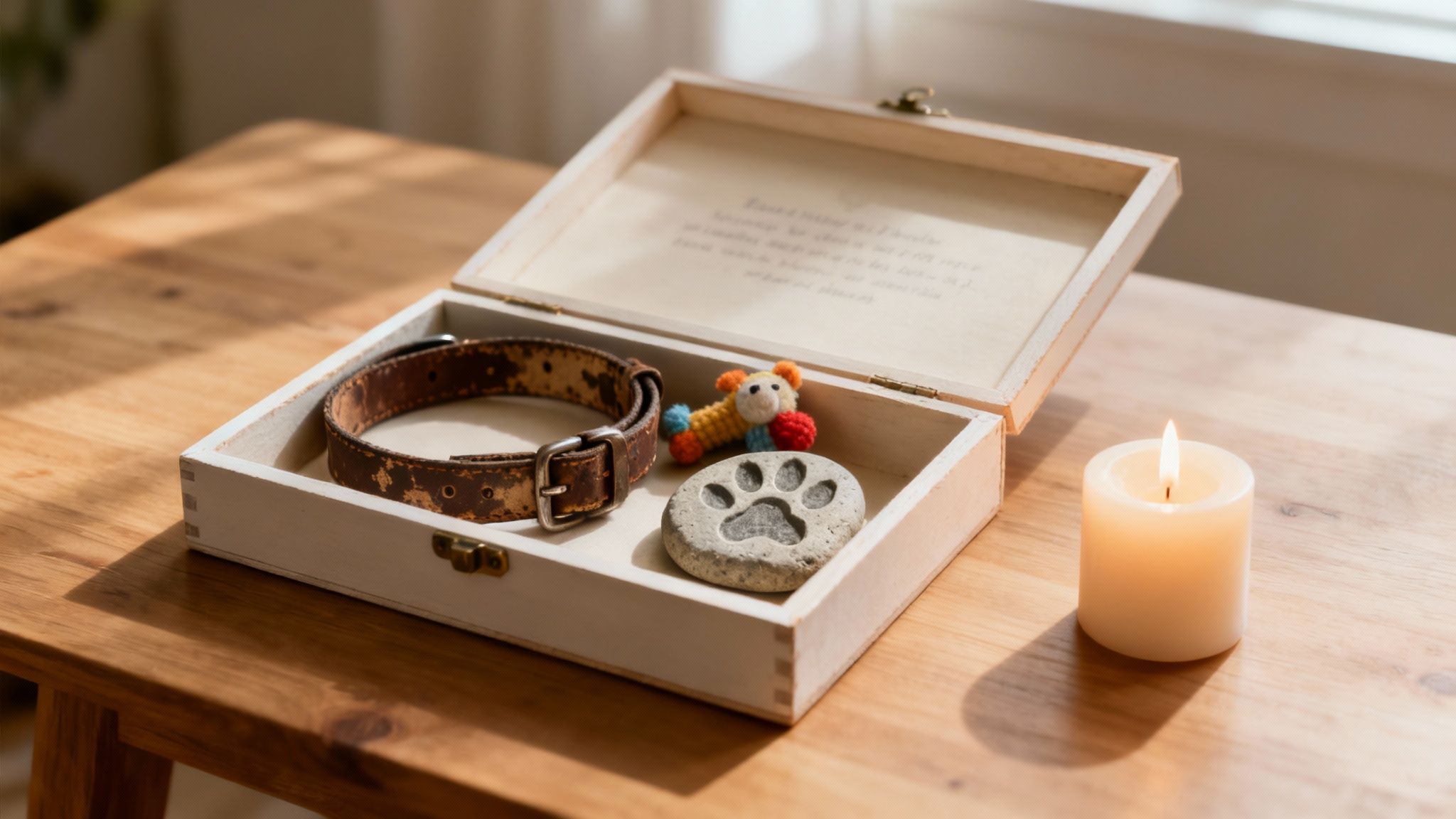
- Create a Memory Box: Gather their favorite things—that squeaky toy they adored, their old collar and tags, a cozy blanket—and place them in a special box. This gives you a physical collection of memories you can hold and revisit whenever you need to feel close to them.
- Write a Heartfelt Letter: Sometimes, putting feelings into words is the best therapy. Write a letter to your dog, sharing your favorite memories, telling them what you miss most, and saying all the things left in your heart. It can be an incredibly cathartic release.
- Compile a Photo Album or Slideshow: Go through all those photos and videos on your phone. Pick out the ones that truly capture their goofy personality and create a visual story of their life. It’s a beautiful way to celebrate the happy times and remember them in their prime.
These small acts are so powerful because they allow you to actively engage with your memories in a positive way, shifting the focus from the pain of loss to the joy of the life you shared.
Living Tributes and Community Support
A tribute can also be a living legacy that continues to grow, just like your love for them does. These types of memorials can extend beyond your home and create a positive impact right here in our community.
For those of us in the El Paso area, planting a tree in a favorite park is a beautiful symbol of life continuing. Every time you walk by, you'll be reminded of the deep roots of love your companion left behind. Another meaningful option is to make a donation in their name to a local animal shelter, helping other dogs find their own forever families. As a veteran-owned grooming business, we are deeply committed to the well-being of all pets in our region.
Honoring their life transforms the pain of their absence into a testament to their lasting impact. It’s an act of love that says, "You are not forgotten, and your memory continues to bring good into the world."
This journey of remembrance is deeply personal, and it's rooted in the long-term bond we build with our companions. A 2022 study highlighted just how profound this connection is, noting that the average ownership length for dogs was nearly 10 years. The research also found that after such a loss, behavioral changes in owners were common, with nearly 60% observing these shifts for more than two months. You can discover more insights about the emotional impact of losing a dog.
For our local El Paso community, Glomore Grooming offers the Petals for Paws program. We provide custom floral arrangements for families grieving a beloved pet, offering a beautiful way to pay tribute. It’s a small gesture of comfort from our hearts to yours. We have gathered more ideas for honoring your companion; you might be interested in our other articles on creating a pet memorial. No matter which path feels right, creating a tribute is a beautiful and vital step toward healing.
Supporting Children and Other Pets Through Loss
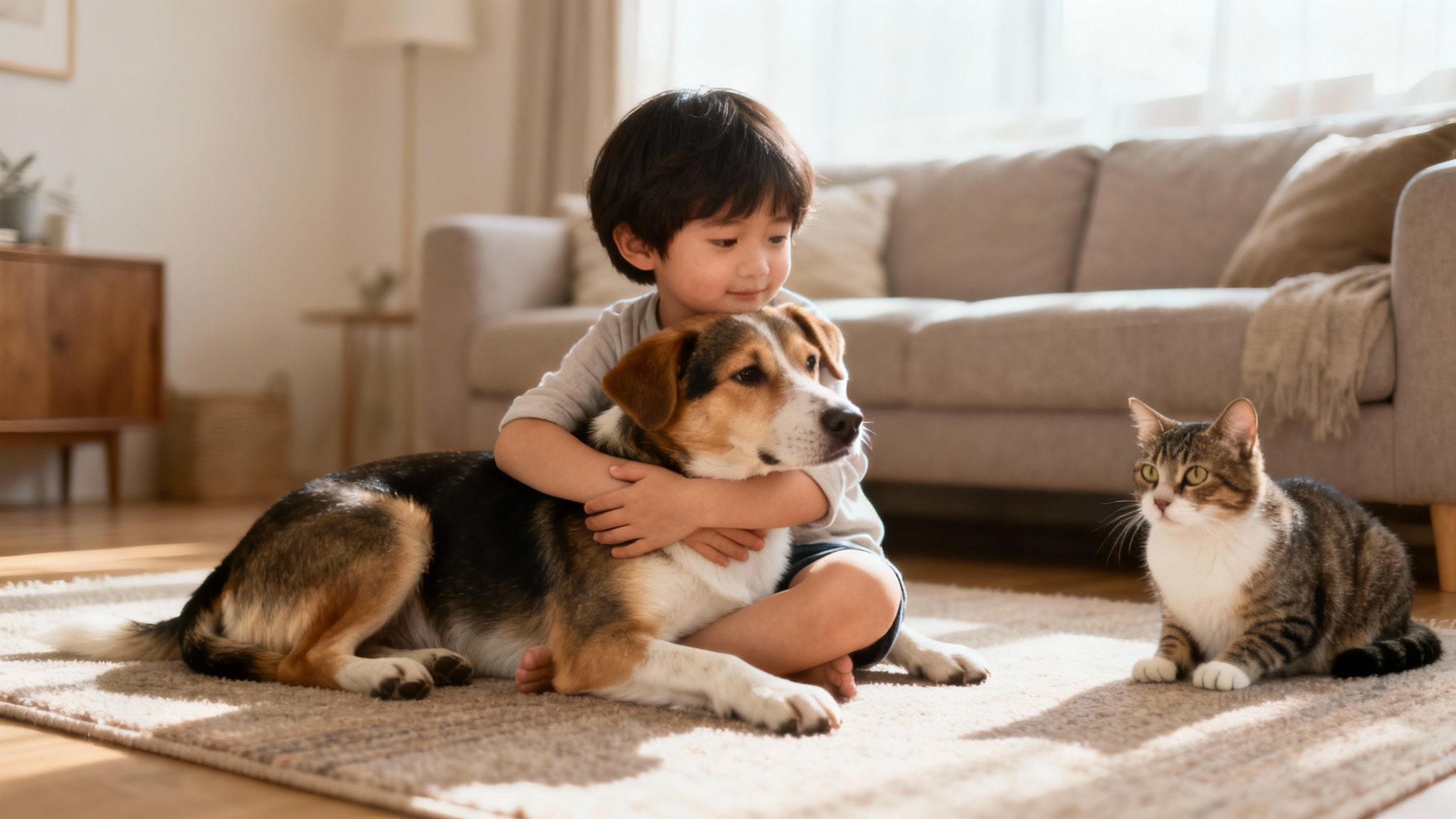
When a beloved dog passes away, the loss echoes through the entire home. It’s not just your heart that's broken; your children and any other pets are feeling that same empty space. This is a shared grief, and navigating it means being gentle and intentional with every member of the family, because each one will process this loss in their own unique way.
This isn’t a journey you take alone. It’s a collective experience that demands patience, open hearts, and a whole lot of compassion for everyone involved—whether they have two legs or four.
Guiding Children Through Their Grief
For many kids, losing a dog is their very first brush with death. It’s a big, confusing, and often scary concept. The way you handle this conversation can shape how they understand loss for the rest of their lives, so the key is to be honest, reassuring, and to speak in a way they can understand.
It helps to use clear, simple language. Softening the truth with phrases like "went to sleep" or "ran away" can accidentally create fear around bedtime or a belief that their friend might come back. It’s much kinder, in the long run, to gently explain that their dog’s body stopped working and they died.
Practical Ways to Support a Grieving Child:
- Validate Their Feelings: Let them know it's completely okay to feel sad, mad, or just plain confused. Sharing your own feelings helps, too. Something as simple as, "I miss our friend so much," shows them they aren’t alone.
- Encourage Expression: Give them outlets to let their emotions out. They could draw pictures of their favorite memories, help you write a story about their dog, or put together a special memory box.
- Involve Them in Memorials: Giving a child a role in saying goodbye can bring a sense of closure. You could let them pick a spot in the garden for a new plant or choose their favorite photo to put in a new frame.
By including them in these small but powerful rituals, you’re giving them a healthy way to work through their feelings and honor the special bond they had with their pet.
Helping Your Other Pets Cope
The four-legged members of your family will absolutely feel the absence of their companion. While they don’t understand death the way we do, they definitely experience loss. You might notice them acting differently, and it can be worrying if you don't recognize it as grief.
A surviving pet might seem listless, turn their nose up at food, whine more than usual, or wander the house looking for their friend. This is their way of reacting to a huge change in their daily life and the pack they belong to. Providing them with consistent, actionable routines, such as regular grooming, can offer a sense of stability during this uncertain time.
"Animals grieve the loss of a companion, and their world has been turned upside down. The most important thing we can do is provide stability and extra affection to reassure them that they are safe and loved."
The best thing you can do for them is create a sense of security. Try to stick to your usual routine as much as possible—keep walks, feeding times, and playtime consistent. That predictability is incredibly comforting when their world feels so off-kilter.
Offer extra affection, but don't force it if they aren't receptive. A few more belly rubs, some quiet time snuggled on the couch, or a gentle grooming session can go a long way in strengthening your bond and making them feel safe. Just like you, they need time to adjust. With a little extra patience and love, your entire family can start to heal together.
When It Might Be Time for Professional Support
Losing a dog is a heartbreaking, deeply personal experience. The world doesn't always understand this specific kind of sorrow, which can make you feel like your pain isn't real or justified. This is what experts call disenfranchised grief—a heavy term for a simple, lonely feeling: grieving a loss that society doesn’t always acknowledge or make space for.
While there's no right or wrong way to mourn, sometimes the weight of it all becomes too much to bear on your own. It's crucial to know the difference between the natural, painful process of grieving and signs that your grief is turning into something more complex, like clinical depression.
Recognizing You Need More Support
Listen to your gut. If your grief feels like a constant, crushing weight that isn't getting any lighter with time, that’s your sign to reach out. Asking for help isn't a sign of weakness. It's an act of courage and a tribute to the incredible love you shared with your dog.
It might be time to find professional support if you're experiencing things like:
- Prolonged Inability to Function: For weeks or even months, you’re finding it nearly impossible to manage daily basics—like getting dressed, going to work, or caring for your family.
- Persistent and Debilitating Guilt: You're stuck in a loop, replaying your dog's final days and blaming yourself to the point where it’s interfering with your life.
- Complete Social Withdrawal: You’ve pulled away from everyone and everything you used to enjoy, choosing to stay isolated for a long period.
- Feelings of Hopelessness: The thought that you’ll never feel happy again has become a constant presence in your mind.
Reaching out is a powerful step toward healing. It acknowledges that your bond was real, your love was immense, and your grief deserves to be met with compassionate, professional care.
Finding the Right Resources
The good news is, you don't have to walk this path alone. A growing number of resources are available specifically for people mourning a pet, offering a safe space to share your feelings with others who truly get it.
This sense of isolation is more common than you might think. With about 68% of U.S. households owning pets, it’s a shared experience. Still, surveys show that roughly 30% of people report feeling severe grief after a recent pet loss. Worse, more than half of them feel society doesn't view their loss as a valid reason to mourn, which often forces them to grieve in silence. You can learn more about these societal attitudes toward pet loss.
Here are a few places to start looking for help:
- Pet Loss Support Groups: There is incredible power in connecting with others who understand exactly what you're going through.
- Specialized Grief Counselors: Look for therapists who specialize in pet bereavement. They can offer strategies tailored to your specific situation.
- Bereavement Hotlines: Many veterinary schools and animal welfare organizations run free hotlines staffed by compassionate, trained volunteers.
Just acknowledging that you might need help is the first step toward finding your way through the darkness. For a deeper dive, check out our comprehensive article on grief support for pet loss. Please remember, you are not alone, and there is help available to guide you toward healing.
We Hear You: Answering Your Hardest Questions About Losing a Dog
When you're walking through the fog of grief after losing your dog, your mind can be a whirlwind of tough questions. Finding gentle, honest answers can be a small comfort, a light in the darkness. We've been there, and we've gathered some of the most common questions we hear from heartbroken pet parents.
Please know, whatever you're feeling right now is okay. Your grief is yours alone, and it doesn't follow a rulebook or a calendar.
How Long Does This Hurt? The Timeline of Grief
This is the question everyone asks, and the honest answer is: there is no set timeline. For some people, the sharpest edges of pain might start to soften after a few weeks or months. For others, the ache is a constant companion for a year or even longer. How long you grieve depends on so many things—the unique bond you shared, the circumstances of their passing, and your own heart.
The goal isn't really to "get over it," because how could you? It’s more about learning how to carry their memory with you. Healing means getting to a place where you can remember them with a full heart and the resilience that honors their memory.
Is It Normal to Feel So Guilty?
Yes. It is incredibly normal, and it's one of the heaviest parts of this journey. So many of us replay those final days and weeks, second-guessing every decision. If you had to make the choice for euthanasia, that burden can feel especially immense. You might torture yourself with "what ifs" and wonder if you could have done more.
It is so important to remember this: you made the best decisions you could with the information you had, and every single one was rooted in deep, unwavering love for your dog. Try to treat yourself with the same compassion you gave them.
When Should I Get Another Dog?
There is no "right" time, and anyone who tells you otherwise doesn't understand. This is a deeply personal decision. Some find that the pitter-patter of new paws helps them heal, giving their love a new place to go. Many others need significant time—months, or even years—before they feel ready to open their home and heart again.
A good rule of thumb is to wait until you’ve moved through the rawest, most acute stage of your grief. This helps ensure that a new dog is welcomed for the unique soul they are, not as a stand-in for the one you miss so dearly. It’s also a decision the whole family should feel ready for.
At Glo More Grooming, our veteran-owned business is built on a foundation of discipline, pride, and a long-term vision for exceptional El Paso dog grooming. We see every day the profound love you have for your pets. Whether you are grieving or celebrating a new companion, our premium grooming standards are a testament to that bond. For those grieving, our Petals for Paws program is a beautiful way to honor the companion who changed your life.
Ready to experience premium pet grooming that honors your pet? Contact Glomore Grooming today to book an appointment or reserve your spot in our next affordable grooming promo, like our popular Snip & Style Saturday.
Learn more about our community programs at glomoregrooming.com