
You hear it before you see it. Click, click, click across the kitchen floor, followed by a dog who hesitates on tile, snags a nail in the carpet, or pulls away when you touch a paw. That search for “nail trim near me” usually starts as a convenience question, but the better question is whether your dog needs a calm, careful appointment from someone who treats paw care as preventive maintenance.
In El Paso, that decision matters. Hot pavement, dry conditions, indoor lifestyles, nervous dogs, and dark nails can all make home trimming harder than it looks. A premium grooming visit should deliver more than a quick clip. It should provide disciplined handling, clean tools, clear communication, and one-on-one attention that protects the dog's comfort and the handler's safety.
Recognizing When Your Dog Needs Professional Paw Care
The familiar clicking sound on hard floors is a useful warning, not a harmless soundtrack. Nails that touch the ground while your dog stands or walks can change how the paw meets the floor. You should also act when nails snag on carpet, split, crack, or your dog becomes reluctant to cross tile and other hard surfaces.
Watch the whole dog, not just the nail tips. Licking at the paws, awkward steps, limping, or a sudden dislike of having the feet handled all deserve attention. Severe overgrowth can cause nails to curve into the paw pads, creating pain, injury, and infection, as explained in Washington State University's veterinary guidance on clipping a dog's nails.
Use the calendar as a starting point
Dogs' nails grow continuously. Widely cited veterinary guidance says many dogs need trimming every 2–4 weeks, while dogs that naturally wear their nails on abrasive surfaces may go 6–8 weeks between appointments. Indoor-only dogs can need attention more often. These ranges come from the canine nail-clipping review indexed by PubMed, but your dog's gait and nail position matter more than a rigid calendar.
A simple home check helps:
- Standing position: Look for nails pressing into or touching the floor.
- Walking sound: Listen for clicking on hard flooring.
- Surface behavior: Note snagging, slipping, or reluctance to walk.
- Nail condition: Check for cracks, splits, curling, or uneven wear.
Practical rule: If the nail is making contact with the floor, don't wait for a dramatic problem.
Home trimming can work for a relaxed dog with clear nails and cooperative paws. It becomes a poor choice when the dog is anxious, the nails are dark, or the owner can't see the quick. A professional El Paso dog grooming appointment gives the handler better visibility, safer positioning, and a controlled plan. For dogs with fragile or splitting nails, review guidance on brittle dog nails before choosing the service.
Choosing a Premium Pet Grooming Studio Over Chain Salons
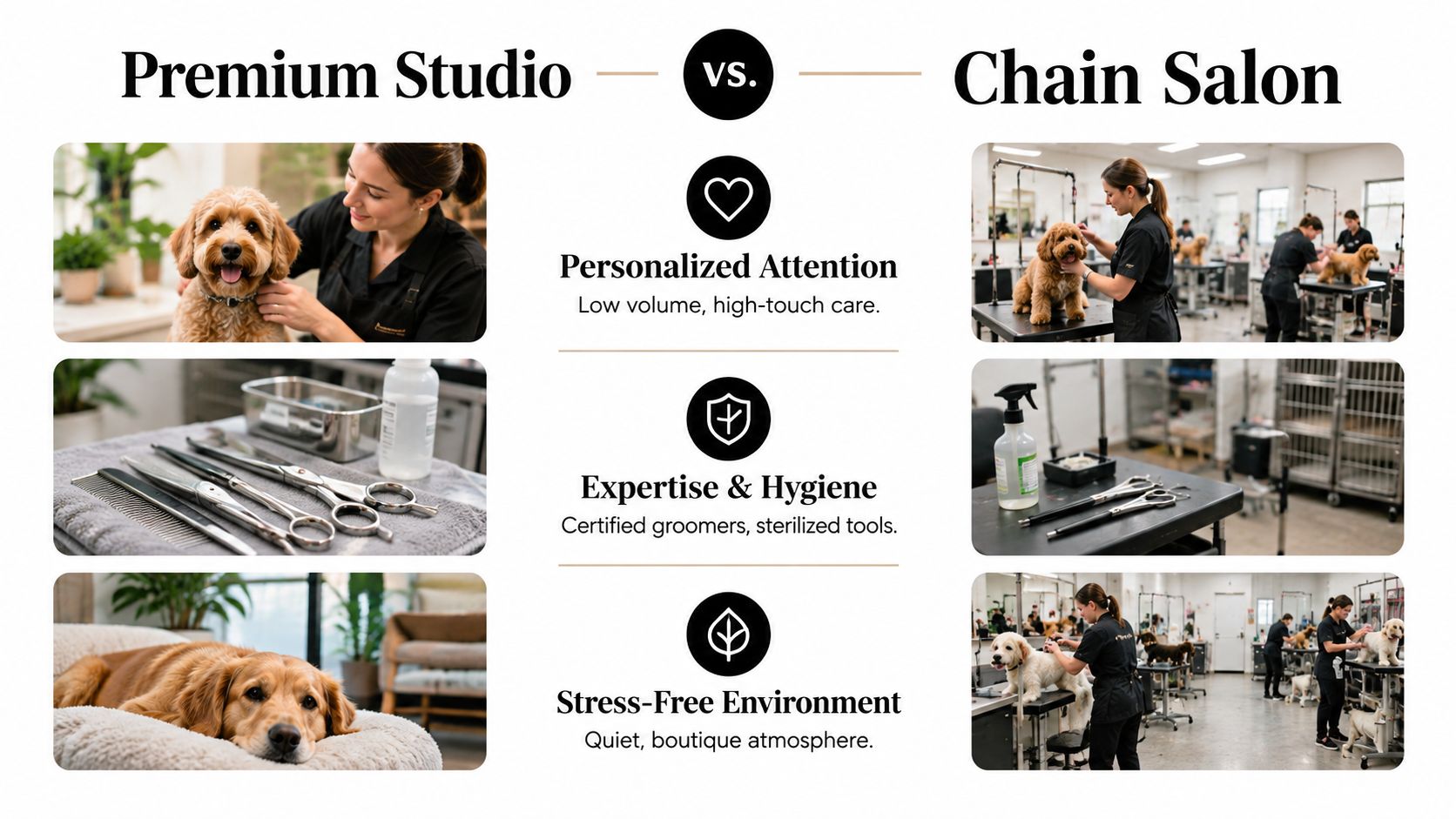
Your dog may tolerate a nearby chain salon and still be a poor fit for its busy routine. Noise, unfamiliar dogs, frequent handoffs, and rushed handling can turn paw care into a struggle, especially for a dog that already pulls away when its feet are touched. Proximity and low price do not tell you whether the setting is safe or suitable.
A premium independent studio should offer the opposite experience: controlled capacity, one-on-one attention, and a pace adjusted to the dog in front of the groomer. During a nail trim, that focus improves positioning and gives the handler time to respond before a small movement becomes a safety problem. A quieter room also makes it easier to separate appointments and maintain an orderly cleaning process.
Judge the studio by its operating standards
Ask specific questions before booking:
- Handling: Who holds the dog, and what is the plan if the dog resists?
- Visibility: What lighting or visual aids help with dark nails?
- Sanitation: How are clippers, grinders, tables, and contact surfaces cleaned?
- Communication: Will the groomer explain what was completed and what to monitor?
- Capacity: How many dogs will be present during the appointment?
Choose a veteran-owned grooming business when direct accountability matters to you. The owner sets the procedures, controls the workflow, and answers for the dog's experience. Military-inspired discipline can support clear routines and careful execution, but the practical test is simple: does the groomer show patience, maintain control, and respect the dog's limits?
Glomore Grooming operates differently from large chains such as PetSmart and Petco. Its home-based studio, controlled capacity, efficient booking, and one-on-one attention create a quieter appointment structure. That combination is a practical advantage for owners seeking premium pet grooming and a lower-stress alternative to a busy salon.
Use this visual overview to compare a boutique workflow with a high-volume grooming environment:
Preparing Your Dog for a Stress-Free Appointment
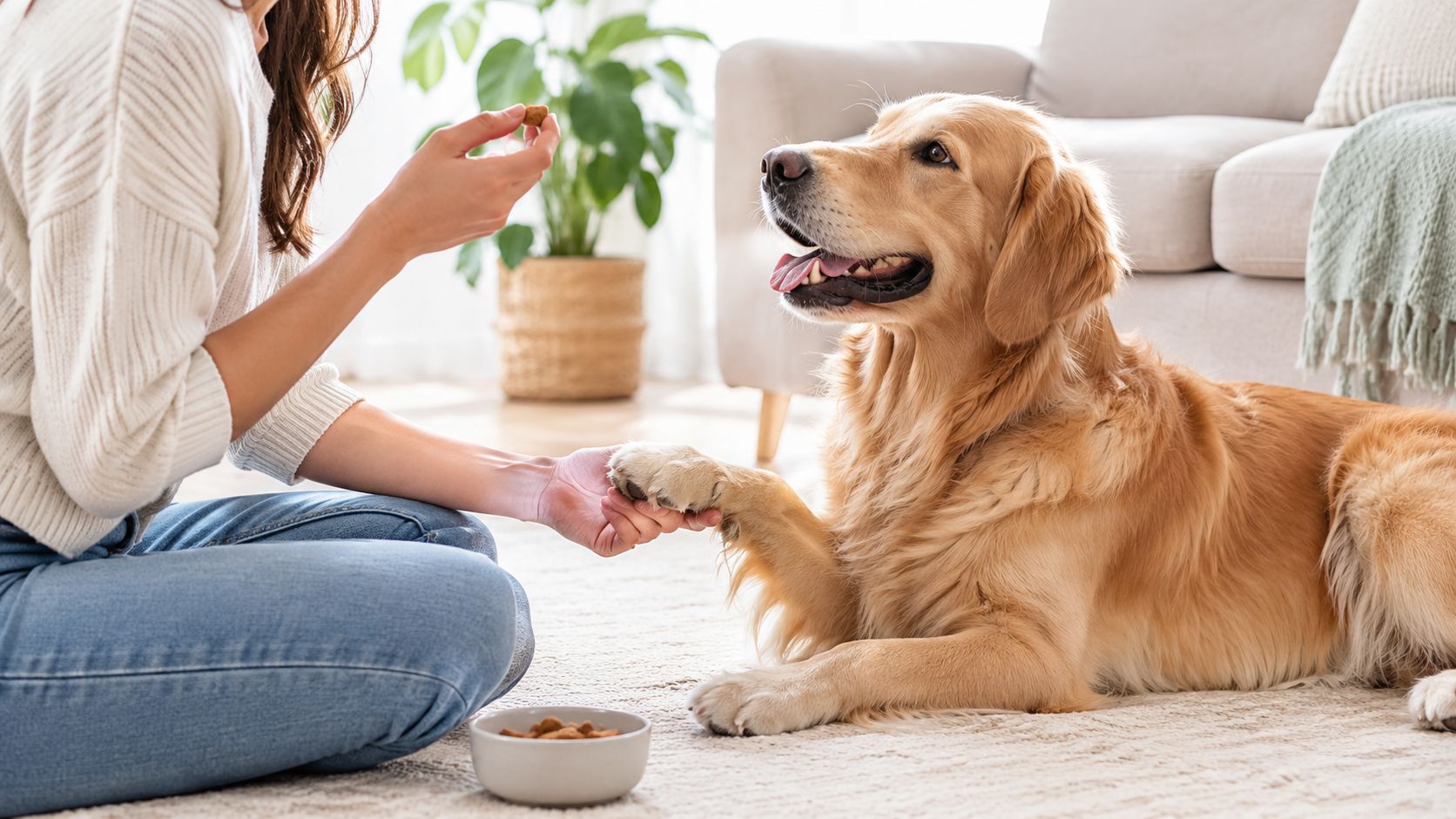
The best appointment often begins at home. Don't wait until the day of the trim to grab a paw, pull out a clipper, and expect cooperation. Build tolerance in small sessions that end before your dog becomes frustrated.
Practice in short, positive stages
-
Start with contact. Touch the shoulder, slide your hand down the leg, and briefly hold the paw. Give a high-value treat before your dog pulls away. Release calmly.
-
Add gentle pressure. Press lightly on one toe so the nail extends. Reward the stillness, not the struggle. Move to another toe only when your dog remains relaxed.
-
Introduce the equipment. Let your dog see a guillotine-style clipper or nail grinder while the tool is turned off. Place it nearby, offer a treat, and put it away. The goal is familiarity, not forced inspection.
-
Pair sound with distance. If you use a grinder, turn it on several feet away for a brief moment, reward your dog, and stop. Increase closeness gradually. Never run the tool against the nail during the introduction stage.
-
End on success. One calm paw touch is better than a long session that ends with wrestling. Consistency builds trust.
El Paso conditions require practical scheduling. Regional Southwest guidance recommends limiting outdoor activity during high heat, protecting paws from hot pavement, and maintaining grooming routines that reduce discomfort in hot, dry conditions, as outlined in regional dog-grooming guidance. Schedule the car ride and appointment during cooler parts of the day when possible, and check pavement before asking your dog to walk across it.
Bring your dog in a secure harness or carrier arrangement, provide water for the trip, and tell the groomer about previous reactions. Honest information helps the professional choose a safer pace.
What Happens During a Safe and Professional Nail Trim
The appointment should begin with observation, not cutting. The groomer examines each paw, checks nail thickness, shape, cracks, and sensitivity, then supports the foot in a position that keeps the dog and handler secure. Clear lighting matters, especially when dark nails make the quick difficult to see.
A professional aims for a healthy, comfortable length instead of chasing the shortest possible trim. The quick contains sensitive tissue, so gradual removal gives the groomer better control. A 2026 study of incremental nail trimming in healthy dogs found that using a guillotine-style clipper along the nail's natural curvature, with a slight distal angle, did not change gait. That finding supports careful, stepwise trimming.
The work should stay measured from start to finish. Each nail is shortened in small passes, with the cut surface checked before the next pass. The groomer follows the nail's direction, preserves stable paw support, and smooths sharp edges only if the dog remains comfortable. Every paw gets a final inspection.
Handler safety is part of professional care, not an optional extra. A 2026 survey of veterinary team members reported that 79.8%, or 193 of 242 respondents, had been injured while performing nail clipping. Safe positioning, good visibility, suitable restraint, and clear communication reduce the chance of a rushed or improvised struggle.
Dark or thick nails need closer attention. Senior and fearful dogs may also require a slower pace, shorter pauses, or a different finishing method. Depending on nail condition and tolerance, the groomer may choose clipping, grinding, or both. Owners can compare the practical differences in dog nail grinding versus clipping before booking.
A skilled groomer stops when the dog's behavior shows that continuing would compromise safety. The right result is a controlled maintenance trim the dog can tolerate at the next visit, with comfort and handler safety protected throughout.
Understanding Local Pricing and Affordable Grooming Promos
A low posted fee tells you very little about the appointment. Before booking, ask how the studio sanitizes tools, handles dogs one-on-one, checks each paw, and allows enough time for safe work. A rushed trim can leave a dog frightened, making future handling harder and increasing risk for both the dog and groomer.
Premium pricing should match the operating model. It should cover controlled appointment capacity, trained handling, well-maintained tools, clear visibility, and a workflow that gives each dog individual attention instead of treating every visit like a fixed ten-minute task. The studio should also explain what the service includes and what care it recommends next.
Price the full experience, not the discount alone. A local promotion has value when its terms are clear and the same handling standards apply during promotional appointments.
Glo More Grooming's Snip & Style Saturday provides a defined example. According to the studio information provided by the publisher, it offers a once-monthly $55 full-groom promotion for all sizes. The offer qualifies as an affordable grooming promo while preserving the structure of a complete grooming visit rather than reducing care to a rushed nail clip.
Before reserving a promotional appointment, confirm:
- What's included: Ask whether the bath, haircut, styling, ear cleaning, and nail trim are covered.
- When it runs: A monthly schedule calls for advance planning, particularly for owners with limited availability.
- How dogs are handled: Find out whether the promotion changes appointment pace, staffing, or capacity.
- What happens after: Ask whether the studio records coat, paw, and handling notes for the next visit.
Independent studios can use promotions to establish repeat relationships while showing owners how they work. That approach suits people who want a predictable routine and a grooming team that remembers the dog's needs over time.
If a full groom fits your budget only occasionally, keep maintenance on schedule. Ask about a standalone nail trim or a bath-and-nail service, then choose the appointment that protects comfort and safe handling between larger grooming visits.
Booking Your Visit and Maintaining Long-Term Paw Health
Turn the search into a routine. Most dogs need a trim about every 3–4 weeks, although some need weekly attention and others can go closer to 6–8 weeks, depending on activity, age, and natural wear, as summarized in veterinary grooming guidance. Use the calendar as a reminder, then confirm with the clicking, floor contact, and walking cues described earlier.
A reliable studio should make booking simple. Look for clear service descriptions, straightforward appointment requests, and a way to share your dog's temperament, nail color, previous grooming experience, and any mobility concerns. Busy professionals may also value concierge-level support, especially when pet care needs to fit around travel or a demanding schedule.
Build a maintenance record
After each visit, note:
- The appointment date: Use it to estimate the next check-in.
- Your dog's reaction: Record what handling worked and what caused stress.
- Nail condition: Track cracks, unusual growth, or tenderness.
- Home observations: Pay attention to clicking, snagging, and hard-floor reluctance.
- Seasonal demands: Increase awareness during hot El Paso periods and after outdoor activity on abrasive surfaces.
Professional grooming schedules commonly center on recurring 4–8 week intervals, but disciplined care means adjusting the schedule to the dog instead of forcing every pet into the same pattern, as discussed in professional grooming schedule guidance. A consistent relationship also lets the groomer recognize changes before a small paw issue becomes a larger comfort problem.
For an appointment, use Glo More Grooming's online dog grooming booking page. Choose a service that matches the dog's current needs, provide complete handling information, and reserve the next visit before the routine slips.
A veteran-owned grooming studio should give you more than a polished finish. It should give you a standard you can trust, a calm process your dog can learn, and an independent local team committed to doing the work correctly every time.
Glo More Grooming provides one-on-one nail trims, full grooming packages that include nail care, bath and blow-dry services, and concierge support for El Paso pet owners who expect disciplined, comfortable handling. Visit Glo More Grooming to book your dog's appointment, reserve a Snip & Style Saturday spot, or contact the studio about a routine that keeps your dog's paws healthy.