
A lost dog with a microchip has a much better shot at getting home. 52.2% of microchipped lost dogs are returned to their owners, compared with 21.9% of dogs without microchips, according to the American Veterinary Medical Association data summarized here. That gap should settle the debate for any serious dog owner in El Paso.
Microchipping a dog isn't trendy pet care. It's baseline responsibility. In a city where pets travel in and out of yards, parks, cars, groomers, boarding setups, and family homes, permanent identification matters. If you care about preparedness, safety, and long-term protection, your dog should be chipped and the registration should be current.
Why Microchipping Is a Lifeline for Your Dog
Permanent identification changes the odds when a dog gets loose. That alone makes microchipping standard care, not an extra.
A collar can snap. A tag can wear down, fall off, or become unreadable after enough hard use. A properly placed microchip stays with the dog and gives shelters, clinics, and animal services a direct way to trace ownership.
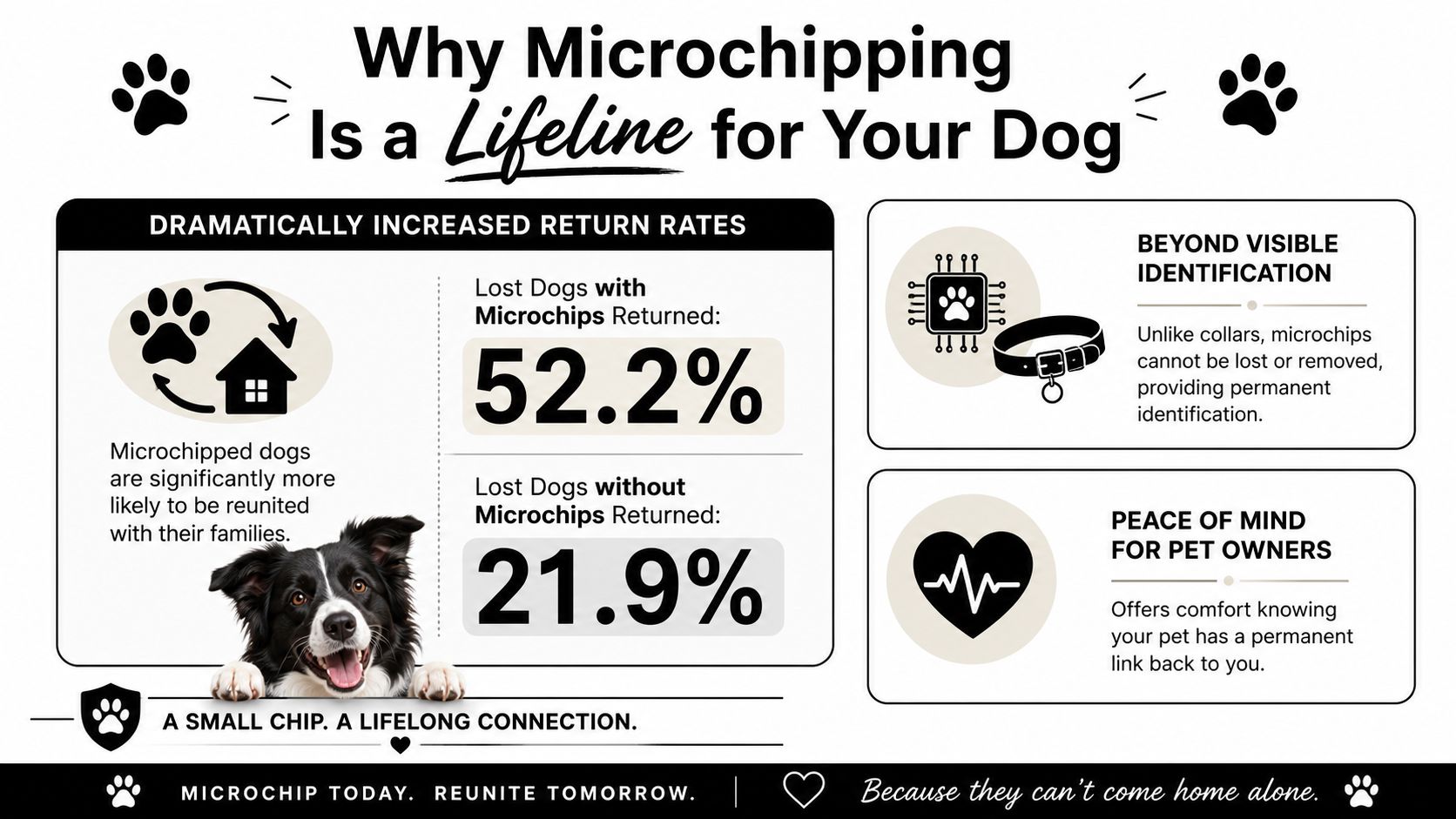
Return rates change the conversation
The numbers cited earlier already make the case. Microchipped dogs are reunited with their owners far more often than dogs without chips.
That gap is important in practice. If your dog lands at a shelter, veterinary clinic, or animal control intake, staff can scan for a chip even if the collar is gone and no one can read a tag. Permanent ID gives them a working path back to you.
Use both forms of identification. Keep a collar and ID tag on your dog every day, but back them up with a chip.
Permanent ID fits responsible pet care
Microchipping belongs in the same category as vaccines, routine exams, and parasite prevention. Owners who take safety seriously build layers of protection. They do not rely on one point of failure.
That standard matters in premium care. Groomers, boarding facilities, veterinary teams, and trained handlers all work better when a dog has clear, verified identification attached to an owner record. If you are serious about preventive pet care for dogs, include a microchip, visible ID, and current contact information.
Why this matters in El Paso
El Paso dogs move through a lot of environments. Neighborhood walks, desert wind, busy roads, family gatherings, travel across town, grooming appointments, and boarding drop-offs all create chances for a dog to slip out at the wrong moment. It only takes one mistake.
That is why I give direct advice on this. If your dog is not microchipped, get it done. If your dog has a chip but the phone number or address is outdated, correct it now.
Local standards should be higher than basic box-checking. In a city like El Paso, responsible ownership means preparing for the day something goes wrong and making sure your dog can still get home. Veteran-owned businesses understand that mindset. Good care is built on discipline, verification, and follow-through. Microchipping is part of that standard.
The Simple and Safe Microchipping Procedure
Owners often build this up in their heads. The procedure itself is quick, standard, and handled with professional control.
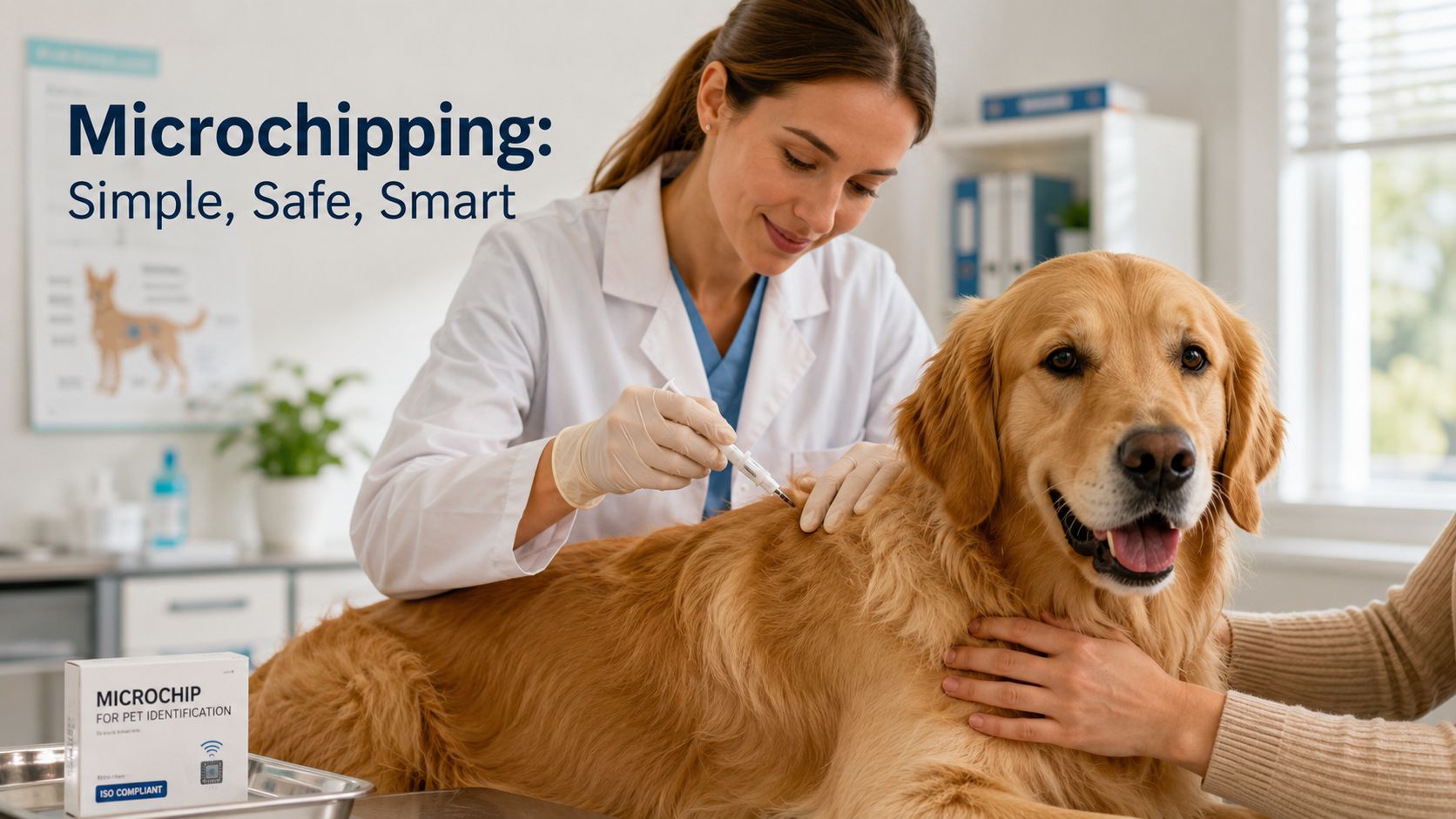
What happens at the appointment
The process follows a clean sequence. The veterinarian confirms your dog's identity and checks the implantation area, usually the loose skin between the shoulder blades. Then the sterile microchip is scanned before placement so the unique ID can be confirmed and recorded.
Next, the chip is loaded into the applicator and placed under the skin with a quick injection. After that, the vet scans the area again to confirm the chip reads correctly and is in place. The last step is the one owners can't ignore: registration of your contact information in the database.
According to this step-by-step veterinary guide to dog microchipping, the procedure is exceptionally safe, with complications occurring in less than 0.01% of cases, and it typically lasts only a few seconds.
What your dog actually experiences
Most dogs handle the implant about as calmly as they handle a routine injection. The moment is brief. Your energy matters more than you think. If you stay steady, your dog usually does too.
What matters most is the clinic's workflow. Clean handling, verified scanning, accurate records, and immediate registration are what separate disciplined care from sloppy care. That same mindset is what defines premium pet grooming as well. Good care is organized, not rushed.
Ask one direct question before you leave the clinic: “Can you scan the chip once more and show me the number that needs to be registered?”
A quick visual walkthrough can help if you want to see the process in action.
My recommendation
Book the implant during a routine veterinary visit and handle the paperwork the same day. Don't leave with “I'll do it later” floating in your head. That delay is where preventable mistakes start.
Your Critical Role in Microchip Registration
Often, many owners drop the ball. They get the chip implanted and assume the job is done. It isn't.
A chip without accurate registration is just an unreadable promise from your point of view. The scanner can find the number, but if the database doesn't point to current owner information, the system breaks right there.
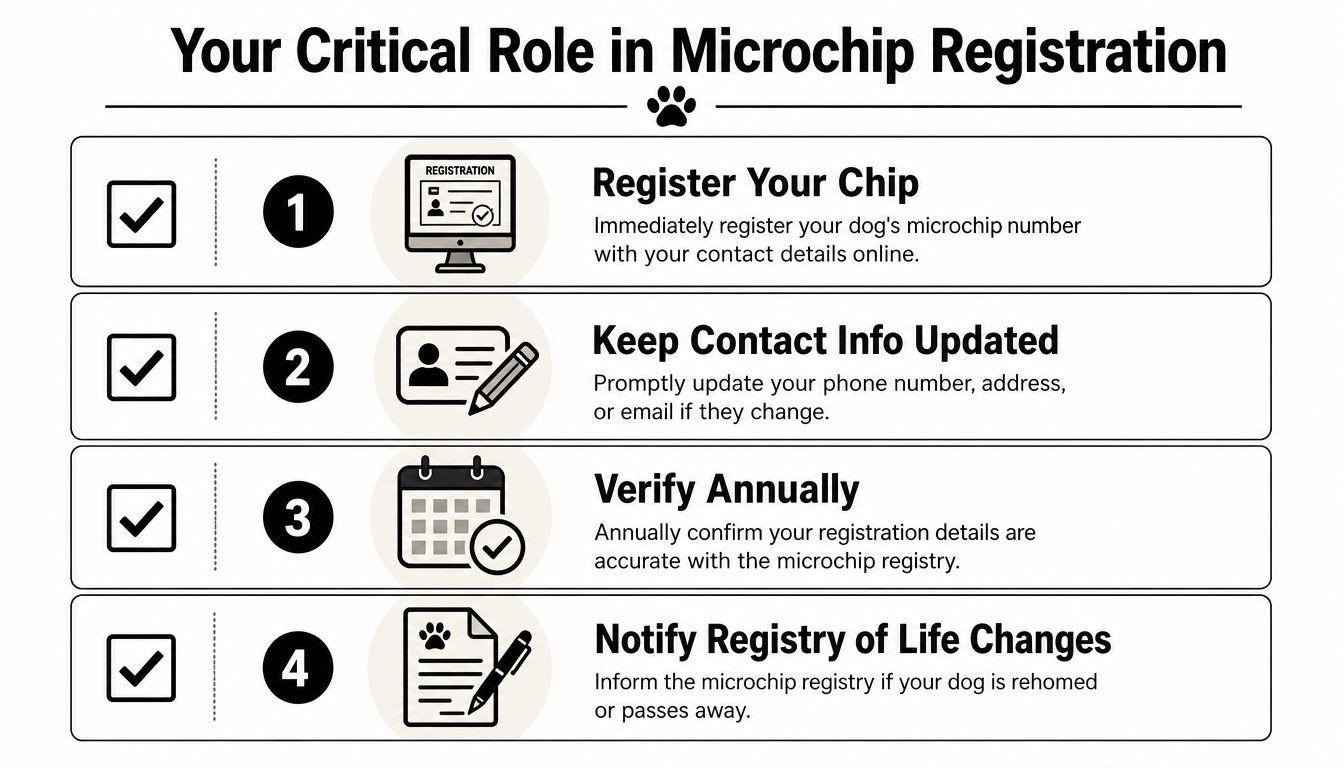
Registration is not optional
The hard truth is that up to 40% of microchipped pets cannot be reunited with owners because the chip data is unregistered or outdated, and 38% of stray animals with microchips had no owner contact data in the registry, based on the AVMA microchipping FAQ resource.
That means the problem often isn't the chip. It's the owner follow-through.
The routine that actually works
Treat registration like any other critical record. It needs setup, review, and updates.
- Register immediately: Before you file away the paperwork, complete the online registration tied to the chip number.
- Update after every change: If your phone number, address, or email changes, update the registry right away.
- Add backup contacts: Include a trusted family member or close friend if the registry allows it.
- Check it yearly: Put a recurring reminder on your calendar and confirm every field still matches reality.
The chip is only as useful as the information attached to it.
What owners forget most often
Life changes subtly. People move. They switch cell numbers. They change emails and never think about old pet records again. Then the dog gets lost, the chip scans fine, and nobody can reach the owner.
That's preventable. If you're serious about microchipping a dog, don't stop at implantation. Finish the mission. Register it. Audit it. Keep it current.
Microchipping Resources and Rules in El Paso
El Paso isn't casual about pet identification in professional care settings, and that's a good thing. Standards protect dogs.
One local point that matters to owners is this: a city ordinance for grooming salons in El Paso requires pets to have a microchip before receiving grooming services, as noted by this El Paso grooming ordinance reference. That requirement puts identification in the same category as core health and safety records. It isn't paperwork for the sake of paperwork. It's part of a controlled pet care system.
Why the local rule makes sense
In a grooming environment, dogs are being transferred, handled, kenneled briefly, moved through check-in and pick-up, and managed around normal service activity. Identification needs to be reliable. That's especially true in a region like ours where people value convenience, mobile schedules, and efficient drop-offs.
This is also where El Paso dog grooming standards start separating strong operators from loose ones. Chains like PetSmart and Petco offer broad access, but local owners who want tighter handling, calmer workflows, and more accountability usually look for a more disciplined setup. That's where premium pet grooming earns its name. Not with marketing slogans, but with rules, verification, and one-on-one care.
What grooming costs look like locally
Microchipping doesn't replace grooming, and grooming doesn't replace basic safety. The best owners budget for both.
According to El Paso grooming pricing listed here, the average cost for full grooming of a small dog in El Paso is $48, $54 for medium dogs, and $66+ for large dogs. Against that backdrop, a monthly affordable grooming promo like Snip & Style Saturday is worth paying attention to because it offers one price across sizes.
| Dog Size | Average El Paso Salon Price | Glo More 'Snip & Style Saturday' Price |
|---|---|---|
| Small | $48 | $55 |
| Medium | $54 | $55 |
| Large | $66+ | $55 |
For larger dogs especially, that kind of promo changes the value equation. It also gives families a practical path into premium pet grooming without getting boxed into chain pricing structures.
Pair compliance with full-care thinking
Good owners don't treat services in isolation. They think in systems.
- Before grooming: Confirm microchip status, vaccine records, and contact details.
- Before travel: Review identification, crate labels, and emergency contacts. If you're flying, start with this guide on dog rabies shot requirements and related travel prep.
- Before summer peaks: Check tags, chip registration, and hydration plans. Heat and disrupted routines create mistakes.
El Paso also has strong local examples of veteran-owned grooming that emphasize discipline and emergency readiness. One example is Waggy Tails Mobile Pet Grooming, which highlights city licensing plus AKC S.A.F.E. and Red Cross Pet CPR credentials. That's the type of standard owners should look for when choosing between independent operators and mass-market chains.
Long-Term Care and Checking Your Dog's Chip
Microchipping a dog is a one-time procedure, but keeping that chip useful is ongoing work. Disciplined owners, through this effort, stay ahead.
Build it into your annual routine
Ask your veterinarian to scan the chip during regular visits. If your dog has frequent grooming appointments, ask whether the business encourages routine record checks as part of intake discipline. Premium operations pay attention to details that rushed chains often skim over.
Use a simple annual checklist:
- Scan the chip: Confirm it still reads properly.
- Verify registry details: Make sure your phone, email, and address are current.
- Review emergency contacts: Replace outdated backup contacts.
- Check travel readiness: If you travel with your dog, keep records organized and easy to access.
A chip that hasn't been checked in years is a risk you don't need to carry.
Tie it to life events
You don't need a complicated system. Tie chip maintenance to real moments you already remember, such as your dog's birthday month, vaccine visits, a move, or trip planning. If your dog flies or travels often, keep identification review in the same file as your transport prep. This kind of planning pairs well with practical guidance on how to fly with a dog safely and smoothly.
The point is consistency. That's what long-term pet care looks like. Not drama, not guesswork. Just clean records, repeatable checks, and no loose ends.
Common Questions About Microchipping
Is a microchip a GPS tracker
No. That myth needs to die.
A 2025 PetMD survey found that 62% of new owners believe a microchip can track a pet in real time, but microchips use RFID and require a scanner, so they cannot track your dog's live location, according to this microchip versus GPS explainer. If you want location tracking, you're talking about a GPS collar. If you want permanent identification, you're talking about a microchip. They do different jobs.
Does the chip need power or charging
No battery, no charging routine, no app management. That's part of the value. The chip is there for identification when a clinic, shelter, or animal control officer scans it.
What if I adopted a dog that already has a chip
Don't assume the old information was removed or updated. Ask a veterinarian to scan the chip and help you identify the registry. Then transfer or update the ownership details properly. If you skip that step, the chip may still point to the wrong person.
Should I still use tags if my dog is chipped
Yes. A tag helps a neighbor or passerby contact you fast without needing a scanner. Visible ID and a microchip work best together because they solve different problems.
When should I recheck the registration
At least once a year, and any time your contact information changes. Also review it before moving, boarding, travel, or handing your dog off to a new caregiver for an extended period.
Is microchipping worth it for indoor or closely supervised dogs
Yes. Dogs don't get lost only because owners are careless. Doors open, storms hit, visitors make mistakes, and routines break. The whole point of preparedness is covering the moment you didn't plan for.
If you want polished care, clear standards, and a team that respects both safety and presentation, book with Glo More Grooming. Reserve your affordable grooming promo, lock in your dog's spot for calm El Paso dog grooming, and choose the kind of veteran-owned grooming built on discipline, pride, and long-term care.