
Your dog keeps shaking their head. Then comes the scratching. Then that look pets give when something's bothering them and they can't tell you where. Most owners notice the problem only after the ear is already irritated.
That's the wrong point to begin.
Ear trouble is one of the most common reasons dogs end up needing veterinary attention. Pet insurance data consistently ranks ear infections as one of the top reasons for vet visits, often the #1 or #2 most common health claim filed by dog owners nationwide according to Nationwide pet insurance. If you want to know how to prevent ear infections, the answer isn't fancy. It's discipline, routine, and doing the small things right before your dog starts suffering.
In El Paso, that matters even more. Dust, wind, backyard play, bath time, and seasonal allergens can all stack the deck against a dog's ears. A rushed rinse and a sloppy dry-off might not look like a big deal today. By next week, it can be a different story. Premium pet grooming should never be treated like a cosmetic extra when ear health is on the line.
Proactive Care Is the Best Defense
Reactive care costs more in time, stress, and discomfort. Preventive care asks for consistency. That's the trade-off, and responsible owners should take the second option every time.
A dog's ears don't usually go from healthy to infected without warning. There's often buildup, trapped moisture, mild irritation, or repeated exposure to the same trigger. Owners miss those early signs because they're busy, and chain grooming environments often move too fast to spot subtle issues that matter.
Practical rule: If your dog only gets ear attention when there's already odor, redness, or heavy scratching, you're late.
A disciplined approach works better. Check the ears regularly. Keep them dry. Clean them correctly when needed. Stop guessing about what's “probably fine.” This is the same mindset behind veteran-owned grooming standards. You don't wait for a preventable problem to become a full problem. You build a routine that keeps standards high every time.
What proactive care actually looks like
For most dogs, prevention means a few plain habits done well:
- Look before you clean: Healthy ears don't need random scrubbing every day. They need observation.
- Keep moisture under control: Bathing, swimming, and sloppy drying create ideal conditions for trouble.
- Treat routine as part of wellness: Ear checks belong alongside coat care, nail care, and skin checks.
That's where premium pet grooming separates itself from high-volume service. A calm, one-dog-at-a-time workflow gives someone the chance to notice buildup, trapped debris, or early irritation before it becomes a vet problem. In El Paso dog grooming, that level of attention isn't a luxury. It's part of doing the job right.
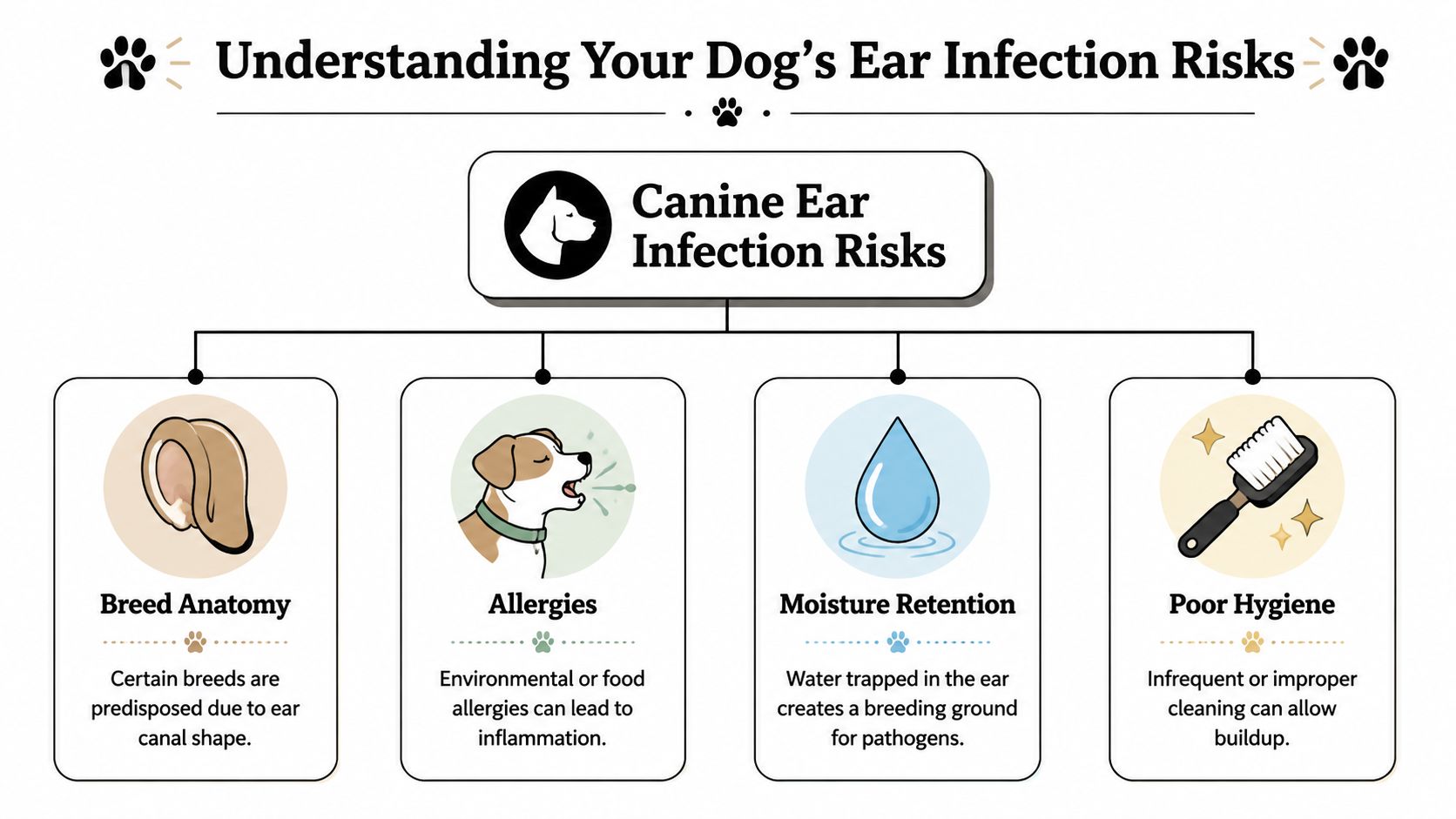
Understanding Your Dog's Ear Infection Risks
Some dogs fight an uphill battle from the start. Their ear shape, coat type, environment, and skin health all matter. If you don't know your dog's risk profile, prevention turns into guesswork.
Breed anatomy matters
Some breeds are built in a way that makes airflow harder and moisture retention easier. Breeds with long, floppy ears like Cocker Spaniels and Basset Hounds, or hairy inner ear canals like Poodles and Schnauzers, have a higher predisposition to ear infections because reduced air circulation can trap moisture according to the American Kennel Club's guidance on dog ear infections.
That doesn't mean those dogs are destined for chronic problems. It means owners need tighter maintenance standards. A Poodle with inner-ear hair and a doodle mix that spends time outdoors need more careful monitoring than a dog with open, well-ventilated ears.
El Paso adds its own challenges
Local conditions matter. Dry wind can carry dust. Seasonal shifts can stir up environmental irritants. Dogs that run in yards, hike trails, or ride with the windows down can collect debris fast.
In practice, El Paso owners should pay close attention after:
- Windy days: Fine dust can settle around the ear opening and coat.
- Baths and play sessions: Water and damp fur around the ear base can linger longer than you think.
- Allergy season: Irritated skin often shows up in and around the ears.
The four usual culprits
Ear infections usually don't come from one dramatic event. They build from common patterns:
| Risk factor | What it does |
|---|---|
| Ear shape | Limits airflow and holds heat or moisture |
| Moisture | Creates conditions where yeast and bacteria can thrive |
| Allergies | Inflames the ear canal and makes recurrence more likely |
| Debris and buildup | Gives irritation a place to start |
A clean-looking ear can still be a high-risk ear if the dog's anatomy and environment keep creating the same problem.
Owners who understand these patterns make better choices. They don't overclean healthy ears, and they don't ignore the dog that keeps coming home dusty, damp, and itchy.
Building a Disciplined Ear Care Routine
Good prevention isn't complicated. It's repeatable. The goal is to build a routine you can keep, not a perfect checklist you abandon after a week.
For most households, a simple ear-care workflow works better than occasional deep cleaning. Daily attention should be quick. Weekly care should be deliberate. Monthly professional grooming should support the same standard.
Daily checks
A daily check takes less than a minute. Lift the ear flap, look inside, and notice what's different from normal. You're not digging into the canal. You're checking for changes.
Watch for:
- Redness: Mild inflammation often shows up before obvious discomfort.
- Odor: A strong smell is a warning sign, not something to cover up with more cleaner.
- Extra scratching or head shaking: Behavior changes often show up before visible discharge.
Weekly maintenance
Not every dog needs a weekly cleaning, but most dogs benefit from a weekly ear review. This is the time to wipe away surface debris if needed, trim around the area if coat overgrowth is trapping moisture, and assess whether your dog's routine needs adjusting.
A disciplined workflow usually looks like this:
- Pick one day and keep it consistent. Weekend grooming routines work well because you're less rushed.
- Check ears before the bath. It's easier to spot irritation on a dry ear.
- Dry thoroughly after any wash. Don't leave dampness hidden under the flap.
- Reward calm behavior. Ear care should feel normal, not like a wrestling match.
Monthly standards
Many owners struggle with this aspect. They'll handle a problem when it's obvious, but they won't maintain a schedule when the dog seems fine. That's exactly how recurring irritation gets established.
An affordable grooming promo can help owners stay consistent without waiting for trouble. If you already block out coat trimming, nails, and bath care, fold ear maintenance into the same rhythm. Discipline wins because it removes guesswork. Veteran-owned grooming isn't about doing more for the sake of it. It's about doing the right things on schedule, every time.
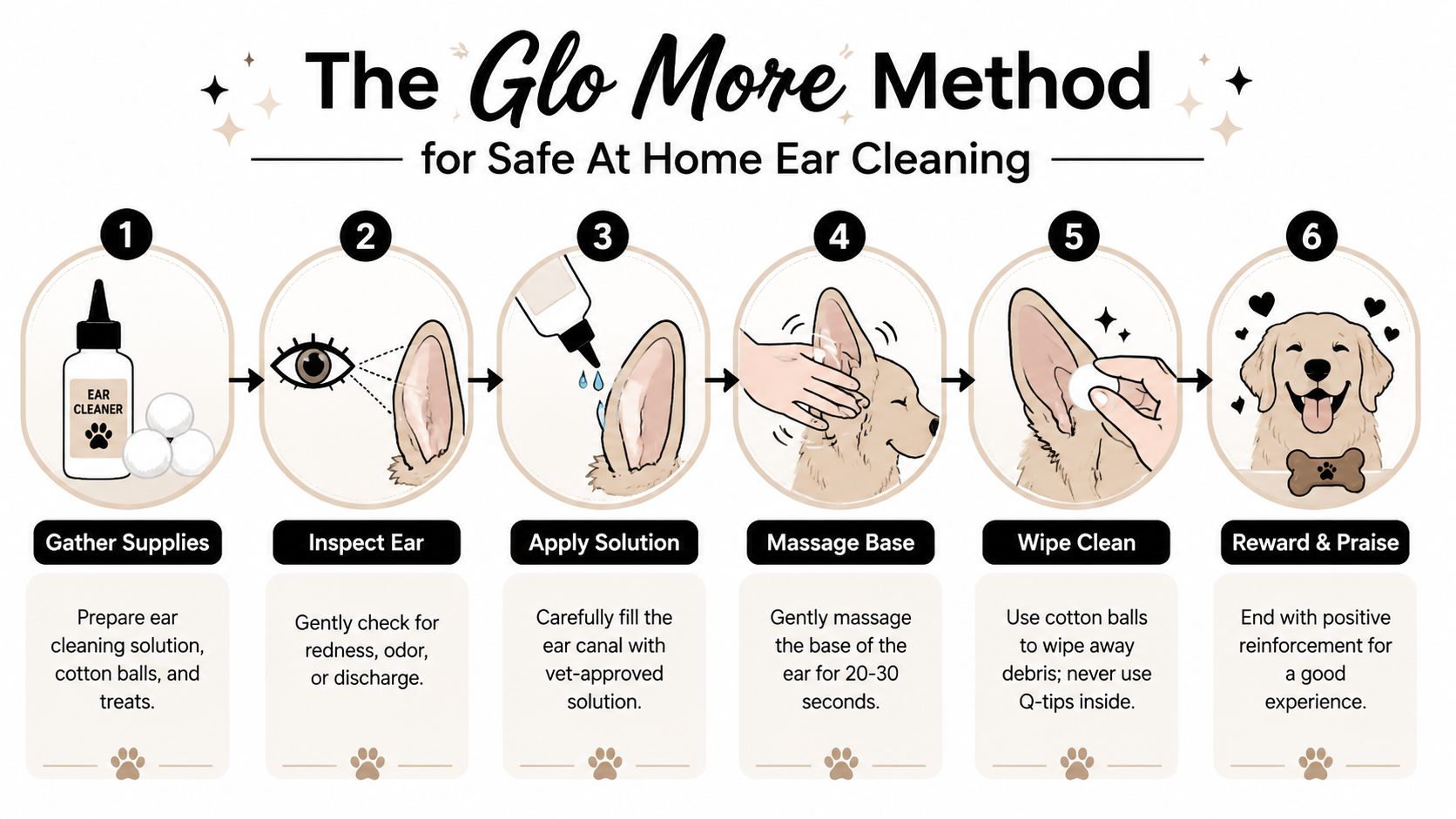
The Glo More Method for Safe At Home Ear Cleaning
At-home ear cleaning should be calm, controlled, and limited to what you can do safely. The goal is to remove visible debris and help keep the ear environment clean. The goal is not to probe deep into the ear canal or play veterinarian.
Start with the right setup.
What you need on hand
Keep the supply list short:
- A vet-approved ear-cleaning solution
- Cotton balls or soft gauze
- Towels
- Treats for reward and cooperation
Skip homemade shortcuts unless your veterinarian specifically tells you otherwise. Skip alcohol-heavy products if they irritate your dog. And never use cotton swabs down inside the ear canal. They push material deeper, and that's a mistake owners make far too often.
The cleaning sequence
Use this sequence every time so your dog knows what to expect:
- Inspect first. If the ear looks angry, painful, or has heavy discharge, stop and get professional guidance.
- Apply the cleaner carefully. Follow the product directions. Don't flood the dog's face or rush the step.
- Massage the base of the ear. A gentle massage helps loosen debris inside the canal.
- Let your dog shake. That helps bring loosened material outward.
- Wipe only what you can see. Use cotton or gauze on the reachable areas.
- Reward immediately. Calm repetition matters.
If you want a more detailed walkthrough of proper maintenance, this guide on ear cleaning for dogs covers the basic service and care approach in plain language.
This visual demo helps owners understand the flow before trying it at home.
What doesn't work
A lot of ear trouble comes from owners doing too much, too aggressively, or too late.
Don't clean an ear you haven't inspected, and don't keep cleaning an ear that's already irritated just because you think more solution will fix it.
Avoid these common errors:
- Using Q-tips inside the canal: That pushes debris inward.
- Scrubbing too hard: Irritated skin gets worse fast.
- Cleaning on a random schedule: Overcleaning some dogs can be just as unhelpful as neglect.
- Ignoring the rest of the groom: Ear care fails when coat, moisture, and skin condition are all neglected.
Safe cleaning is part of how to prevent ear infections. It is not treatment for a painful, active infection.
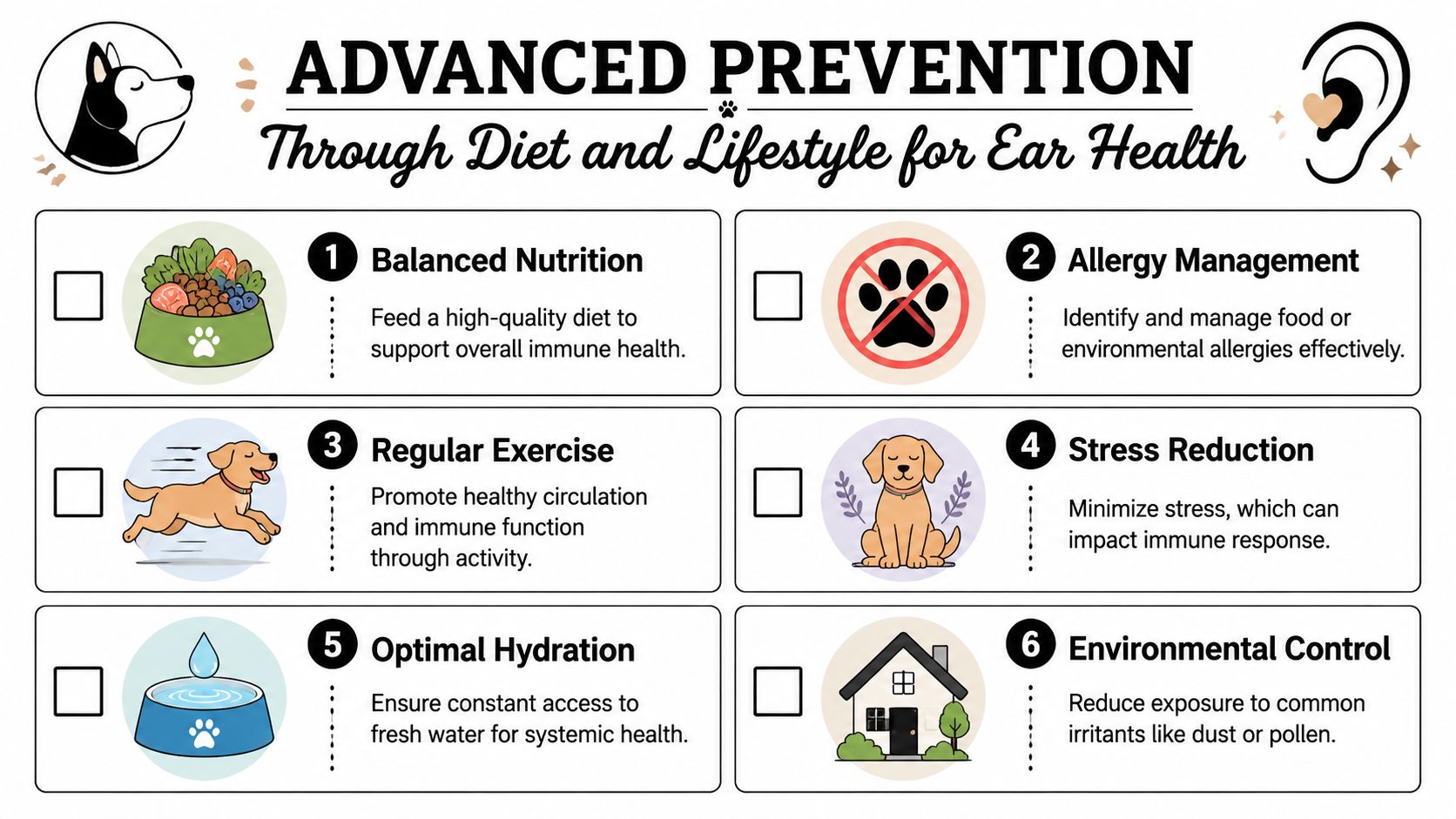
Advanced Prevention Through Diet and Lifestyle
When a dog keeps getting ear infections, the ears may not be the true starting point. Skin health, immune response, environmental exposure, and diet all feed into what happens inside the ear canal.
That's why owners who only focus on cleaner bottles often stay stuck. They're trying to manage symptoms while the trigger keeps showing up every day.
Allergies deserve serious attention
For recurrent outer ear infections, allergies are often a major factor. Veterinary dermatologists estimate that underlying allergies, either environmental or food-related, are the root cause of up to 80% of recurrent otitis externa in dogs according to Cornell's Riney Canine Health Center.
That should change how owners think about prevention. If your dog keeps circling back to ear problems, don't assume poor cleaning is the whole issue. Consider whether itchy paws, face rubbing, seasonal flare-ups, or stomach sensitivity are part of the same picture.
Lifestyle habits that pull real weight
Good prevention usually combines several smaller habits:
- Dry ears after water exposure: Swimming, bathing, and even a thorough rinse can leave moisture where it shouldn't stay.
- Manage the coat around the ears: Heavy matting and overgrowth can hold dampness close to the skin.
- Reduce irritant exposure: Dusty bedding, dirty crates, and heavy outdoor pollen can add stress to already sensitive dogs.
- Feed with consistency: If your veterinarian suspects a food issue, random treats and frequent diet changes make the problem harder to identify.
Think system, not symptom
Experienced owners distinguish themselves from reactive ones. They stop asking, “What can I put in the ear today?” and start asking, “What keeps inflaming this dog in the first place?”
That broader view is what supports long-term ear health. It's also why premium pet grooming should include more than a haircut and quick bath. Ear prevention lives in the details: clean drying, coat management, skin observation, and routines that match the dog in front of you.
When to Consult a Professional
Prevention has limits. Smart owners know where those limits are.
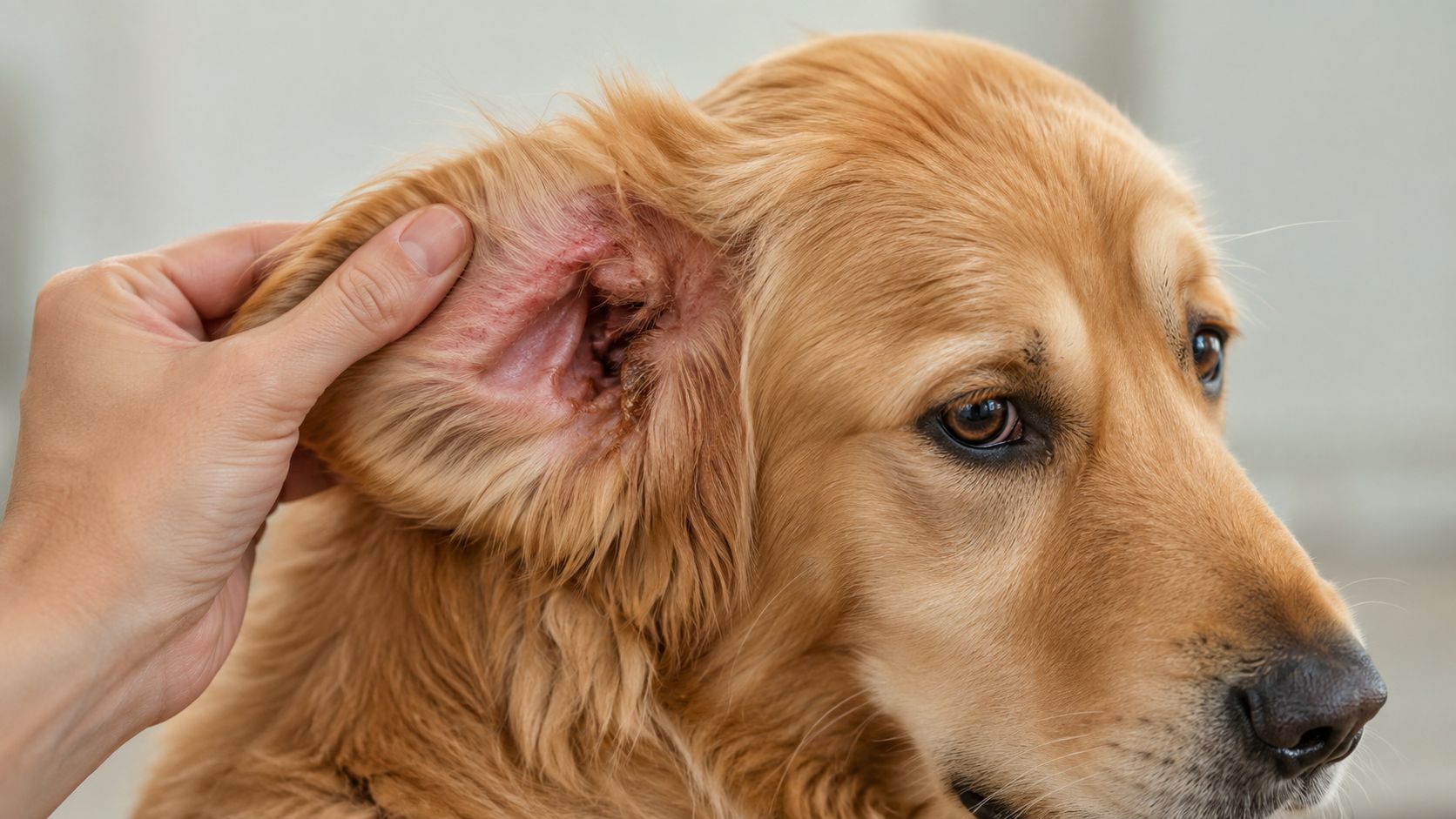
If your dog's ear has a strong odor, visible discharge, marked redness, swelling, pain on touch, or constant head shaking, stop home care and get professional help. The same goes for a dog that cries out, tilts their head, or won't let you near the ear. At that point, you're no longer in maintenance territory.
Groomer versus veterinarian
A groomer can help with hygiene, coat management, drying, and early observation. A veterinarian diagnoses infection, identifies underlying disease, and prescribes treatment. Those roles are different, and good owners respect the line.
If you're unsure what warning signs matter, this breakdown of signs your dog has ear infection gives a practical overview of what to watch for.
Responsible care means knowing when not to keep experimenting at home.
For maintenance between vet visits, one-on-one grooming can make a difference because the dog isn't being rushed through a crowded pipeline. That matters for nervous pets and for owners who want someone to notice changes. For El Paso families trying to stay on schedule, a monthly Snip & Style Saturday slot can also function as an affordable grooming promo that supports regular upkeep instead of last-minute problem solving.
Frequently Asked Questions
What kind of ear cleaner should I use?
Use a vet-approved ear-cleaning solution made for dogs. Don't improvise with harsh household products, and don't use hydrogen peroxide unless your veterinarian tells you to. If your dog has had repeated ear trouble, ask your vet which type of cleaner matches your dog's ear condition.
How often should I have my dog's ears checked professionally?
That depends on breed, coat type, lifestyle, and history. A floppy-eared swimmer needs more monitoring than a short-coated dog with open ears and no history of irritation. If your dog already comes in for regular grooming, ask for ear observation as part of the routine rather than waiting for a visible problem.
Can puppies get ear infections too?
Yes. Prevention starts early with handling practice, clean living conditions, and calm ear checks so the puppy learns to tolerate care. Don't overclean. Build comfort first, then consistency.
What should I do after my dog swims or gets a bath?
Dry the ears thoroughly. That's one of the simplest habits owners can build, and it matters. VCA notes that a post-activity routine like thoroughly drying the ears after swimming or bathing can reduce the risk of moisture-related yeast and bacterial infections by over 50% in its guidance on otitis externa in dogs.
Can I use over-the-counter medication on my own?
Don't guess with medicated products. Some ear problems look alike but need different treatment. If you're weighing store-bought options, read this practical guide to dog ear infection medication over the counter before putting anything in the ear.
If you want disciplined, one-on-one support for ear maintenance, coat care, and clean handling that doesn't feel like a chain-store conveyor belt, book with Glo More Grooming. Reserve your grooming appointment, ask about Snip & Style Saturday, and give your dog the steady care routine that helps prevent problems before they start.