
You notice it when your dog comes in from the yard, hops on the tile, and starts shaking their head like something's off. Maybe there's a little wax. Maybe they scratch one ear more than usual. In El Paso, dust, wind, and outdoor time can make ear care feel like one more chore on a long list.
That's usually when the topic of ear cleaning for dogs arises, revealing the same generic advice repeated everywhere. Clean the ears. Use a solution. Wipe them out. What's often missing is the part that matters most to your dog's comfort. When should you clean, and when should you stop?
At a disciplined, veteran-owned studio, that distinction matters. Premium pet grooming isn't just about a polished coat or a clean finish. It's about standards, calm handling, and knowing the difference between routine maintenance and a problem that needs a veterinarian. That kind of judgment gives owners peace of mind, and it protects dogs from rough, unnecessary handling when their ears are already irritated.
The Importance of Canine Ear Health
A dog can look clean and still have ears that are starting to bother them. One of the first signs is often behavioral. A dog that was steady for brushing or drying starts pulling away when a hand comes near the head. That change matters.
Ear health affects far more than the ears alone. It shapes how a dog feels during bathing, brushing, face trimming, and routine handling at home. Once the ears are sore, even gentle care can feel like too much. Owners often read that as stubbornness or anxiety, when the better explanation is discomfort.
That is one reason generic ear cleaning advice falls short. Good care starts with judgment. Some ears need routine wiping around the outer flap. Some need a proper cleaning. Some should be left alone and checked by a veterinarian before anyone adds solution or pressure. At Glo More Grooming, that distinction is part of the standard.
Why early ear problems get missed
Owners usually are paying attention. The problem is that early ear trouble can look ordinary at first. A little wax may be normal for one dog and the start of irritation for another. Mild odor, extra head shaking, or new sensitivity around one ear can be easy to dismiss until the dog is clearly uncomfortable.
That is why consistency matters more than guesswork. A careful owner watches for changes in smell, discharge, color, heat, debris, and tolerance for touch. A disciplined groomer does the same and knows when routine maintenance stops being appropriate. Fast, one-size-fits-all handling misses those details.
Practical rule: Ear cleaning should leave a dog calmer and more comfortable. If it seems to make the dog more guarded, something is off.
What good ear maintenance helps you do
Proper ear care has a simple job. It keeps normal buildup from sitting too long, helps the dog stay comfortable with handling, and gives you a clear baseline for what is normal in that individual dog.
That baseline matters in El Paso. Dust, wind, outdoor play, and frequent car rides can leave debris around the ear opening and flap. Dirty does not always mean infected. It does mean you need to pay attention to what is changing and avoid the mistake of cleaning harder just because an ear looks messy.
Owners with nervous dogs should also separate ear health from handling stress. A tense dog may resist because the ear hurts, because the process feels rushed, or both. Building better restraint is not always the answer. In many cases, calmer prep and slower handling help more, especially if you have already worked on ways to calm an anxious dog.
The goal is not spotless ears at all costs. The goal is healthy ears, a dog that still trusts your hands, and the judgment to know when home care is enough and when it is time to stop.
Preparing for a Safe and Calm Ear Cleaning
The safest ear cleaning session starts before the bottle opens. If your dog is tense, sliding across the floor, or already avoiding your hands, the job gets harder and sloppier. Good preparation keeps the process controlled.
Set up your tools first
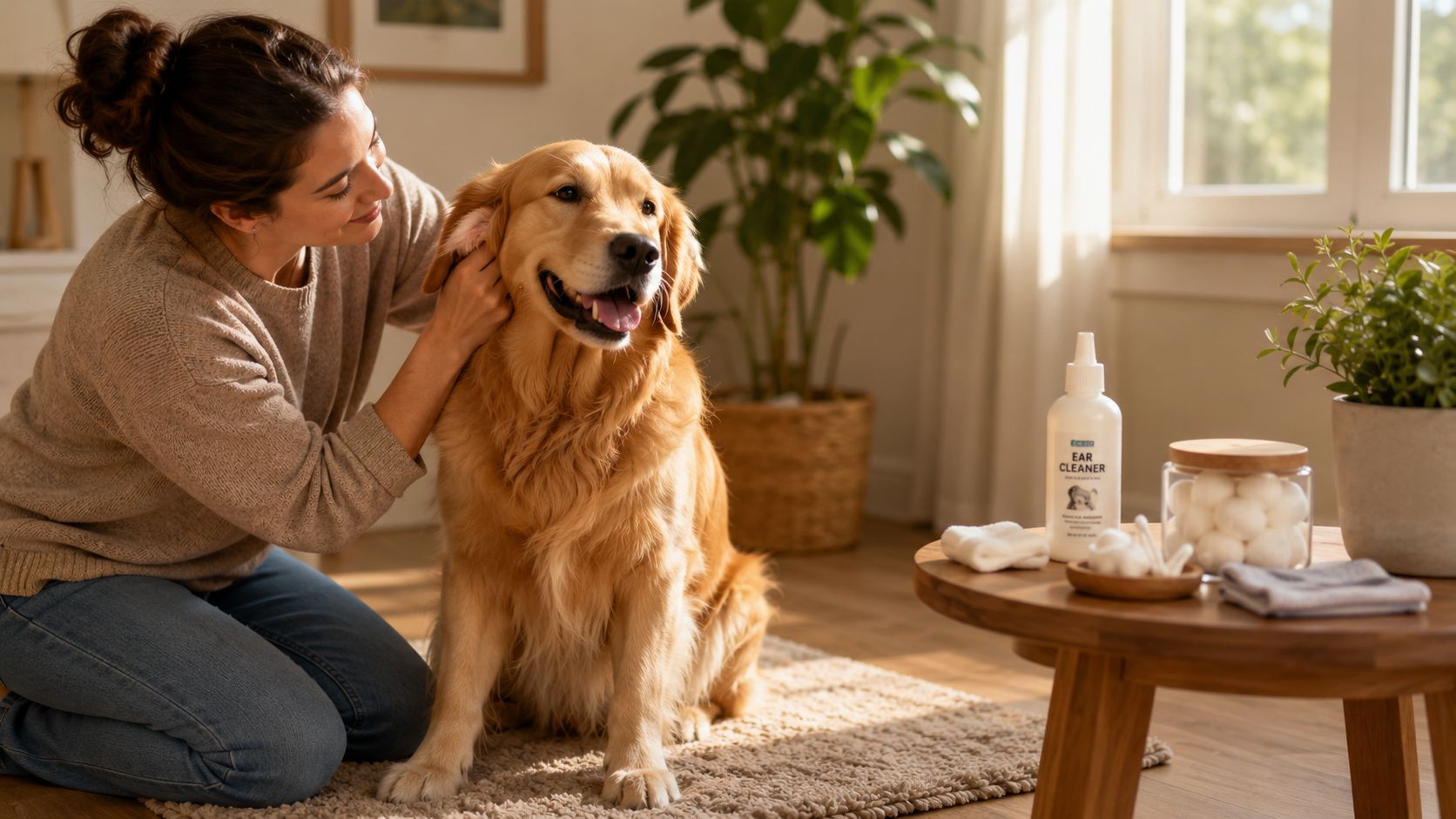
Keep the setup simple. You need a vet-approved ear cleaner and soft cotton or gauze for wiping visible material away. You should not use Q-tips inside the ear canal.
Lay everything out before you bring your dog over. That small step matters. It keeps you from pinning a nervous dog in place while you reach for supplies with one hand.
A clean routine usually includes:
- Ear cleaner made for dogs so you're using a product intended for the job
- Cotton balls or gauze to wipe the visible canal opening and inner ear flap
- Treats to reward calm behavior before, during, and after handling
- A steady surface where your dog can stand or sit without slipping
Train the handling before you need the cleaning
Some dogs don't mind ear care at all. Others brace the second you touch the side of their head. VCA notes in its ear cleaning instructions for dogs that some dogs may need cleaning 1 to 3 times weekly, especially swimmers, while over-cleaning can cause irritation. The same guidance emphasizes weekly desensitization practice for dogs that dislike ear handling.
That's the part many owners skip. They only touch the ears when the ears are dirty.
Instead, practice these small reps when you're not in a hurry:
- Touch the shoulder, then the neck, then the side of the head.
- Briefly lift the ear flap.
- Reward calm stillness.
- Stop before your dog gets frustrated.
If your dog gets anxious during grooming or home care, these ways to calm an anxious dog can help you build a steadier routine.
Calm ear handling is a skill. Dogs learn it the same way they learn anything else. Through repetition, timing, and trust.
What doesn't work
Owners usually run into trouble in one of three ways.
- They rush it. Fast hands create resistance.
- They improvise tools. Household swabs and random liquids create avoidable risk.
- They only clean when there's a struggle. That teaches the dog to expect stress every time.
Premium pet grooming standards start with restraint and preparation, not force. That same mindset works at home.
The Proper Technique for Cleaning Your Dogs Ears
Technique matters because the goal isn't just to get visible wax out. The goal is to loosen debris safely and let it move outward without jamming anything deeper into the canal.
The basic method
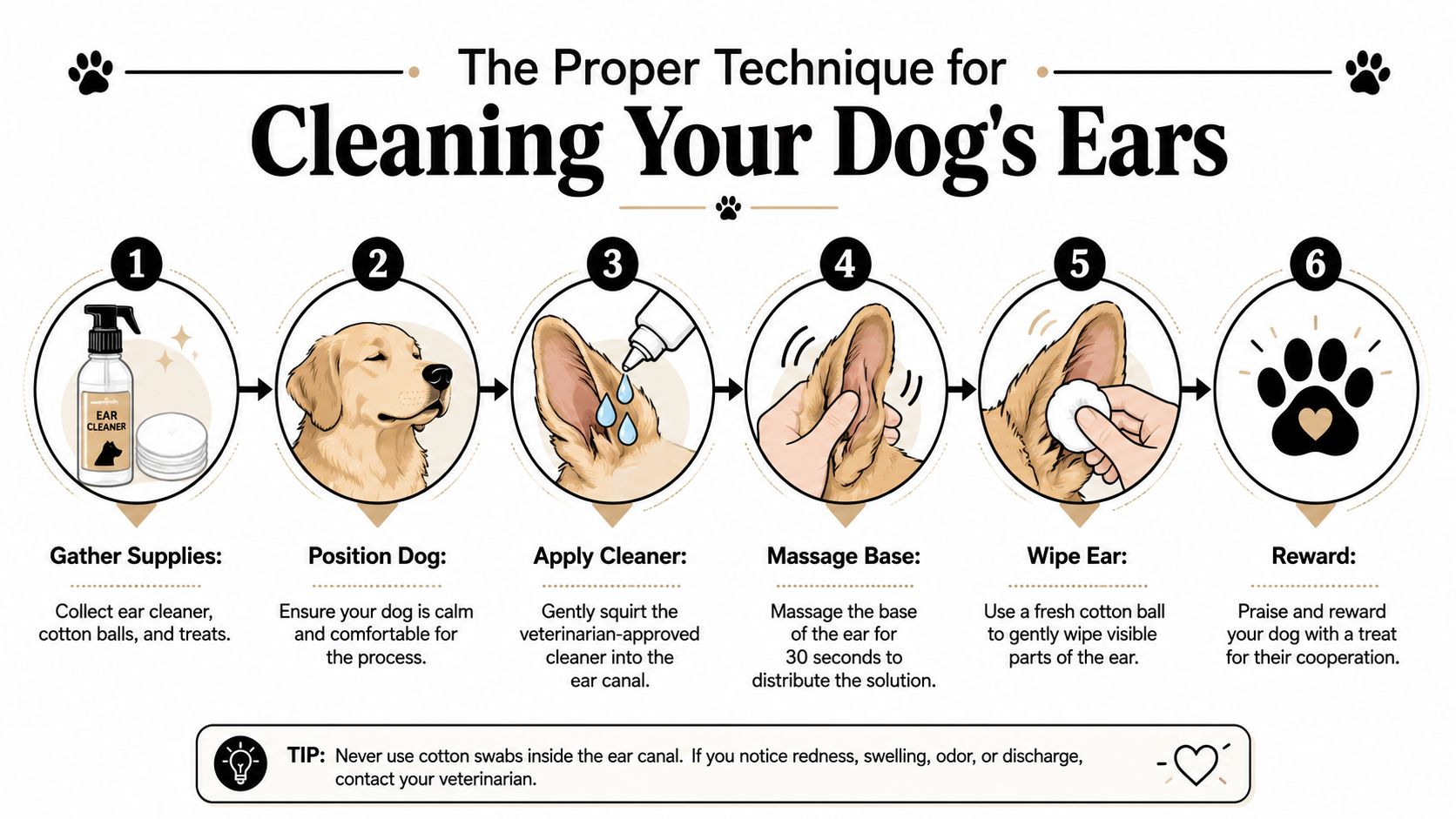
Veterinary instructions in the DOUXO ear cleaning routine for dogs recommend gently lifting the ear flap to straighten the canal, instilling enough vet-approved cleaner to fill the canal, massaging the base of the ear for about 15 to 30 seconds, letting the dog shake, and then wiping only the visible canal and pinna with cotton or gauze. The same guidance warns against inserting Q-tips into the canal because they can push debris deeper or cause trauma.
That sequence works because each step does a different job.
Step by step without guesswork
Lift the ear flap gently.
This helps straighten the canal so the cleaner goes where it needs to go.Apply enough cleaner to fill the canal.
Don't drizzle a tiny amount and expect much to happen. The cleaner needs enough volume to contact the wax and debris.Massage the base of the ear.
Use your fingers at the base, not the tip of the flap. A short massage helps loosen buildup.Let your dog shake.
Owners sometimes try to stop this. Don't. Shaking helps bring loosened material outward.Wipe only what you can see.
Use cotton or gauze to clean the visible opening and the inner flap.Reward and release.
End the session on a calm note.
Why contact time matters
Short, token cleaning usually doesn't do much. Technical guidance summarized in Today's Veterinary Practice on deep ear flush technique notes that effective ceruminolytic cleaners often need 5 to 15 minutes of contact time, and that a brief base-of-ear massage helps break up wax so debris can migrate outward before wiping.
That doesn't mean every home ear cleaning session needs to become a long production. It means you shouldn't squirt cleaner in and wipe it out immediately like you're polishing glass. Let the product work.
Shop-floor standard: If you wipe too early, you remove liquid before it has time to loosen the material you're trying to clear.
Common mistakes that backfire
A lot of home ear cleaning problems come from trying to be “extra thorough.” That instinct causes damage.
Avoid these habits:
- Putting swabs into the canal because it can push debris deeper
- Scrubbing aggressively because irritated skin gets more irritated
- Using random liquids because ears need products made for canine ear tissue
- Cleaning inflamed ears anyway because “something is better than nothing” is false in this situation
If your dog tolerates the process poorly, keep your movements deliberate. One clean pass is better than multiple frantic ones. In a premium grooming workflow, precision beats force every time.
For owners comparing products and maintenance options, this guide to dog ear cleaners can help you think through what belongs in your at-home setup.
Recognizing When to Stop and See a Professional
Your dog lets you touch one ear, then jerks away from the other, pins the head low, and gives you that hard look that says something is wrong. That is not the moment to push through and finish the job.
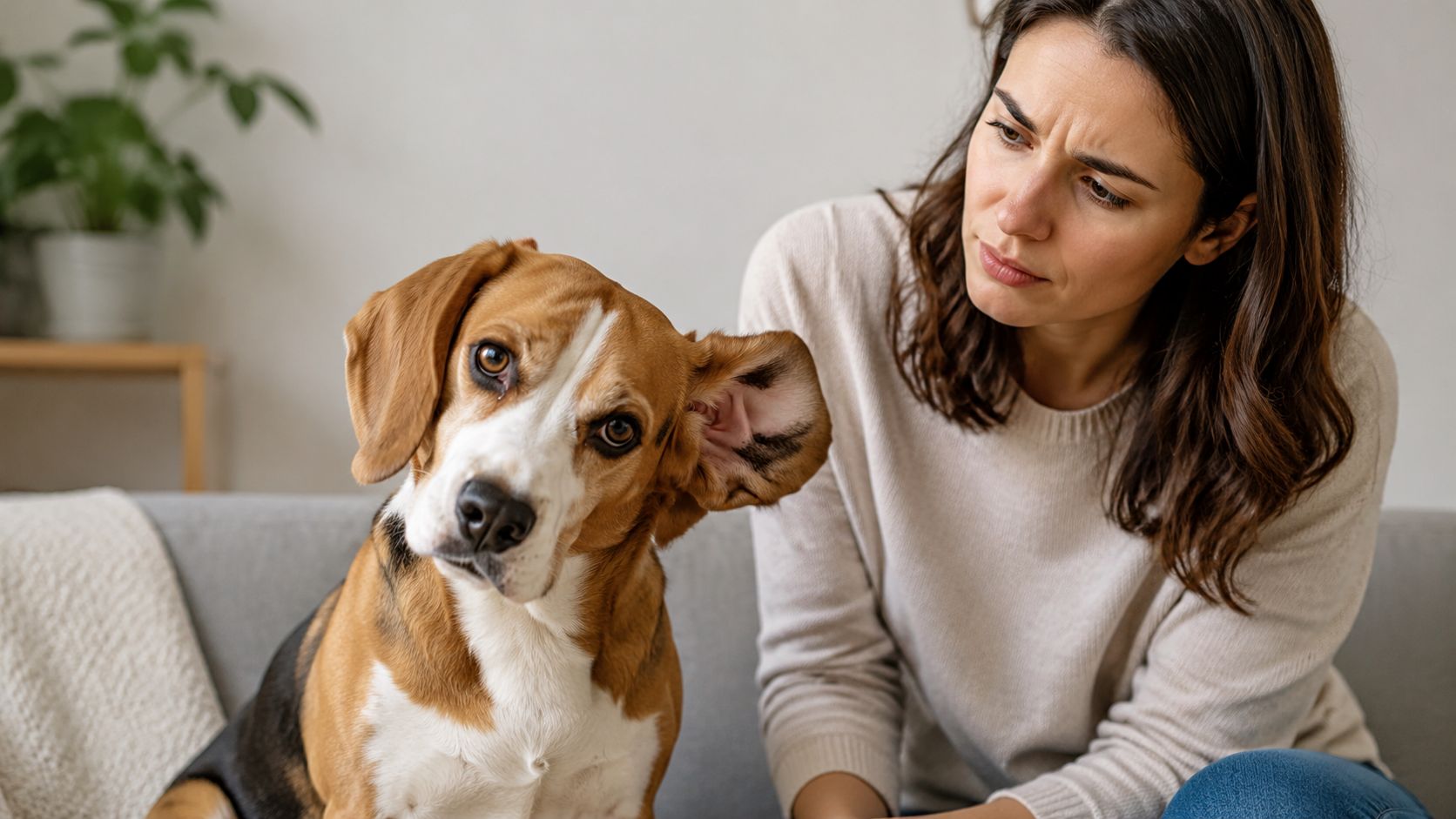
A disciplined ear care routine includes a stop point. Owners get into trouble when they treat every dirty ear like a maintenance issue. Some ears need cleaning. Some need a veterinarian first.
Pain, swelling, active redness, discharge, bleeding, or a strong new odor change the plan. In those cases, home cleaning can add friction to tissue that is already irritated, make the dog more defensive about handling, and blur what a veterinarian needs to see clearly. Generic advice often skips that distinction. We do not.
Red flags that mean stop
Watch the dog and the ear. Either one can tell you to quit.
- Sharp sensitivity to touch such as flinching, yelping, snapping, or pulling away hard
- Noticeable redness or heat inside the visible part of the ear
- Discharge that looks heavy, wet, thick, or unusual for your dog
- A strong odor that is new or clearly worse than usual
- Blood or scabbing in or around the ear opening
- Head shaking or ear scratching that seems persistent, intense, or sudden
Those signs point away from routine upkeep. They raise concern for infection, injury, a foreign body, allergies, or deeper inflammation that should be assessed before anyone adds cleaner and handling.
If you need help sorting normal wax from a medical problem, review these signs your dog has ear infection before you decide the ear just looks dirty.
A simple call to make at home
Use a working standard.
A maintenance ear usually has mild wax, no major odor change, no visible inflammation, and no strong objection to gentle handling. An ear that is painful, hot, red, wet, foul-smelling, or producing discharge belongs in the professional category.
That distinction matters. A good groomer knows the difference between finishing a service and overrunning a safety limit. At Glo More Grooming, we do not force ear work on a dog that is showing clear discomfort just to check a box. Protecting the ear comes first.
This short video gives a useful visual reference for what careful ear handling looks like in practice.
If your dog says the ear hurts, believe that response and stop.
What responsible care looks like
Responsible care means knowing when home effort stops being helpful. That judgment protects the dog, and it protects owners from making a sore ear worse while trying to do the right thing.
In a rushed, high-volume setting, ears can get treated like one more task in the lineup. In a premium one-on-one workflow, the condition of the ear decides whether the service continues, gets modified, or gets referred out. That is the standard disciplined handlers follow.
Building a Custom Ear Care Routine
No dog needs a copy-and-paste schedule. Ear shape, outdoor habits, water exposure, previous irritation, and tolerance to handling all change the right cadence.
A dog that swims often may need more frequent attention. A dog with upright ears and minimal buildup may need far less. Another dog may not need frequent cleaning at all, but still needs regular ear-touch practice so handling stays calm.
What should drive your schedule
Use your dog's real life, not a generic calendar.
- Ear shape: Floppy ears often trap more moisture and debris than upright ears.
- Lifestyle: Swimmers, hikers, and dogs that spend time in dusty El Paso conditions may need closer monitoring.
- History: Dogs with repeated ear trouble deserve a more cautious, individualized plan.
- Temperament: If your dog dislikes ear handling, routine practice may matter as much as routine cleaning.
Recommended Ear Cleaning Frequency by Ear Type and Lifestyle
| Ear Type / Lifestyle | Description | Recommended Frequency |
|---|---|---|
| Upright ears, low buildup | Dogs with open airflow, little visible wax, and no regular water exposure | Check regularly and clean only when visible buildup suggests it's needed |
| Floppy ears | Dogs whose ears cover the canal more fully and may hold moisture or debris | Maintain a regular schedule based on visible buildup and comfort |
| Frequent swimmers | Dogs exposed to repeated moisture | Some dogs may need cleaning 1 to 3 times weekly, though over-cleaning can cause irritation, as noted earlier from VCA |
| Dust-loving outdoor dogs | Dogs that spend time in dry yards, trails, and windy conditions around El Paso | Check often and clean based on debris level rather than habit alone |
| Dogs with handling sensitivity | Dogs that resist ear care or become stressed by restraint | Prioritize calm weekly handling practice and clean only when appropriate |
| Dogs with prior ear issues | Dogs with a history of irritation or infection | Follow a veterinarian's guidance rather than using a general routine |
The trade-off owners need to respect
Cleaning more often isn't always better. Unnecessary handling can create stress, and over-cleaning can irritate the ear. On the other hand, waiting too long when your dog tends to collect wax or moisture can leave debris sitting in place.
That's why the best routine is a maintenance range, not a rigid rule. Check the ears consistently. Clean with purpose. Adjust when your dog's season, behavior, or exposure changes.
The Glo More Standard for Premium Ear Care in El Paso
A dog comes in for grooming, shakes its head once, then pulls away when the ear is touched. That is the moment a disciplined groomer slows down and pays attention.
Professional ear care should be quiet, deliberate, and based on what the dog is showing in real time. In El Paso, grooming standards vary. Some shops run on volume and speed. A smaller, disciplined studio has more room to read body language, handle the ear gently, and decide whether cleaning is appropriate that day.
At Glo More Grooming, ear cleaning is included in full grooming packages with the bath, haircut, styling, and nail trim. That gives owners a practical way to keep ear checks and routine maintenance in the same appointment, instead of treating ear care like a last-minute add-on.
The standard is not just about what is included on a service list. It is about judgment. A good groomer knows the difference between mild surface debris and an ear that needs to be left alone and referred out. That matters for anxious dogs, puppies learning handling, senior dogs, and owners who want a veteran-owned grooming business that values control, cleanliness, and restraint.
That last point matters. Premium care is not cleaning every ear the same way on every visit. Premium care means stopping when the ear looks inflamed, painful, unusually dirty, or medically questionable. Generic advice misses that. Skilled grooming protects the dog first.
There is also room for value without lowering standards. Monthly offers like Snip & Style Saturday give local families access to a more customized grooming experience while keeping the process calm and one-on-one. For many El Paso owners, that is a better long-term fit than dropping a dog into a noisy chain setting and hoping the ear care was done with care.
If your dog's ears need a careful eye, a steady hand, and a grooming routine built around comfort, book with Glo More Grooming. Reserve your spot, ask about Snip & Style Saturday, and get ear care handled with the disciplined standards your dog deserves.