
A lot of El Paso dog owners do the same thing before a grooming appointment. They brush the coat, wipe the paws, check the ears, and hope this visit finally brings back that soft shine they remember. But if a dog's coat feels brittle, sheds heavily, or looks dull no matter how often you schedule care, the answer often starts at the food bowl, not the grooming table.
That matters in a city where dry air, heat, dust, and busy schedules can work against coat condition. A polished finish doesn't come from shampoo alone. It comes from structure, consistency, and feeding choices that support skin, hair, and muscle every day.
A premium grooming result is always easier to achieve on a dog that's being nourished well. That's one reason many owners start paying closer attention to high protein dog foods. When the coat has better raw material to grow from, every bath, blowout, deshed, trim, and tidy-up performs better.
The Foundation of a Flawless Finish Starts from Within
A dog can walk into the salon looking tidy enough and still tell a bigger story. The coat may separate poorly under the comb. The skin may look dry around the elbows, tail base, or belly. A bath may clean the dog, but it won't fix what the body doesn't have the nutrition to build.
That's the difference between surface care and whole-dog care.
In premium grooming, disciplined workflow matters. Clean tools matter. Calm handling matters. One-on-one attention matters. But nutrition still sets the floor for what's possible. If a dog eats a diet that supports muscle and coat quality, the results show up in texture, resilience, and how the coat responds to drying and finishing.
What owners usually notice first
Most owners don't start by saying, “I think my dog needs more protein.” They say things like:
- The coat lost its shine
- She's shedding more than usual
- His skin seems irritated
- He looks clean after grooming, but it doesn't last
- The body looks softer and less toned than before
Those are practical observations. They're also useful. They push the conversation away from marketing labels and toward what is happening with the dog.
Practical rule: If the coat quality keeps disappointing you between appointments, review the diet before you blame the brush, the shampoo, or the season.
Protein isn't the only factor in canine nutrition, but it's a foundational one. Hair is built from protein. Skin repair depends on amino acids. Lean muscle tone affects how a dog carries weight and movement. Dogs that are active, growing, working, or maintaining a strong body condition often benefit when owners understand protein quality instead of chasing flashy packaging.
Why this matters in El Paso
El Paso dogs live with environmental stress that owners can see and feel. Dry conditions can leave skin less forgiving. Dust can collect fast. Outdoor dogs, active dogs, and dogs moving between air conditioning and heat often need routines that are tighter and more intentional than “good enough.”
That's where a grooming-minded nutrition approach helps. You're not only feeding for fullness. You're feeding for skin comfort, coat manageability, and the kind of body condition that holds a polished outline after grooming.
For owners comparing food categories, budget, and ingredient quality, it helps to look beyond sticker shock and think in terms of long-term care decisions. A practical place to start is this breakdown of what dog food can really cost over time.
A flawless finish starts long before the bath. It starts with what the dog can use, absorb, and turn into a healthier coat.
Decoding Labels What Is a High Protein Dog Food
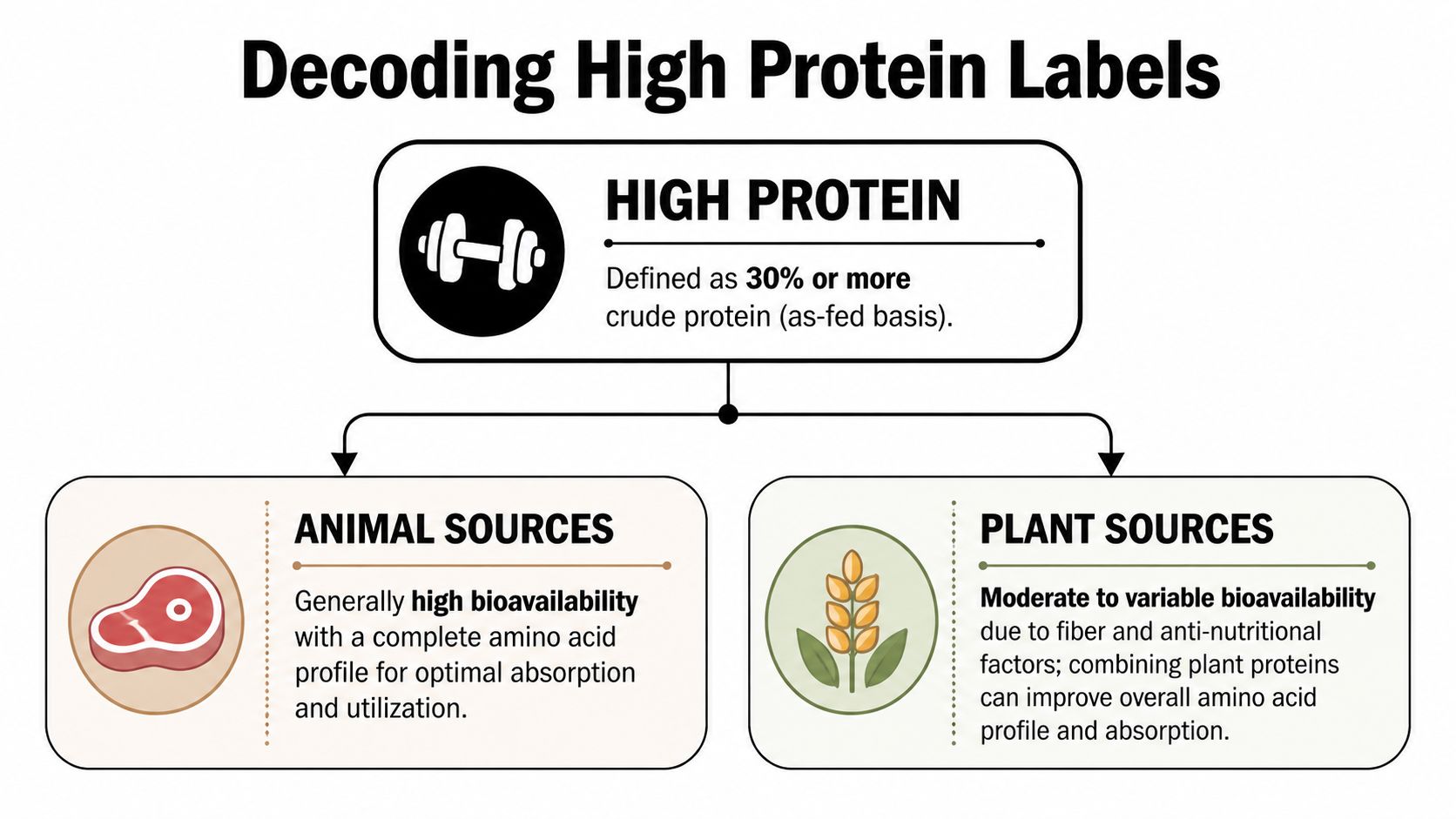
“High protein” gets printed on a lot of bags, boxes, and cans. That doesn't make all those foods equal. If you want to read a label like a pro, you need two things. You need the baseline, and you need the right comparison method.
The baseline comes from AAFCO. The Association of American Feed Control Officials mandates a minimum crude protein level of 18% on a dry matter basis for adult maintenance diets and 22.5% dry matter for puppies and lactating dogs. Foods commonly marketed as high-protein typically exceed 30% dry matter, and some premium formulas go over 60% dry matter, as summarized in this AAFCO protein overview from ThinkJinx.
Dry matter is the key comparison
A wet food often looks lower in protein because water takes up so much space on the label. Kibble looks higher because it contains far less moisture. If you compare them “as fed,” you can make the wrong call.
Use this formula:
% Protein DMB = (% Crude Protein / (100 – % Moisture)) × 100
That formula lets you compare kibble, canned, and fresh food on equal ground. It cuts through a lot of marketing noise.
Here's the practical takeaway:
| Food type | What can confuse owners | What to check |
|---|---|---|
| Kibble | Protein may look high at first glance | Convert only if you want an apples-to-apples comparison with wet or fresh food |
| Wet food | Protein often looks low on the can | Moisture can hide a strong dry matter protein level |
| Fresh food | “As fed” numbers may seem modest | Dry matter may place it firmly in high-protein territory |
Animal protein versus plant protein
Not all protein sources perform the same way in the dog's body. A label may show a decent crude protein number, but ingredient quality still matters.
Look for named animal proteins such as chicken, turkey, beef, or fish near the top of the ingredient list. Those tend to align better with the way owners describe the outcome they want: stronger muscle tone, better coat texture, and more consistent body condition.
A few label-reading habits help fast:
- Check life stage first. Make sure the food matches adult maintenance or growth/reproduction before you focus on anything else.
- Read past the front label. “High protein” on the bag means less than the guaranteed analysis and ingredient panel.
- Compare foods on dry matter. This is the cleanest way to compare canned, fresh, and dry products.
- Favor clear ingredient naming. “Chicken” tells you more than a vague meat description.
The strongest buying decision usually isn't the most expensive bag on the shelf. It's the food whose label still makes sense after you convert it and read the ingredients line by line.
High protein dog foods can be excellent options, but only if you understand what the label is really saying.
How Protein Builds a Resilient Coat and Healthy Skin
A groomer sees protein at work without ever opening a textbook. You see it in a coat that lifts cleanly during drying, lies flatter when finished, and feels denser without being greasy or rough. You also see the opposite. Some coats stay flyaway, weak, or fragile even when the bathing routine is solid.
That difference starts with biology.
Hair and nails rely heavily on keratin, and keratin is built from amino acids supplied through dietary protein. If the dog eats protein the body can digest and use well, the skin and coat usually have better raw material to work with. If the protein source is weaker or less usable, the coat often tells on it.

Digestibility changes the result
Crude protein on the label doesn't tell the whole story. What matters in practice is how much of that protein the dog can digest and absorb. According to this Hill's overview of protein and digestibility, animal proteins like chicken are 80% to 95% digestible, while some plant proteins are 60% to 75% digestible. That same source notes that higher bioavailability from named meat sources can support up to 20% better skin barrier function.
That's a grooming issue, not just a nutrition issue.
When the skin barrier is healthier, the dog often handles routine bathing, brushing, and seasonal dryness better. The coat tends to look more settled and less stressed. You're working with the dog's body, not fighting it.
What high-quality protein often improves
A protein-conscious feeding plan can support several visible outcomes:
- Coat resilience. Hair breaks less easily and tends to hold a better finish.
- Skin comfort. Dogs with better skin condition often tolerate regular maintenance with fewer flare-ups.
- Muscle definition. A more supported body condition gives the dog a cleaner outline after trimming.
- Shedding management. While no food eliminates shedding, a stronger coat can be easier to maintain.
A shiny coat isn't only a cosmetic win. It often signals that the dog has the internal resources to grow and maintain hair properly.
Why climate makes the issue more obvious
El Paso's dry environment can make nutrition gaps show up faster. A dog that already has marginal skin support may look rougher here than it would in a milder, more humid place. Owners sometimes assume the weather is the whole problem. It isn't. Weather exposes weak routines.
That's why premium pet grooming works best when the home routine supports it. Bathing can cleanse and condition. Brushing can prevent tangles and distribute oils. A trained finish can enhance the whole look. But if the coat lacks internal support, the polished result won't hold as long.
Good grooming reveals good nutrition. High protein dog foods, especially those centered on digestible named meats, can give the coat a stronger starting point.
Choosing the Right Protein for Your El Paso Dog
The right food depends on the dog in front of you. Age matters. Activity matters. Coat type matters. So does climate. A compact senior house dog in El Paso doesn't need the same feeding strategy as a young sporting dog hiking, training, or running hard.
That's where owners often get better results from judgment than from trends.
Start with the dog's life stage and workload
A puppy needs a growth formula that fits the demands of development. An adult companion dog needs enough protein to maintain muscle and support coat quality without turning feeding into guesswork. A highly active adult may do better on a more protein-forward formula that supports recovery and body condition. Senior dogs vary a lot, so owners need to watch hydration, weight, and how the dog is performing.
This isn't a one-bag-fits-all decision.
A simple comparison helps:
| Dog profile | What to prioritize | Common mistake |
|---|---|---|
| Puppy | Growth-appropriate food, digestible ingredients, consistency | Buying based on hype instead of life-stage labeling |
| Adult family dog | Quality named protein, stable stool, manageable calories | Assuming any “premium” label means high usable protein |
| Active or working dog | Higher protein intake, recovery support, muscle maintenance | Feeding a sedentary-dog formula and expecting athletic results |
| Senior dog | Digestibility, hydration support, body condition monitoring | Dropping protein automatically without considering the individual dog |
Read the product name carefully
The product name itself can tell you a lot. Under AAFCO's 95% Rule, a food labeled “Chicken Dog Food” must contain at least 95% chicken by weight, excluding water, which helps owners identify products where the named protein dominates the formula, as explained in this Dog Food Advisor discussion of AAFCO labeling rules.
That's useful because many buyers focus only on package design and miss what the name legally signals.
If your dog has done poorly on one protein, you may need to test another. Chicken works very well for many dogs. Others do better on beef, fish, turkey, or a novel protein approach. If you're weighing raw feeding questions, this guide on dogs and raw chicken can help frame the issue more carefully.
What works and what usually doesn't
What works is straightforward. Choose a formula with a named protein source, feed consistently, monitor stool, skin, coat feel, and energy, then adjust based on the dog's real response.
What doesn't work is constant switching. Owners rotate foods too fast, chase every social media recommendation, or assume exotic protein always means superior nutrition. Sometimes the best answer is a well-made chicken or turkey formula that your dog digests cleanly and thrives on.
In a dry, demanding climate, the “best” food is often the one your dog can digest well, stay hydrated on, and maintain over time without coat setbacks.
That kind of consistency beats chain-store confusion every time.
A Disciplined Approach to Food Transitions
When owners decide to move into high protein dog foods, the biggest mistake is speed. They buy a new formula on Saturday, fill the bowl on Sunday, then spend the next few days wondering why the dog has an upset stomach or refuses breakfast.
A better method is boring on purpose. It's measured, gradual, and easy to track.
Use a simple transition routine
A structured transition helps you isolate what's happening. If stool changes, appetite shifts, or the dog seems off, you can slow down rather than guessing.
A practical schedule looks like this:
- Days 1 to 3. Feed mostly current food with a smaller portion of the new food mixed in.
- Days 4 to 6. Move toward a half-and-half mix if the dog is handling it well.
- Days 7 to 10. Increase the new food steadily until the old food is phased out.
Watch four things during the switch:
- Stool quality. Firmer, consistent stool is usually a good sign.
- Appetite. Some dogs dive in fast. Others need a little time.
- Skin and coat response. Changes here take longer, so don't expect instant shine.
- Energy and comfort. Look for the dog's normal rhythm, not a dramatic “boost.”
For owners exploring less processed options, this overview of fresh food for dogs is a useful next step.
Learn to compare labels correctly
A lot of confusion disappears once you use dry matter basis. The formula is:
% Protein DMB = (% Crude Protein / (100 – % Moisture)) × 100
According to this Bramble explanation of dry matter basis, a wet food with 12% protein and 75% moisture has a 48% dry matter protein level, which can make it higher in protein than a kibble showing 30% “as fed” protein.
That one conversion changes buying decisions.
Here's a quick reference:
| Label view | What it shows | Why it can mislead |
|---|---|---|
| As fed | Protein including moisture content | Wet foods often look weaker than they are |
| Dry matter basis | Protein after removing water from the equation | Gives a fair comparison across formats |
This short video can help owners think more carefully about what goes in the bowl and why routine matters.
Keep the process steady
Food transitions pair well with disciplined care routines. If you're changing diet, don't overhaul every supplement, treat, topper, and chew at the same time. Keep variables under control so you can tell what's helping and what isn't.
That same mindset works well before a grooming appointment or an affordable grooming promo like Snip & Style Saturday. A dog that's settling into a better feeding routine often arrives with a cleaner baseline for skin, coat, and stool quality. That makes maintenance easier for everyone.
Complete the Glo Up Book Your Premium Grooming Session
A strong diet gives the coat its base. Professional grooming gives that work a finished shape. The two belong together.
When a dog eats well and digests the diet cleanly, owners often notice practical benefits that go beyond shine. The coat is easier to handle. The skin tends to be less reactive. The dog often presents better on the table because comfort and body condition support the process.
Nutrition can improve the grooming experience itself
One often missed connection is stool quality and anal gland comfort. According to this Wellness discussion of protein options and stool quality, an often-overlooked benefit of high-protein diets is improved stool quality, which can help naturally express anal glands. That can reduce the need for manual expression during grooming and make the visit more comfortable for the dog.
That's not a small detail.
Any groomer who works carefully knows that comfort changes the whole appointment. A dog that feels cleaner, less irritated, and less physically bothered is easier to bathe, dry, trim, and finish with precision.
Why premium standards matter after the diet is handled
Owners sometimes think good food means they can stretch grooming visits indefinitely. Usually, the opposite is true. Better nutrition gives you more to preserve. The coat deserves maintenance that matches the investment.
Premium pet grooming means:
- Calm one-on-one handling instead of assembly-line traffic
- Disciplined hygiene and workflow instead of rushed turnover
- Closer observation of skin and coat condition instead of a basic in-and-out service
- A finish customized for the dog in front of you instead of chain-level uniformity
That's where local care separates itself from a big-box experience. Chains like PetSmart and Petco can process volume. They can't always provide the same calm environment, continuity, and relationship-based attention that many El Paso families want for sensitive, high-maintenance, or heavily coated dogs.
Better food gives your dog a stronger canvas. Skilled grooming turns that healthy canvas into a polished result you can actually see.
For busy households, convenience matters too. Some owners need a studio that respects time, keeps standards tight, and offers high-level support when life gets hectic. Others care about community and want a business with roots, discipline, and long-range commitment behind it.
That's where El Paso dog grooming should feel personal, not transactional. It should reflect pride in workmanship, not just a slot on a booking board. It should feel like veteran-owned grooming with standards behind it, not generic grooming by volume. And when families need value, an affordable grooming promo can still be delivered without cutting corners.
If you've improved your dog's diet and you're ready to complete the transformation, book with Glo More Grooming. This is El Paso dog grooming built around calm, one-on-one care, premium pet grooming standards, and the pride of a veteran-owned grooming studio that believes details matter. Ask about monthly availability for Snip & Style Saturday, the studio's affordable grooming promo, or reserve a full appointment if your dog needs a complete reset. Book now, claim your spot, and give your dog the full Glo Up.