
Your dog is standing in the bathroom, half damp, half tangled, and already done with the whole idea. The cheap clippers you bought online are snagging. The guard keeps shifting. Hair is collecting in the wrong places, and your dog is watching you like you've betrayed a sacred trust.
That moment is why so many owners start searching for a better dog haircut machine.
The machine matters. But the standard behind it matters more. A clipper in untrained hands can leave lines, burns, panic, and a coat that needs correction. In disciplined hands, it becomes part of a calm routine that protects the skin, respects coat type, and gives the dog a clean, balanced finish.
The Reality of Home Grooming
The hard truth is simple. Most home grooming problems don't start with bad intentions. They start with underpowered tools, rushed prep, and the false belief that clipping fur is the same as grooming a coat.
A proper dog haircut machine is part of a long professional tradition. The history of electric grooming clippers shows how early 20th century electric models replaced manual, labor-heavy tools and made grooming faster, more precise, and more consistent. That shift didn't just improve speed. It helped turn grooming into a craft with clearer standards for finish, safety, and breed presentation.
The machine isn't the craft
Owners often assume the upgrade path is straightforward. Buy stronger clippers, attach a guard, and the result should improve. Sometimes it does, but only when coat condition, blade choice, handling, and dog temperament all line up.
That rarely happens by accident.
Practical rule: Never judge a dog haircut machine by how well it cuts clean, loose hair off an already-brushed dog. Judge it by how safely it handles real-world coat problems without stressing the dog.
A matted leg, a damp undercoat, a nervous face trim, or a dog that won't stand still can turn a simple clip into a welfare issue. That's why good grooming has structure. Brush-out first. Bath when appropriate. Dry fully. Check skin. Choose the blade. Test the clipper. Then work with control.
If you're maintaining your dog between appointments, a basic home routine helps. This at-home dog grooming guide is useful for understanding what owners can do safely before the coat gets out of hand.
What usually goes wrong at home
- Poor prep: Dirty, tangled coats dull blades fast and produce rough, uneven cutting.
- Too much pressure: Owners press the clipper into the coat instead of gliding with the lay of the hair.
- Wrong expectations: A machine can't replace technique, balance, and restraint handling.
- Rushing sensitive areas: Feet, face, armpits, groin, and sanitary zones demand a steadier hand than most first-time users expect.
Home maintenance has a place. Full grooming still belongs to people who treat the work with discipline.
Anatomy of a Professional Dog Clipper
A dog comes to the table with a dense coat, tight movement around the feet, and little patience for noise. In that moment, a clipper stops being a shopping keyword and becomes a control tool. Its design affects coat finish, skin safety, handling speed, and the dog's stress level.
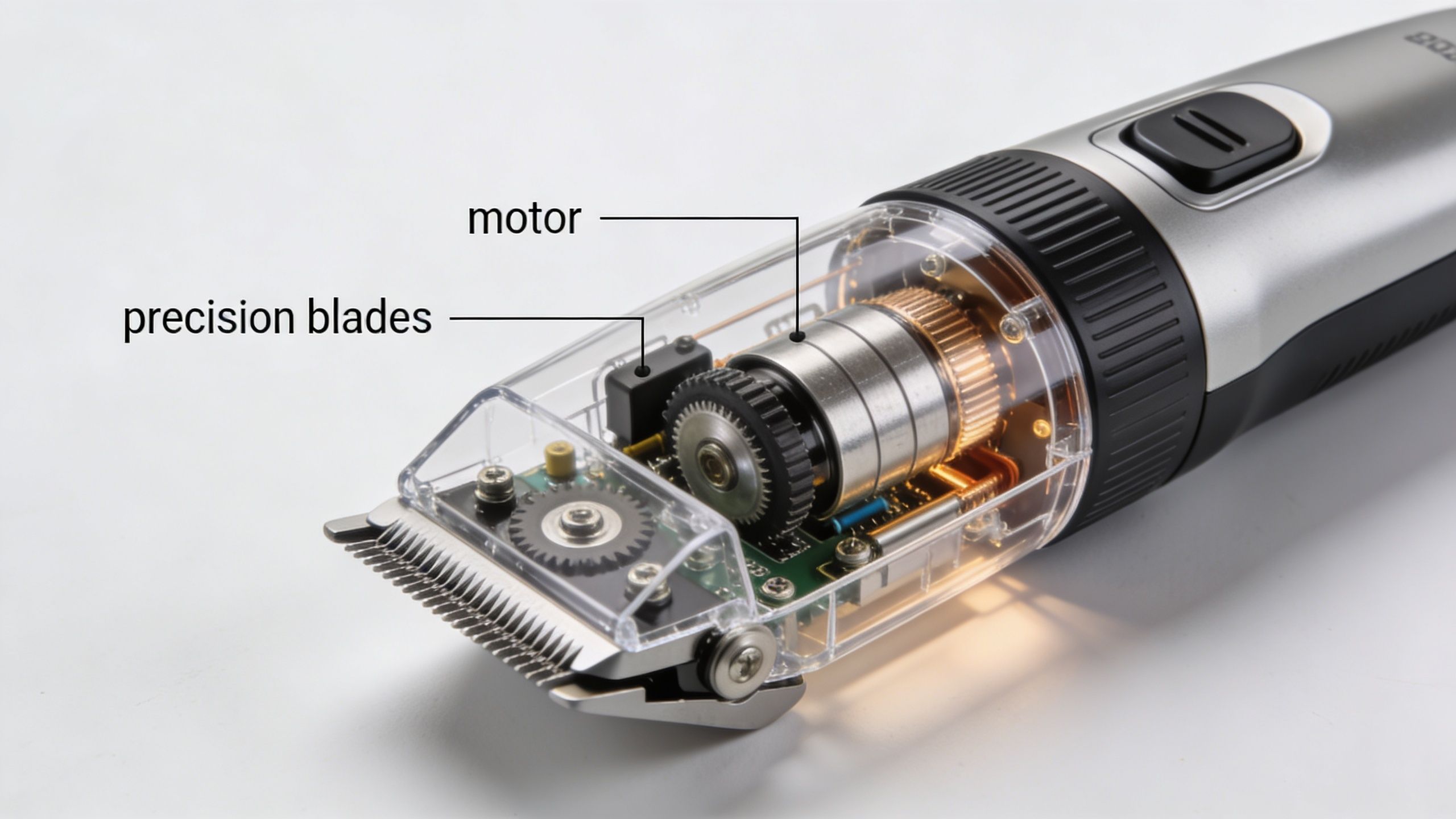
Professional clippers share the same basic architecture, but the parts do not carry equal weight. Motor strength, blade quality, housing balance, and heat control decide whether the machine keeps a clean line through coat or starts grabbing, tracking, and forcing extra passes. Guards and attachments still have a place, but only after the coat is clean, dry, brushed through, and suitable for that setup.
Motor first
Motor performance shapes the whole groom. A weak clipper may cut soft, clean hair acceptably on the first stroke, then stall as soon as it meets packed undercoat or resistance at the shoulder and hip. That is where owners often mistake a tool problem for a technique problem.
Torque matters more than marketing language. So does consistency under load.
Battery life matters too, but the primary issue is workflow, not the number on the box. Cordless units are useful because they reduce cable drag and give better freedom around nervous dogs, especially during detail work. They still need charge management, spare batteries, or a second machine if the session runs long. Owners comparing options can sort through those trade-offs in this guide to dog grooming clippers for home use.
Corded and cordless solve different problems
Corded clippers give steady power for long body work and heavy coats. Cordless clippers improve handling, especially around legs, sanitary areas, and dogs that shift their weight or sit down often.
Neither format is universally better. A small, well-kept coat can do fine with a lighter cordless machine. A large doodle with coat neglect asks for more staying power, more blade discipline, and usually a more capable setup than home buyers expect.
Here's a quick visual reference before going further.
The parts that matter most
| Part | What it does | What happens when it's wrong |
|---|---|---|
| Motor | Keeps blade speed steady through resistance | Snagging, stalling, repeated passes |
| Blade set | Sets cut length, finish, and skin contact | Track marks, uneven finish, higher skin risk |
| Housing and grip | Affects hand control and wrist fatigue | Sloppy pattern lines, poor accuracy in tight areas |
| Battery system | Determines how long a cordless machine stays usable | Shutdowns mid-session, rushed decisions |
| Noise and vibration | Affects tolerance in sensitive dogs | Flinching, pulling away, harder restraint |
Low vibration is not a luxury feature. On puppies, senior dogs, and dogs with handling sensitivity, it can decide whether the clip stays calm enough to finish safely.
A professional clipper does not create skill. It gives skilled hands the stability to work cleanly, with less stress on the dog and fewer compromises in the result.
Choosing the Right Machine for Your Dog's Coat
Most owners shop for a dog haircut machine the wrong way. They compare star ratings, battery claims, and a pile of attachments. A groomer starts somewhere else. Coat type. Skin condition. Matting. Temperament. Then the tool.
Blade numbers are not intuitive
Professional clippers use a standard blade numbering system, and it trips up almost everyone at first because higher numbers mean shorter cuts. According to this professional blade length reference, a #10 blade cuts at 2mm and is a core safety blade for matted coats and sensitive areas, while a #7F finish blade is used when you want a cleaner-looking result.
That tells you something important. Blade choice isn't cosmetic. It's structural. The wrong blade can leave a coat choppy, catch in problem areas, or put too much blade edge against fragile skin.
Match the machine to the coat problem
A clipper should solve the actual problem in front of you.
If your dog has a dense, heavy coat, you need enough torque to move through resistance without chewing the hair. If your dog is anxious, elderly, or highly sensitive to vibration, a loud, jumpy machine can ruin the session before the first body pass is finished. If the coat is matted, your priority isn't preserving fluff. Your priority is safe removal.
That means a buyer should think in scenarios:
- For thick or matted coats: Choose a machine with strong cutting power and blade compatibility that can handle short, practical work.
- For nervous dogs: Favor quieter, lower-vibration handling over flashy accessory bundles.
- For maintenance trims only: A lighter cordless unit may be enough, but only if the coat is clean, dry, and free of tight tangles.
- For face, feet, and sanitary work: Control matters more than speed. Bulkier tools often create sloppy handling in tight spaces.
What works and what doesn't
What works is boring. A reliable clipper body, sharp blades, steady prep, and realistic expectations.
What doesn't work is buying a machine because it promises an all-in-one answer. Attachments don't fix a dirty coat. A premium price tag doesn't teach blade angle. A quiet motor doesn't make a distracted owner safe around the groin, tuck-up, or ear edges.
The best home setup is the one you can control without hurrying, overheating the blade, or forcing the dog through fear.
There's also a difference between getting hair off and producing a finish. In premium pet grooming, the finish matters. Coat should look intentional, not merely shorter. Lines should flow. Transitions should be balanced. Sensitive areas should look neat without looking scraped.
A practical buying filter
Before you purchase, ask these questions in plain language:
- Is this for full haircuts or maintenance between professional appointments?
- Can the machine accept professional-style blades, or is it locked into one limited system?
- Will it stay manageable in my hand when my dog shifts weight or pulls away?
- Can it safely do sanitary and matted work, or will I be tempted to force a guard through tangles?
- Does the noise level fit my dog's temperament?
If you can't answer those clearly, you're not choosing a machine yet. You're guessing.
DIY Grooming vs Professional Care The Real Cost
Owners often compare DIY clipping and salon grooming as if the only issue is money. It isn't. An accurate comparison includes time, skill, safety, correction risk, and the dog's experience during the process.
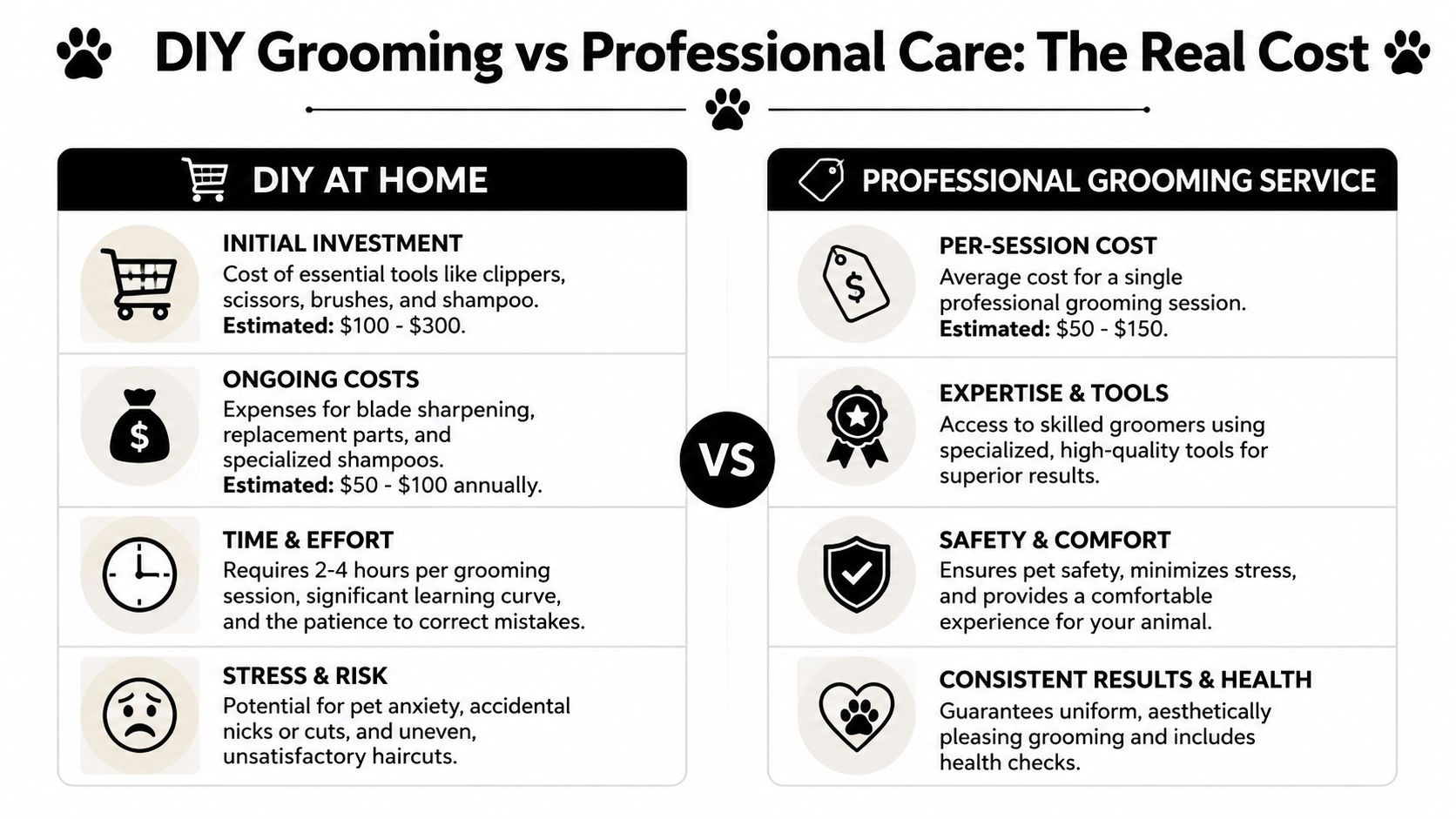
Why home grooming looks easier than it is
A major problem for owners is the knowledge gap. The home groomer guidance gap identified in this clipper discussion is clear. Reviews often focus on specs like weight and strokes per minute, but occasional home users still need coat preparation, blade angle, and pressure control to avoid poor results and safety mistakes.
That gap is why expensive equipment can still produce a rough groom.
Side-by-side comparison
| Factor | DIY Grooming | Glo More Professional Grooming |
|---|---|---|
| Tool selection | Owner must choose and maintain the machine, blades, brushes, and prep tools | Equipment is selected as part of a disciplined workflow for coat type and handling needs |
| Learning curve | Steep, especially for blade use, prep, and sensitive areas | Technique is already built into the service |
| Risk of error | Uneven lines, clipper irritation, missed mats, and stressful handling | Lower risk because the process is structured around safety and finish |
| Time demand | Setup, bathing, drying, clipping, cleanup, and troubleshooting all fall on the owner | Appointment-based process with a defined workflow |
| Dog comfort | Depends heavily on the owner's handling confidence | One-on-one handling can be paced around the dog's behavior |
| Final appearance | Often acceptable for maintenance, less reliable for polished trims | Better suited for balanced styling and consistent presentation |
The hidden cost is correction
A home trim can look fine from six feet away and still need repair. Common problems include shelf lines on the legs, choppy transitions on the neck, clipper tracks across the body, and over-short areas where the owner kept going back to fix the first mistake.
Then there's the dog's memory. A pet that panics through a rough home session may resist the next one even if the tools are better. Once trust drops, every future groom gets harder.
- DIY works best when the owner is doing light maintenance, has patience, and stays within safe limits.
- Professional care works best when the dog needs a full haircut, mat removal, coat balancing, or calm handling in sensitive work zones.
- A hybrid approach works best when owners brush, maintain face and paw tidiness if they're skilled, and leave full finish work to trained hands.
Owners don't usually need to replace professional grooming. They need to support it between visits.
That distinction matters in El Paso dog grooming, where busy schedules, heat, dust, and active outdoor routines can put extra wear on the coat. For many households, the smart choice is not all-DIY or all-salon. It's a partnership.
Chain environments often run on volume. A one-on-one studio works differently. Fewer dogs on site can mean less chaos, more control, and more attention to coat condition instead of just moving the line forward. That's part of what separates premium pet grooming from a basic haircut.
The Disciplined Workflow Safety and Maintenance
A cordless clipper dies halfway through a rear-leg trim. The dog has already lost patience, the coat is half cut, and the owner starts rushing to finish before the moment gets worse. That is how small equipment mistakes turn into uneven work, hot blades, and a dog that fights the next session.
A dog haircut machine belongs in a controlled routine. Professionals do not treat clipping as a single step. We treat it as coat prep, machine prep, handling, heat management, and a clean stopping point before the dog is pushed past tolerance.
The routine that protects the dog
Start with the coat, not the clipper. Check for mats, packed undercoat, skin irritation, burrs, and damp areas. Clipping a dirty or wet coat dulls blades faster, leaves tracks, and increases tugging on the skin.
Then check the machine. Make sure the blade is seated correctly, the housing is free of packed hair, and the clipper has enough charge to finish the work you plan to do. Cordless tools are useful, but they require planning. Running out of battery in the middle of a stressful session creates a handling problem, not just an equipment problem.
Owners setting up safer maintenance between appointments should look at the full kit, not just the clipper. These dog grooming supplies show the bigger picture. Brush, comb, blade care, cleaning spray, and table control all affect the result.
What disciplined handling looks like
Good handling is quiet and deliberate.
- Monitor blade temperature: Test the blade on the inside of your wrist often. If it feels hot there, it is too hot for the dog.
- Clean and oil on schedule: Hair, dust, and dry metal create drag. Drag makes the operator press harder, and pressure is where skin gets into trouble.
- Match the machine to the coat: Dense double coats and thick doodle coats need steady torque. Fine coats and sensitive dogs often do better with lower vibration and slower, calmer passes.
- Work in short sessions if needed: A safe partial trim is better than forcing a full haircut on a dog that has mentally checked out.
- Keep your free hand on the dog with purpose: Skin needs to stay flat in thin areas like the flank, armpit, groin, and hock.
This is one of the biggest differences between home upkeep and professional finish work. The clipper itself is only part of the job. Restraint judgment, coat tension, angle of entry, and knowing when to stop matter just as much.
Maintenance shows up in the finish
Blade care affects the haircut you see and the comfort the dog feels. A dirty blade skips. A dull blade chews at the coat instead of cutting cleanly. A loose blade can rattle and leave a rough path that invites the handler to go back over the same spot too many times.
Respect for the tool is part of respect for the animal.
That standard fits the values behind veteran-owned grooming. Precision, consistency, and accountability are daily habits. In practice, the cleanest work usually comes from the best routine, not the most expensive machine.
Your Partner in Premium Pet Care in El Paso
A dog haircut machine can help with upkeep. It can tidy a sanitary area in capable hands, maintain a face between visits, or buy you time before the coat gets away from you. It cannot replace judgment, restraint awareness, finish work, or the quiet repetition that makes a dog feel safe on the table.
That matters in El Paso, where many owners need grooming that fits real life. Long workdays, travel, family schedules, desert dust, and seasonal shedding all put pressure on coat care. Home maintenance helps. Professional structure keeps standards from slipping.
The demand for at-home maintenance also creates a clear need for better owner education. As noted in this discussion of at-home maintenance needs, owners benefit from guidance on which tools preserve coat health between professional sessions. That's the right model. Not replacement. Partnership.
In practice, that means using home care to support the work, not undo it. Brush before mats tighten. Keep small maintenance tasks within your skill level. Ask for guidance on what should stay in professional hands. That's how affordable grooming promo offers, routine touch-ups, and full service appointments all fit together without compromising the dog's comfort.
For local families who want calm handling instead of a chain-store rush, independent care matters. For professionals who need clean scheduling and a polished result, one-on-one service matters. For those who value resilience, accountability, and craft, veteran-owned grooming carries weight because the workflow behind it is built to hold its standard.
A monthly special like Snip & Style Saturday is a good example of practical access. It gives budget-conscious owners a way to stay on schedule without lowering the bar on care.
If you're looking for El Paso dog grooming that treats clipping as skilled care rather than conveyor-belt service, book with Glo More Grooming. Reserve your spot early, ask about current scheduling and the Snip & Style Saturday offer, and get a grooming plan that keeps your dog's coat clean, calm, and professionally maintained.