
Your dog comes in from a bath, a swim, or a dusty West Texas afternoon, and later that night you notice the head shaking. Maybe there’s a faint odor when they lean in close. Maybe they keep scratching one side. That’s usually when most owners think about ear care.
A disciplined groomer thinks about it earlier.
Clean ears aren’t a cosmetic extra. They’re part of preventive wellness. In professional practice, dog ear cleaners matter because they help remove wax, moisture, and debris before irritation turns into a larger problem. That’s especially relevant for active dogs in El Paso, where dry wind, dust, outdoor play, and frequent bathing can all change what collects around the ear opening.
For owners looking for El Paso dog grooming, premium pet grooming, and a veteran-owned grooming studio that works with standards instead of shortcuts, ear care should be part of the conversation. It also shouldn’t feel mysterious. You should know what a quality cleaner does, what a bad one does, and when home maintenance is enough versus when a veterinarian needs to step in.
Choosing the Right Dog Ear Cleaners for Your Pet
The right ear cleaner should match the dog in front of you, not the marketing on the bottle. In a grooming setting, product choice is part of preventive care. A poor formula can dry the ear too hard, leave residue behind, or irritate skin that was manageable before the cleaning started.
A good cleaner loosens wax, helps remove trapped debris, and supports a healthy ear environment without roughing up the tissue. That balance matters. Dogs with floppy ears, dogs that swim, and dogs that spend time in El Paso dust do not all need the same formula, but they all benefit from a cleaner that works with the ear instead of against it.
What a quality formula does
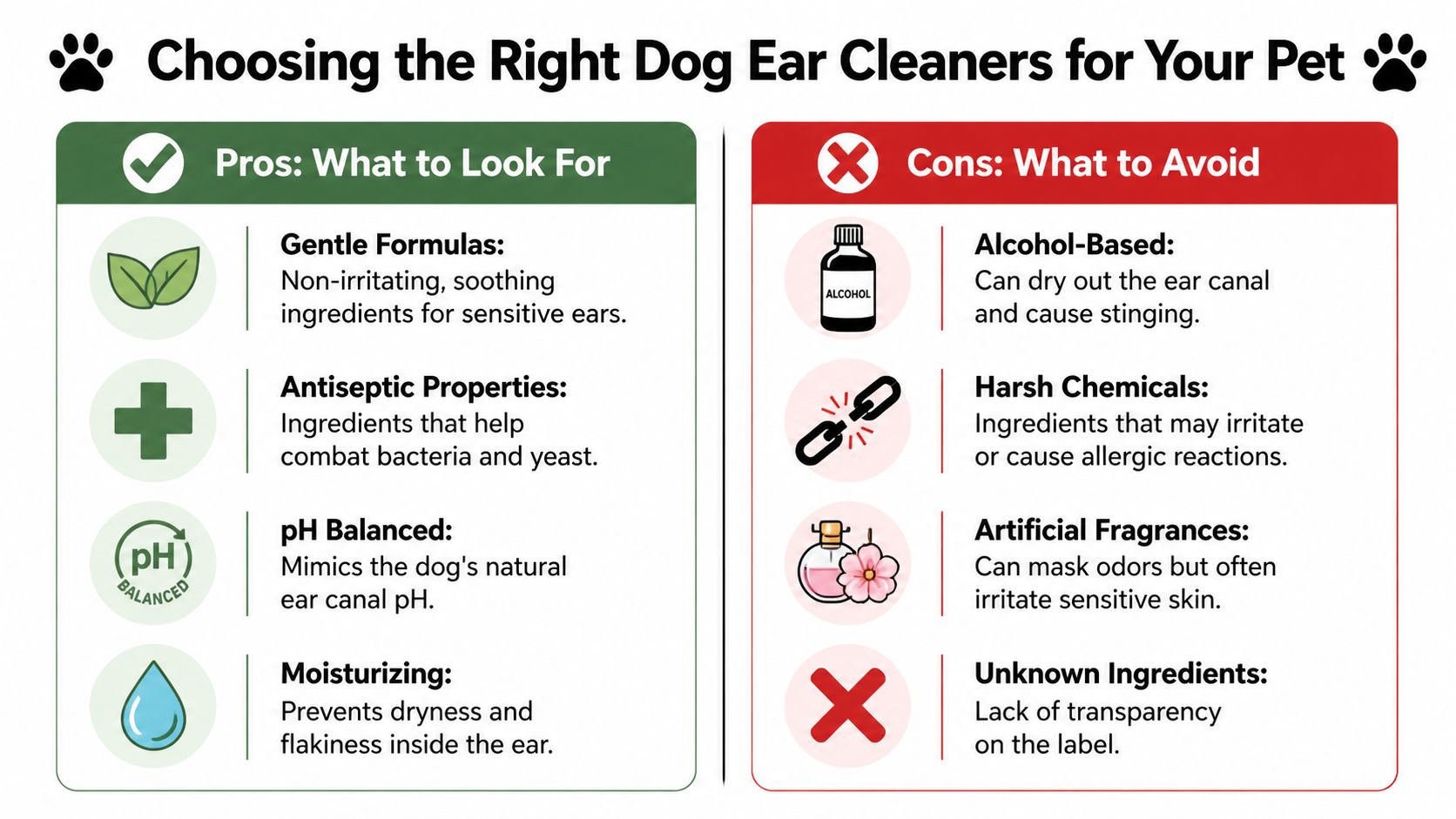
Quality starts with function and labeling. If the ingredient list is vague, skip it.
As noted in Business Insider’s guide to dog ear cleaners, useful formulas may include drying agents such as salicylic acid and wax-loosening ingredients such as docusate sodium. In practice, that means less packed buildup, less moisture sitting in the canal opening, and less need to scrub.
Useful formulas often include:
- Wax-softening ingredients: These help lift buildup so cleaning stays gentle.
- Drying support: Helpful for dogs that swim, get frequent baths, or hold moisture in heavy ear leather.
- Mild antiseptic support: Enough for routine hygiene without creating more irritation.
- Clear labeling: You should be able to see what is in the bottle and why it is there.
What to avoid in dog ear cleaners
Some products feel harsh because they are harsh. Strong sting is not a sign of better cleaning.
Be careful with formulas built around high alcohol content, hydrogen peroxide, or heavy fragrance. Those ingredients can make sensitive ears harder to manage, especially if the skin is already inflamed or dry. Fragrance is another common problem. It can cover odor for a short time without addressing the wax, moisture, or debris causing it.
A few warning signs show up again and again on poor products:
- Heavy alcohol content: Can over-dry the skin and increase sensitivity.
- Hydrogen peroxide: Often too aggressive for irritated ears.
- Artificial fragrance: Covers odor instead of helping solve the problem.
- Opaque marketing: Words like “natural” or “advanced” mean very little without a real ingredient list.
At Glo More Grooming, this is one of the clearest differences between disciplined professional care and the one-size-fits-all approach common at large chains. Product choice should follow the dog’s coat, ear shape, skin condition, and routine exposure, not a standard bottle pulled for every appointment.
Owners comparing products, wipes, and maintenance tools can review these dog grooming supplies used for routine maintenance. Buy with a purpose. Fewer products, chosen well, usually produce better results.
Match the cleaner to the dog
Dogs with open, upright ears often do well with a milder maintenance cleaner. Dogs with floppy ears or a habit of swimming usually need better drying support. Dogs with sensitive skin need simpler formulas and closer observation after each use.
Choose the mildest cleaner that still fits your dog’s real conditions. That standard holds up in the grooming room and at home.
A Groomer's Checklist for Safe At-Home Ear Cleaning
Technique matters as much as product choice. The wrong motion, the wrong amount of pressure, or the wrong tool can undo the benefit of a good cleaner.
A controlled routine beats a rushed one. In a clinical trial, professional-grade ear cleaners reduced video-otoscopic scores from a median of 6 to as low as 2 within six days, which supports a simple point: proper cleaning technique produces measurable results, not just a cleaner-looking ear from the outside, according to this clinical review of canine ear cleaners.
Set up like a professional
Before you start, get your supplies in one place. You want the cleaner, cotton rounds or gauze, a towel, and a calm dog. Don’t begin if you’re in a hurry.
A good home session should feel controlled, not dramatic. If your dog is already agitated, wait until they’re settled.
| Step | Action | Professional Tip |
|---|---|---|
| 1 | Check the ear before cleaning | Look at the visible ear flap and opening first. If it already looks angry or painful, stop and reassess. |
| 2 | Position your dog securely | Small dogs can sit in your lap. Larger dogs do better beside you against a wall or couch for stability. |
| 3 | Lift the ear flap gently | Expose the canal opening without pulling hard. Calm handling matters more than speed. |
| 4 | Apply the cleaner without touching the tip to the ear | Keep the bottle tip clean. Contact with the ear can contaminate the bottle. |
| 5 | Fill enough cleaner to coat the canal entrance | Don’t just dampen the surface. The solution needs contact to loosen debris. |
| 6 | Massage the base of the ear | Use your fingers at the base until you hear or feel the soft squish that tells you the cleaner is moving through debris. |
| 7 | Let your dog shake | That head shake helps bring loosened debris outward where you can safely remove it. |
| 8 | Wipe only what you can see | Use cotton or gauze to clean the flap and visible opening. Don’t dig into the canal. |
| 9 | Repeat if needed | If the wipe comes back dirty, a second pass may help. Stay gentle. |
| 10 | Reward and release | Treats and calm praise make the next session easier. Consistency builds cooperation. |
The steps owners most often skip
The two missed steps are massage and patience. Owners often drip in cleaner, wipe once, and call it done. That leaves loosened material sitting in place.
Massage is what breaks up buildup. Letting the dog shake is what helps move that material outward. Wiping only the visible area is what keeps the process safe.
If you’re forcing cotton swabs deep into the canal, you’re not cleaning better. You’re usually pushing debris farther in.
What not to do
Avoid improvising. Ear care isn’t the place for household shortcuts.
Don’t use:
- Cotton swabs inside the canal: They can push material inward and raise the risk of trauma.
- Homemade mixes for a dog with irritation: If the ear is already inflamed, “gentle” home remedies can still make it worse.
- Dry wiping alone: Friction without a proper cleaner tends to smear wax instead of lifting it.
- Repeated cleaning in one sitting: More passes don’t always equal cleaner ears.
A safe at-home routine is maintenance. It’s not treatment. If the ear looks wrong, smells wrong, or hurts the dog, move out of home-care mode and into evaluation mode.
Red Flags That Require Professional Attention
Routine cleaning has a limit. Once an ear crosses into pain, heavy discharge, or obvious inflammation, your job changes from maintenance to escalation.
That line matters because a dog can go from mildly uncomfortable to severely irritated fast, especially when owners keep cleaning an ear that already needs medical attention.
Signs that should stop home cleaning
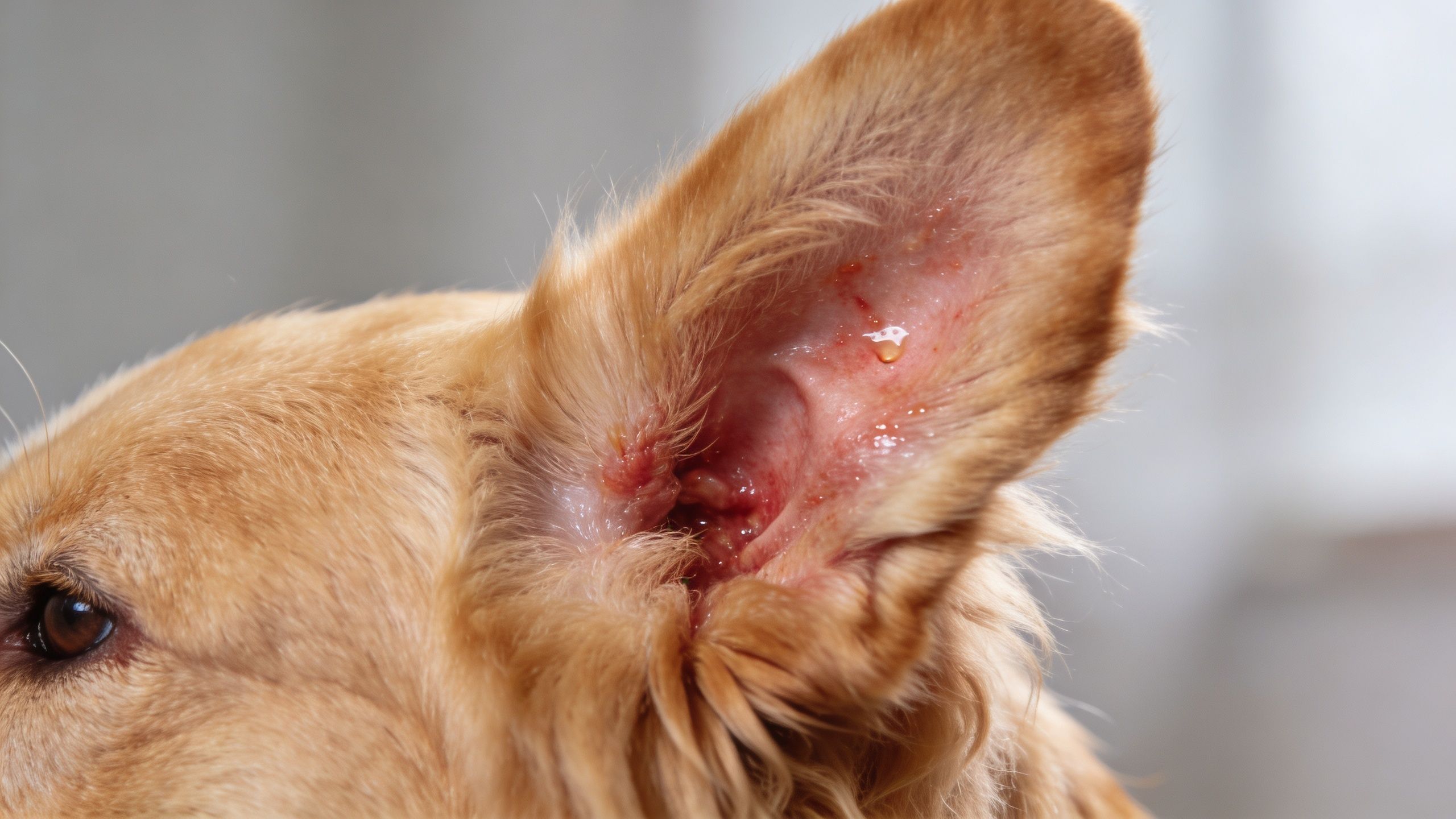
If you notice any of the following, stop routine ear cleaning and get professional guidance:
- Strong odor: Not a light wax smell. A sharp, foul smell that keeps returning.
- Colored discharge: Yellow, green, dark, or coffee-ground-like material needs attention.
- Frequent head shaking or head tilt: That can signal discomfort deeper in the ear.
- Pain with touch: If your dog flinches, cries out, or won’t let you near the ear, don’t push through it.
- Visible redness and swelling: A healthy maintenance cleaning shouldn’t start on an angry-looking ear.
- Repeated scratching: Persistent pawing often means more than simple wax buildup.
For a more detailed breakdown of warning signs, review these signs your dog has an ear infection.
Why discipline matters here
Owners sometimes make the problem worse by cleaning too aggressively because they assume “dirty” is the same thing as “infected.” It isn’t. Dirt can be cleaned. Infection needs diagnosis.
That’s especially true when the dog starts resisting. Resistance often isn’t stubbornness. It’s communication.
This short video gives a helpful visual reference on when ear irritation needs a closer look.
A responsible groomer knows when not to proceed. Protecting the dog comes before finishing the task.
If the ear appears inflamed, painful, or abnormal, a veterinarian should lead the next step. A professional groomer can support hygiene and identify concern, but treatment decisions belong in the medical lane.
Establishing a Long-Term Ear Maintenance Routine
The question owners ask most is simple. How often should I clean my dog’s ears?
The honest answer is that there isn’t one universal schedule for healthy dogs. Trusted guidance from Cornell’s College of Veterinary Medicine does a strong job explaining ear infection care, but it offers limited data on ideal preventive frequency for healthy dogs. That gap creates room for personalized schedules based on breed, anatomy, and health history, as noted by Cornell’s canine ear care guidance.
Build the routine around the dog
A preventive routine should start with three factors.
First is ear structure. Floppy ears trap more moisture and air moves less freely. Upright ears often stay drier and show problems faster.
Second is lifestyle. A dog that swims, gets frequent baths, hikes in dusty areas, or spends long stretches outdoors in El Paso may need more frequent checks than a dog with a quieter routine.
Third is history. If your dog has had recurring irritation before, don’t use a generic schedule. Use a monitored one.
A practical framework looks like this:
- Low-risk dogs: Check regularly and clean only when visible wax or moisture buildup calls for it.
- Moderate-risk dogs: Dogs with heavier ears, active outdoor routines, or seasonal buildup often do well with planned maintenance.
- Higher-risk dogs: Dogs with chronic buildup, water exposure, or a history of ear trouble benefit from a tighter schedule and better documentation.
Use observation, not autopilot
The best routine isn’t “every dog, every month.” It’s a check-clean-adjust cycle.
Watch for changes after baths, rain, pool time, lake outings, or allergy flare periods. In El Paso, dry conditions don’t remove the need for ear care. Dust, wind, and debris can still collect around the ear opening, and some owners over-bathe trying to manage coat odor or shedding, which adds another variable.
Field note: The right schedule is the one your dog’s ears tolerate well over time, without drifting into odor, buildup, or irritation.
Professional grooming can help most. Not by replacing home care, but by giving owners a cleaner baseline and a consistent outside set of eyes.
The Glo More Grooming Standard for Professional Ear Care
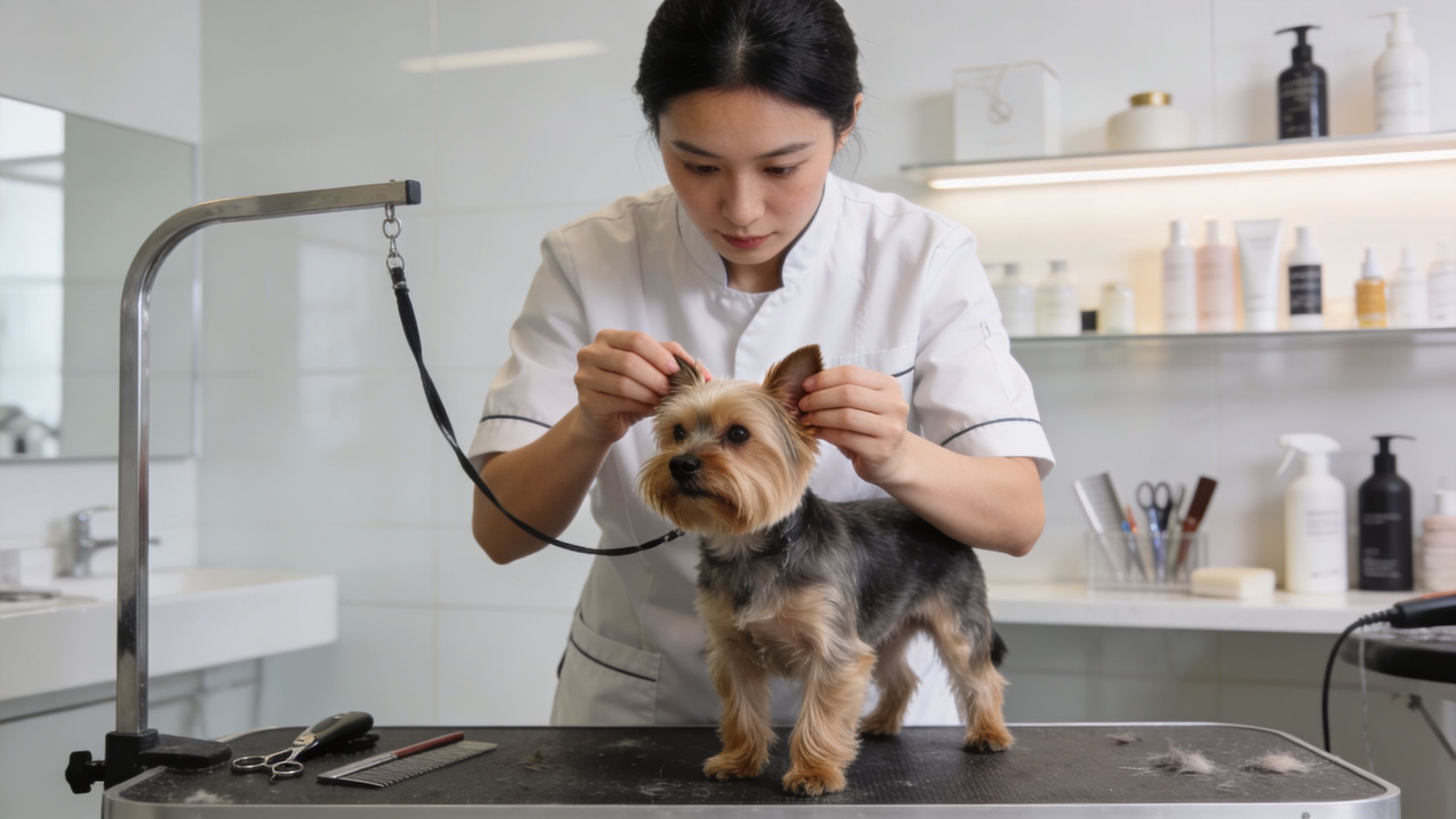
Professional ear care should feel methodical. Calm handling, correct product choice, and a one-dog focus change the result.
That’s where a veteran-owned grooming standard shows up in real practice. The workflow is tighter. The dog gets handled with more control. The service isn’t treated like a rushed add-on while multiple pets cycle through a loud room.
Product standards and handling standards
Premium ear care starts with non-irritating veterinary formulas. One relevant example is EPIOTIC Advanced Ear Cleanser. According to Virbac’s EPIOTIC product information, its glycotechnology can reduce microbial adherence by up to 50%, and weekly use can reduce recurrence of otitis externa by 40%. That kind of formulation makes sense in a premium workflow because it supports routine hygiene without leaning on harsher ingredients.
The difference isn’t only the bottle. It’s the environment and the discipline around it.
A controlled one-on-one setting allows time to:
- Observe before acting: Ear condition gets checked before solution is applied.
- Use measured technique: Cleaner is applied cleanly, then massaged and wiped with intent.
- Watch the dog’s tolerance: Sensitive dogs often do better in a low-volume setting than in a noisy chain environment.
- Document patterns: Repeating buildup, odor, or sensitivity becomes part of the conversation, not an afterthought.
Owners comparing service models can learn more about one-on-one dog grooming appointments, where ear care is handled as part of a calmer grooming process rather than a conveyor-belt task.
Why this matters in El Paso
Big-box grooming has volume pressure. That doesn’t automatically mean poor care, but it does change pace and attention. In ear cleaning, pace matters.
In a home-based studio model built around premium pet grooming, there’s more room for a steady hand, product restraint, and dog-specific judgment. That matters for nervous pets, floppy-eared breeds, older dogs, and owners who want continuity instead of a different handler every visit.
This also makes preventive care more accessible. A monthly affordable grooming promo like Snip & Style Saturday gives owners a way to stay on schedule without waiting until buildup becomes obvious. Ear cleaning works best when it’s part of a standard, not a panic response.
The only body mention that fits plainly here is this: Glo More Grooming includes ear cleaning within full grooming packages, which places ear hygiene inside a repeatable maintenance routine instead of treating it like an occasional extra.
Reserve Your Dog's Premium Grooming Experience Today
A dog comes in for a routine groom, then flinches when the ear is touched. That moment usually means the maintenance window was missed.
Ear cleaning belongs in the same category as coat care, nail work, and skin checks. It protects comfort before irritation turns into odor, head shaking, or a groom that feels harder than it should. Growth in the category reflects that shift. The global pet ear cleaners market is projected to reach USD 685 million by 2033, according to DataHorizzon Research’s pet ear cleaner market outlook.
In practice, the standard matters more than the bottle. A rushed salon can clean ears. A disciplined groomer tracks tolerance, uses restraint, and treats ear care as part of the dog’s standing maintenance plan. That difference shows up over time in cleaner ears, calmer appointments, and fewer surprises.
If you want El Paso dog grooming built around preventive care, choose a groomer who handles ear cleaning with patience and consistent judgment. If timing and budget matter, watch for monthly openings and an affordable grooming promo you can use to stay on schedule.
Clean ears support better rest, better focus, and a smoother groom.
Book your next appointment with Glo More Grooming for a calm, one-on-one grooming experience built around premium care, disciplined standards, and practical support for El Paso pet owners. Reserve your full groom, ask about concierge-level care, or claim a spot in the next Snip & Style Saturday before slots fill.