
A lot of owners hit the same wall early. The dog is wonderful, the house feels livelier, and then the practical questions show up fast. How do you stop jumping, leash pulling, barking at the door, and grooming struggles without turning dog ownership into another major monthly bill?
That’s where affordable dog training gets misunderstood. Cheap isn’t the goal. Efficient, disciplined, repeatable training is the goal. The owners who get the best results usually aren’t the ones buying the most gear. They’re the ones setting clear standards, practicing short sessions, and choosing outside help with intention.
As someone who works in premium pet care, I can say this with confidence. Dogs do better when the people around them are calm, consistent, and precise. That applies in the living room, on the sidewalk, and on the grooming table. A polished routine beats a pile of random tips every time.
Building a Well-Behaved Dog Without Breaking the Bank
A common budget mistake happens in the first month. The dog pulls on walks, jumps on visitors, fights nail trims, and the owner starts pricing classes, gear, treats, and apps all at once. The total looks heavy, so training gets pushed down the list.
That choice usually costs more later.
As noted earlier, professional training rates can add up fast. The smarter budget approach is to treat training as part of everyday care from the start, right alongside food, veterinary care, and grooming. In practice, early structure is cheaper than fixing habits that have been repeated for six months.
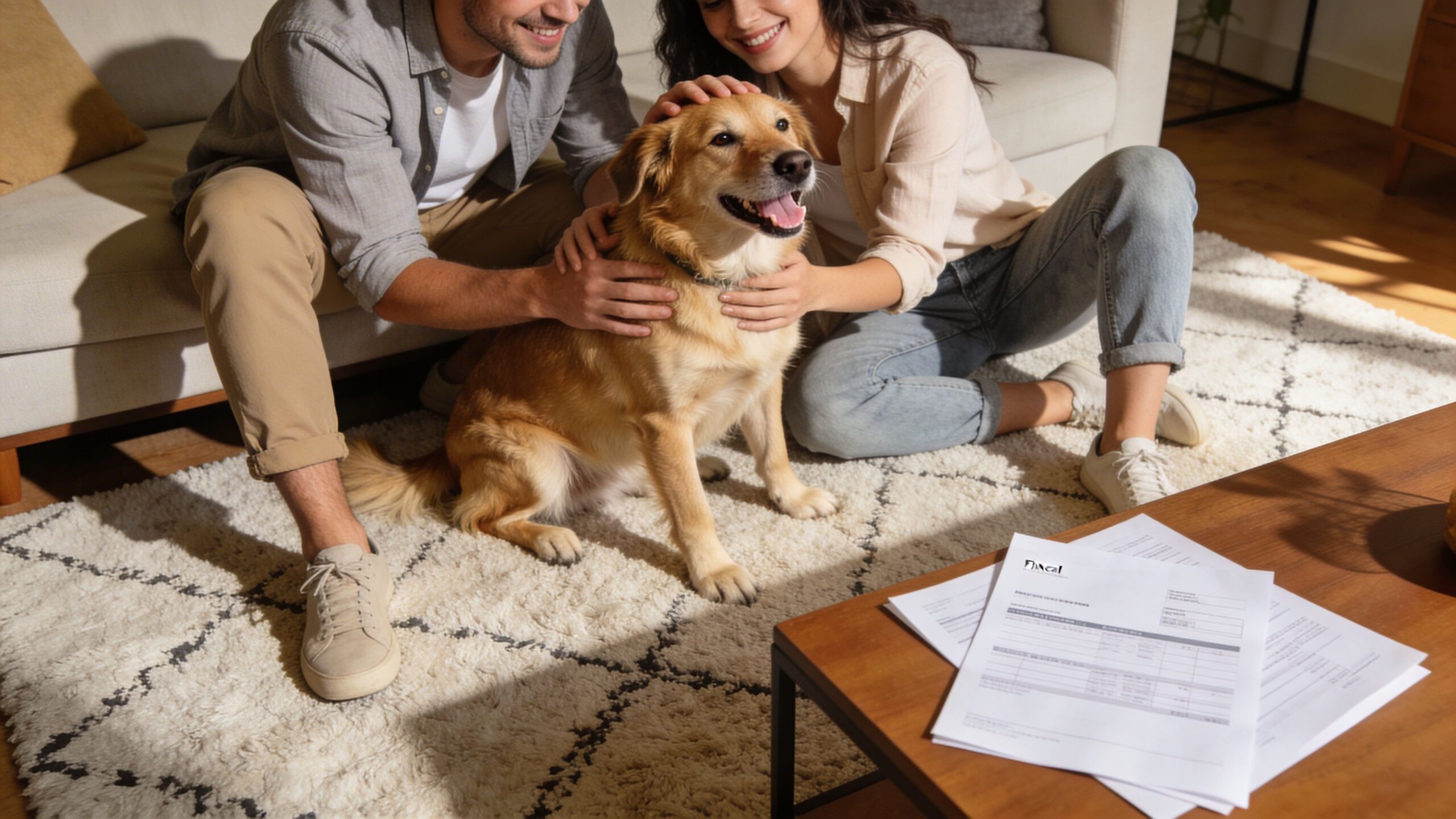
What owners often miss
Good behavior is built in the ordinary parts of the week. It shows up at the front door, on the leash, during brushing, and while a dog stands still for ear cleaning or paw handling.
From a grooming studio perspective, this matters every day. A dog that can pause, accept touch, and recover quickly from mild stress is easier to maintain and often needs fewer costly interventions later. That is one reason grooming belongs in the affordability conversation. Regular baths, coat care, nail trims, and handling practice support training instead of competing with it.
Owners should focus first on skills that reduce friction across the whole care routine:
- House manners: waiting at doors, settling instead of pacing, greeting people without jumping
- Handling tolerance: accepting restraint, paw touch, face wiping, brushing, and nail work
- Functional response: coming when called, walking with less tension, staying engaged in distracting places
Those skills save time. They also protect the relationship between the dog and the people caring for it.
Consistency saves money
Dogs do not need an expensive rotation of tools and classes to improve. They need a clear standard that shows up every day.
In my experience, families on a tighter budget make solid progress when they build one routine and keep it steady. The same cue means the same thing. The same door rules apply every time. The same grooming setup is practiced before the appointment, not only during it. Owners who learn to read dog body language during handling and training usually make better decisions sooner, because they catch stress before it turns into resistance.
A disciplined routine is also a community issue, not just a household one. In El Paso, veteran-owned businesses often bring a practical standard to pet care: show up, be consistent, do the small things well, and do not waste the client’s money. That mindset fits dog training. It also fits grooming. One well-run local business that values structure, handling skills, and regular maintenance can give owners far more day-to-day value than a stack of random one-off purchases.
Build foundations, not rescue plans
Affordable dog training works best when owners invest in habits early and use professional help with purpose. One dog may do well with a group class plus daily home practice. Another may need a single private lesson to clean up leash handling or grooming resistance, then steady follow-through at home. A young dog with a high-maintenance coat may benefit from regular professional grooming because each appointment becomes a handling lesson as much as a cosmetic service.
The trade-off is simple. Spend a little earlier on structure, coaching, and care, or spend more later correcting rehearsed behavior. The lower-cost path is usually the one with clearer standards.
Mastering the Basics with Positive Reinforcement
The most cost-effective training system for most owners is also the simplest. Use a marker, reward what you want, and break hard behaviors into small pieces the dog can understand.
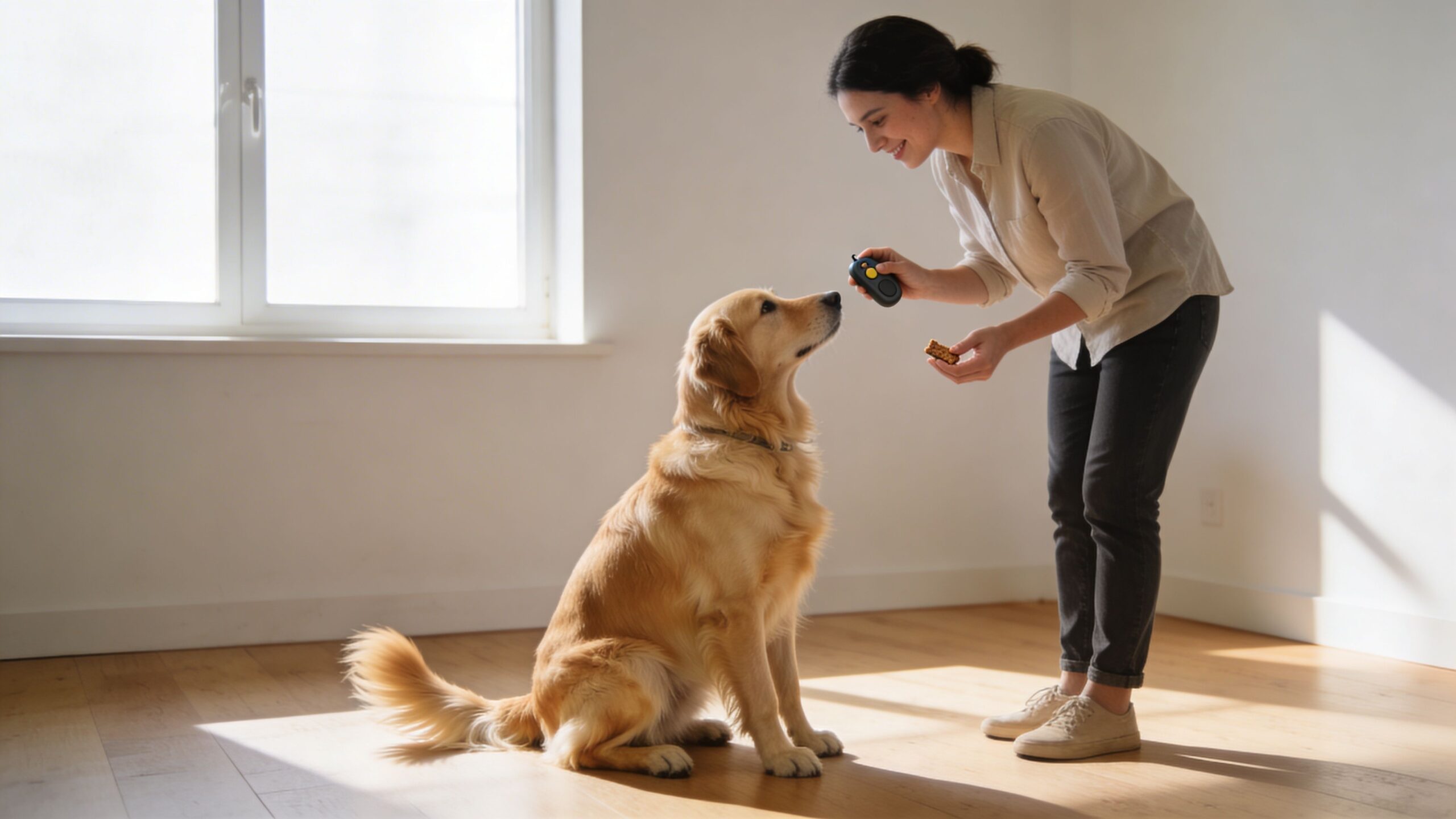
A marker can be a clicker or a short verbal cue like “yes.” The job of the marker is precision. It tells the dog, “That right there is what earned the reward.”
According to QC Pet Studies’ guide to science-backed dog training methods, positive reinforcement with markers and shaping works best in 5 to 10 minute sessions, 3 to 5 times daily. The same guide notes that sessions over 10 minutes can drop efficacy by 50%, and dogs often quit when reinforcement rates fall below 5 times per minute.
Start with one clean communication system
Don’t mix too many methods at once. For a budget-conscious owner, simple is better.
Use this sequence:
- Choose one behavior. Start with sit, down, recall, crate entry, or standing calmly for handling.
- Mark the exact moment. Click or say “yes” the instant the dog does the right thing.
- Reward immediately. Small treats work well because you can repeat often.
- Repeat in tiny steps. If the final behavior is hard, reward approximations instead of waiting for perfection.
That process is called shaping. It’s one of the best tools for affordable dog training because it lets you teach without force and without expensive equipment.
A practical example for teaching down
“Down” is a good example because many dogs don’t offer it naturally.
You can shape it like this:
- First rep: mark the dog for lowering its head
- Next reps: mark for bending elbows
- Then: mark for chest moving toward the floor
- Finally: mark only when the full down happens
The dog learns through clear feedback, not confusion.
Reward early, reward often, and stop while the dog still wants more. That keeps the session sharp instead of stale.
A weekly routine that owners can sustain
Owners do not need marathon sessions. They need a schedule they’ll follow.
Monday through Friday
- Morning: 5 minutes of sit, down, and name response
- Afternoon: 5 minutes of leash walking in the yard or hallway
- Evening: 5 to 10 minutes of recall games or crate practice
Weekend work
Use the weekend for proofing, not cramming. Practice the same skills in a new place with slightly more distraction. If your dog falls apart, the distraction is too high.
That’s where owners often overestimate progress. The dog can sit in the kitchen, but can’t sit near the front door when someone knocks. That doesn’t mean the dog is stubborn. It means the skill isn’t fully generalized yet.
For many dogs, success improves when owners also get better at reading tension, avoidance, and over-arousal before the dog shuts down. This guide on how to read dog body language is useful for spotting those early signs.
A good training session should look focused, not frantic.
Where grooming fits into basic training
Handling is part of obedience whether people think of it that way or not.
A dog that can stand still for brushing, accept paw handling, tolerate ear checks, and relax during restraint has learned useful life skills. Work these into home training:
- Touch a paw, mark, treat
- Lift an ear flap, mark, treat
- Brush once, mark, treat
- Hold the collar gently, mark, treat
That kind of work pays off during vet visits, nail trims, baths, and full grooms. It also gives owners a more realistic training goal. Not every family needs competition-level obedience. Every family benefits from a dog that can be handled safely and calmly.
Choosing Your Training Arsenal Low-Cost Tools and Courses
Owners waste money when they buy tools before they understand the job. Most dogs don’t need a drawer full of gadgets. They need a short list of useful items and a course format that keeps the human involved.
Buy fewer tools and use them well
A practical low-cost setup can be very small:
- Marker tool: a clicker, or your voice if your timing is clean
- Treat pouch: anything that gives fast access to rewards
- Long line: useful for recall practice in open space
- Flat collar or well-fitted walking gear: simple, safe, and consistent
- Mat or bed: gives the dog a defined settle spot
That’s enough to teach a lot.
What usually doesn’t help is buying novelty tools because they look impressive online. If the owner’s timing is late and the criteria keep changing, expensive gear won’t rescue the training plan.
DIY enrichment can also reduce training problems without adding much cost. Scatter feeding in the yard, cardboard box searches, rolled towel treat hunts, and frozen food puzzles all give dogs productive work. A dog with an outlet for energy and problem-solving usually trains better.
Free isn’t always the best value
A lot of owners assume the cheapest option is the smartest one. That’s not always true.
A 2019 study on access to dog training found 100% dropout in free online classes and 43% dropout in free face-to-face classes, while a paid program in the same area had a 24% dropout rate. That doesn’t mean free information is bad. It means many people follow through better when the format has structure and commitment.
Worth remembering: An unfinished free course costs more in the long run than a modest paid course you actually complete.
How to judge a low-cost course
Look for these signs before you enroll:
- Clear progression: the course should move from easy tasks to harder ones
- Defined homework: vague inspiration isn’t training
- Short demonstrations: owners need to see timing, not hear theory only
- Support for handling and walking: daily life matters more than flashy tricks
If you’re also selecting walking equipment, this article on a martingale collar for dogs can help you think through fit and control in a practical way.
A low-cost course earns its keep when it gets you practicing consistently. That’s the return.
Decoding Your Best Training Investment Group vs Private
A common budget mistake looks like this. An owner signs up for the cheapest group class available, then spends six weeks managing barking, pulling, and stress without getting usable reps. The class was affordable on paper. It was expensive in wasted time.
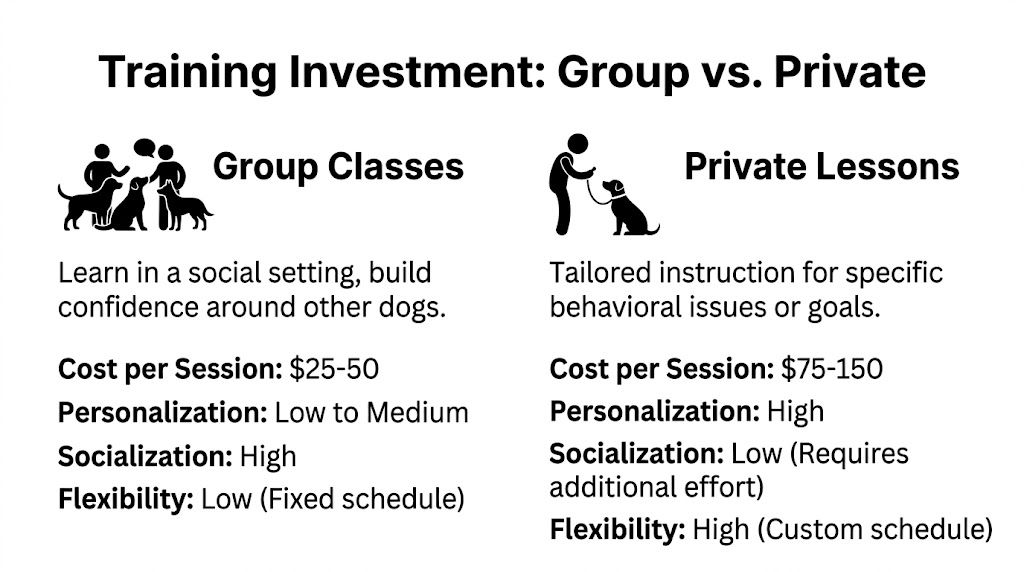
Group classes and private lessons both can be smart purchases. The right choice depends on what your dog can handle today, not what sounds ideal.
As noted earlier, group training usually has the lower entry cost. Private training costs more because the trainer is solving your dog’s problem in real time, with your home setup, your timing, and your mistakes in view. That difference matters.
When group classes are the better value
Group work fits dogs who can stay under threshold around other dogs and people, even if they are distracted. It is often the strongest budget option for teaching household basics and building owner consistency.
Group classes work well for:
- Basic manners, such as sit, down, stay, and loose-leash foundations
- Focus around moderate distractions
- Owners who need a schedule, homework, and repetition
- Young dogs that need practice settling in public
The trade-off is speed. In a class, the instructor has to divide attention across the room. If your dog freezes, vocalizes, or lunges through most of the session, you are paying for exposure your dog is not ready to use.
When private training earns its higher price
Private lessons make sense when the problem is narrow, disruptive, or tied to your daily routine. I recommend private work first for dogs that cannot function in class, dogs that struggle with handling, and families dealing with conflict points at home.
That often includes:
- Leash reactivity
- Fear during grooming or restraint
- Aggression concerns
- Door manners, guest greetings, crate issues, or child-related routines
Private coaching gives you cleaner feedback. The trainer can adjust your leash handling, reward timing, setup, and criteria on the spot. That usually saves weeks of guessing.
The grooming factor owners miss
Training value is not only about obedience minutes. It is also about how well your dog handles touch, tools, noise, standing still, and mild restraint.
That is one reason grooming belongs in the budget conversation. A dog that has learned to accept brushing, paw handling, dryers, nail care, and table manners is easier to train in every other setting. At our studio, I see this constantly. Dogs with a steady care routine often learn faster because they are already used to structure, body handling, and short periods of patient stillness.
Owners who want to build those skills at home can learn a lot from dog grooming classes for handling and coat care. That kind of education does not replace behavior work. It does reduce stress, improve safety, and make each training dollar go further.
Training options compared
| Factor | Group Classes | Private Training |
|---|---|---|
| Cost | Lower starting cost | Higher per session |
| Personalization | Limited | High |
| Distraction practice | Built into class | Must be set up intentionally |
| Scheduling | Fixed times | More flexible |
| Best fit | Basics, owner accountability, public manners | Specific problems, home routines, handling issues |
Many dogs do best with a staged plan. Start with private sessions to get the dog stable enough to learn, then move into a group class for distraction practice and lower ongoing cost. Other dogs can do the reverse. A social, food-motivated young dog may start in group and only need one private session later to clean up a sticking point.
A simple decision filter
Use three questions before you spend:
- Can my dog eat, respond, and recover around other dogs?
- Am I building general skills or fixing one problem that affects daily life?
- Will everyone in the home practice between sessions?
If the answer to the third question is no, pause and fix the routine first. No training format, group or private, gives good value without follow-through.
Finding Affordable Training Support in the El Paso Community
El Paso owners often need a practical mix of support, not a single perfect solution. One family may need a basic manners class. Another may need help teaching cooperative handling because bath time turns into a wrestling match. Another may need a calmer, more structured care routine.
That’s why local support matters. Big chains can be convenient, but convenience and quality aren’t the same thing.
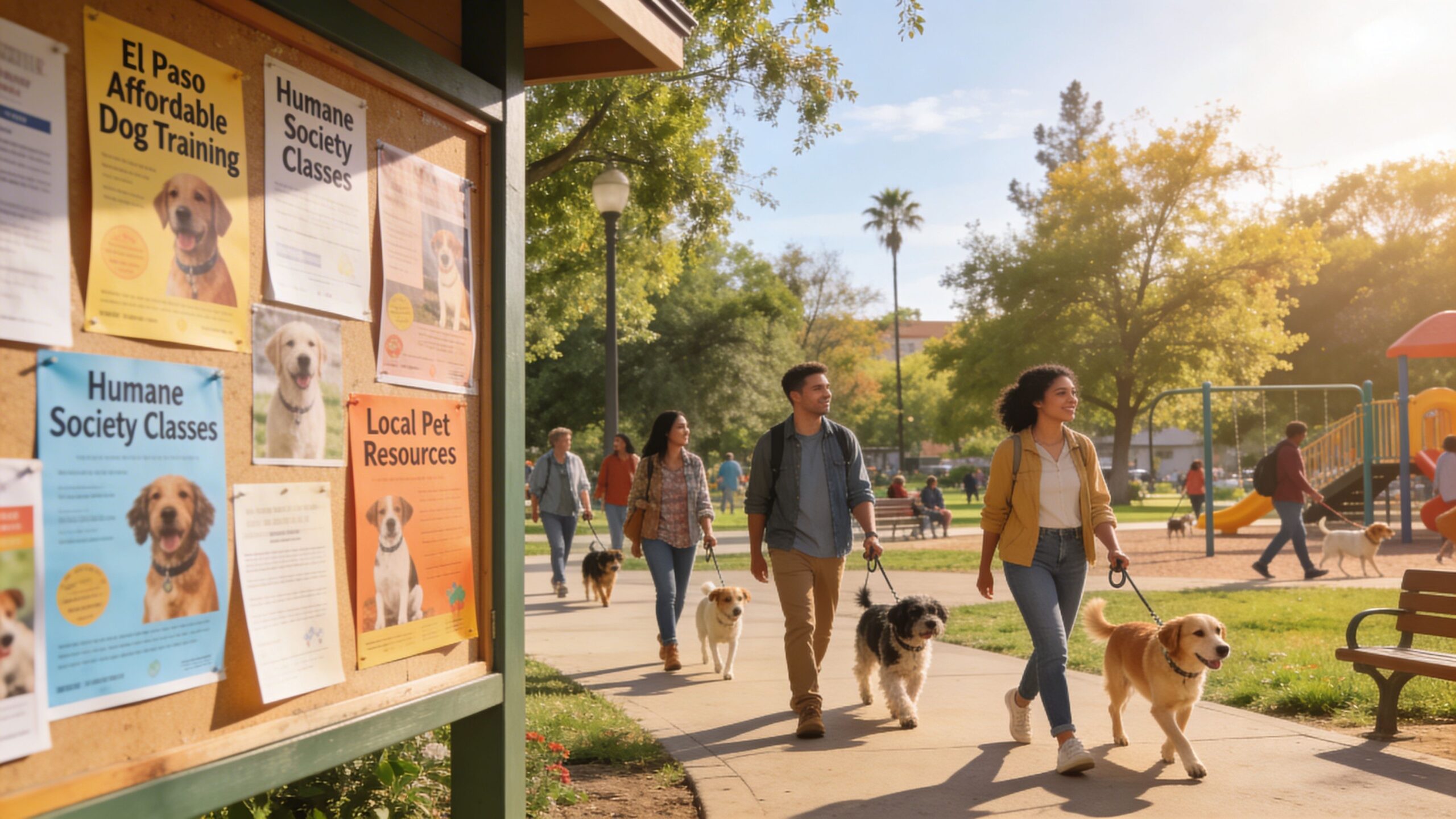
Start with community options you can sustain
For many households, the strongest local plan includes a few layers:
- Entry-level training classes: useful for basics and accountability
- Neighborhood practice: short leash and focus drills during normal walks
- Home handling exercises: paws, ears, brushing, standing still
- Professional grooming support: consistent exposure to structured handling
This last point gets ignored too often. A lot of search results for affordable dog training focus only on obedience work. They skip a major part of real-life behavior, which is how dogs respond to touch, restraint, equipment, bathing, drying, and standing still.
According to a market analysis of the gap between training and grooming content, pet owners searching for budget-friendly support often find trainers but miss grooming-based help for issues like handling anxiety. That same analysis points to an underserved opportunity in El Paso through affordable, premium care options like a $55 Snip & Style Saturday promo.
Why premium pet grooming can support training goals
A well-run grooming appointment teaches more than cleanliness. In the best setup, the dog rehearses:
- entering a structured environment
- transitioning between handling tasks
- tolerating touch in sensitive areas
- recovering from mild stress without spinning up further
- standing still and accepting direction
That’s training support, even when the appointment itself isn’t sold as a training lesson.
Dogs don’t separate “grooming behavior” from “life behavior” the way people do. Calm handling in one context helps the next context too.
This matters in El Paso, where owners often juggle work, family schedules, weather, shedding, dust, and the ordinary wear of active dogs. A disciplined grooming routine can reduce matting, improve handling tolerance, and give owners cleaner feedback on what their dog needs work on.
What sets local independent care apart
Independent studios often have more control over pace, dog volume, and handling standards than large retail settings. That can make a real difference for sensitive dogs.
Look for a grooming provider that offers:
- Clear intake standards
- Low-chaos scheduling
- One-on-one or reduced-volume handling
- Consistent communication about behavior
- Attention to the dog’s emotional state, not just the haircut
That’s where veteran-owned grooming businesses often stand out. The strongest ones operate with visible discipline, pride in workmanship, and ownership of the full client experience. In practical terms, that means fewer corners cut, cleaner workflows, and a dog that isn’t treated like just another slot on the calendar.
For owners comparing El Paso dog grooming options, this is the question to ask: does the business only process dogs, or does it support better long-term behavior through careful handling? That answer affects value more than a flashy lobby ever will.
Your Path Forward Disciplined Training Consistent Care
Affordable dog training works when the plan is realistic. Not ambitious for three days. Realistic for months.
That usually means short sessions, clean repetition, and measured progress. It also means you stop chasing quick fixes and start building layers. Marker training at home. Smart spending on tools. The right class format for your dog. Professional handling that supports calm behavior instead of undermining it.
Follow a system, not your mood
Structured training plans hold up better than improvised ones. Sue Ailsby’s Training Levels approach is a good example of that kind of framework. It progresses from easy skills with low distraction to more advanced work, and an average dog can master a level in 2 to 3 months with consistent 10-minute sessions.
That timeline matters because it resets expectations. Good training doesn’t have to be dramatic. It has to be repeatable.
What pays off over time
The owners who make the biggest gains usually commit to a few habits:
- They keep sessions short
- They reward clearly
- They don’t raise difficulty too fast
- They build handling into everyday life
- They choose support based on need, not impulse
If you’re in El Paso, that same mindset should guide how you choose grooming. Premium pet grooming isn’t only about appearance. In the right hands, it supports tolerance, patience, body awareness, and calm response to care. That’s a real part of a dog’s education.
A disciplined dog care plan also reflects something bigger than convenience. It reflects ownership. It says you’re not just reacting to problems. You’re building standards your dog can live inside comfortably.
That’s the long game. And it’s the one that lasts.
If you want a calmer, cleaner, better-structured care routine for your dog, book with Glo More Grooming. This veteran-owned grooming studio in El Paso delivers one-on-one care with disciplined standards, polished workmanship, and an affordable grooming promo through Snip & Style Saturday. If you’re looking for El Paso dog grooming that supports long-term behavior, not just a quick wash-and-cut, reserve your spot now.