
You’ve got a trip coming up. You want your dog with you, not left behind with a rushed backup plan and a knot in your stomach.
Then the logistics hit. Airline rules. Carrier measurements. Health paperwork. Cargo questions. Airport timing. Potty breaks. Coat care after landing. Most guides stop at “book early” and “call the airline.” That’s not enough. If you want to know how to fly with a dog safely, you need a tighter process than that.
In El Paso, disciplined pet care matters. Heat, dry air, and long travel days can wear a dog down fast. The same standards that define strong El Paso dog grooming also apply to travel prep. Clean handling. Clear timing. No guesswork. That’s how you protect your dog before takeoff, during the flight, and after wheels down.
Your Travel Mission Begins with a Plan
A lot of owners make the same mistake. They start with airfare instead of starting with the dog.
That usually looks like this. You find a decent ticket. You assume your dog can come. Then you learn the airline has limited pet spots, your carrier is the wrong size, your paperwork timing is off, and your dog has never spent more than ten minutes calmly inside a travel crate.
That’s how stress builds. Not because flying with a dog is impossible, but because sloppy sequencing causes avoidable problems.
At Glo More Grooming, the standard is simple. Greatness, Loyalty, and Ownership. Those values don’t stop at the grooming table. They apply to travel too. If your dog is flying, you need a controlled plan and you need to execute it cleanly.
Start with the dog, not the ticket
Ask these questions first:
- Size and travel method: Is your dog small enough for in-cabin travel, or are you looking at checked travel under airline rules?
- Temperament: Does your dog settle in confined spaces, or panic when movement starts?
- Coat and skin condition: Is your dog already matted, irritated, or overdue for grooming?
- Health status: Is your dog current on routine care and fit to travel?
- Route tolerance: Can your dog handle a long airport day, or do you need the shortest possible itinerary?
A calm, crate-trained dog with current records is in a different category than a dog who’s never been confined and hates loud environments. Treat those situations differently.
The right mindset
Flying with a dog is not casual. It’s not something to improvise the week of travel.
Practical rule: If you wouldn’t trust the plan for your own child, don’t trust it for your dog.
That means building a checklist, confirming every requirement directly with the airline, and preparing the dog as carefully as you prepare your documents.
Owners in El Paso already know that conditions matter. Dry climate, hot pavement, and long drives to the airport can stack stress before the flight even starts. A disciplined workflow fixes that. You prep early, tighten the routine, and remove as many variables as possible.
That’s the difference between hoping the trip goes well and setting your dog up to succeed.
Choosing Your Flight Path In-Cabin vs Cargo
The first major decision is simple in wording and serious in consequences. Will your dog fly in the cabin with you, or travel as checked cargo under airline pet rules?
Don’t answer that emotionally. Answer it based on the dog, the route, and the airline.
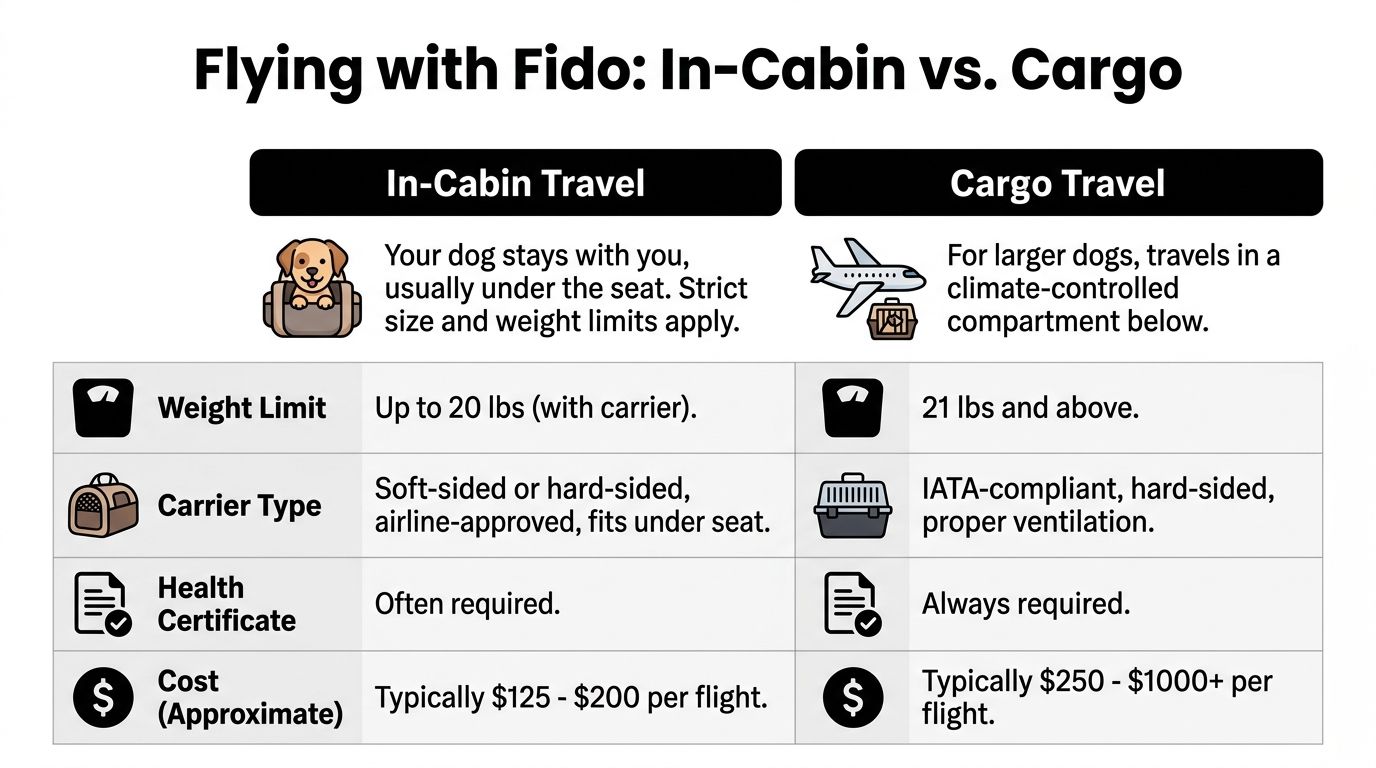
In-cabin works best for small dogs who stay steady
If your dog fits the airline’s size rules and can remain calm in a carrier under the seat, in-cabin is usually the cleaner option. You keep visual contact. You can monitor breathing, posture, and stress. Your dog avoids separate handling behind the scenes.
But small size alone doesn’t make a dog a good cabin traveler.
A dog that scratches, vocalizes, or spirals under confinement can turn a short flight into a bad call. Some dogs do better physically in the cabin and worse behaviorally. Be honest about that.
Use this quick comparison:
| Travel mode | Strong fit | Weak fit |
|---|---|---|
| In-cabin | Small dog, calm in carrier, tolerates noise and close quarters | Reactive dog, panics in confinement, struggles to settle |
| Cargo or checked pet handling | Larger dog, well crate-trained, healthy, direct route available | Flat-faced breed, anxious dog with no crate conditioning, route with too many variables |
Cargo is not a shortcut. It requires better preparation
Owners often talk about cargo like it’s automatically unsafe. That’s lazy thinking. The central issue is whether the dog, crate, route, and carrier are a strong match.
For dogs traveling as checked luggage on the same itinerary, a proven method includes booking direct flights, using IATA-compliant crates, crate-training for 2 to 4 weeks, obtaining a health certificate within 10 days, withholding food 4 to 6 hours pre-flight, and checking in at the airline’s dedicated pet desk. With proper preparation, USDA benchmarks show a 99% safe arrival rate, as summarized by Tailwind Global Pet’s guide on flying with a dog.
That matters. Cargo isn’t the problem by itself. Poor preparation is the problem.
Airline selection matters more than price
If you’re serious about safety, stop shopping by fare alone. Compare pet handling records.
Between January 2015 and December 2020, Alaska Airlines transported over 730,000 animals while maintaining an average incident rate of 0.26 incidents per 10,000 animals transported. That rate was more than 6 times lower than United Airlines’ average incident rate of 1.6 during the same period. In 2020 alone, Alaska transported 107,042 animals with zero reported incidents, according to Total Vet’s review of pet-friendly airline safety records.
That tells you exactly what it should tell you. Some airlines have a stronger operational track record for pets than others. Pick accordingly.
Airline choice is a safety decision. Treat it that way.
Flat-faced breeds need extra caution
If your dog is brachycephalic, don’t gamble. Breeds with shortened airways often face tighter restrictions for checked travel, and for good reason. If your dog already works harder to breathe at baseline, air travel is not the place to test limits.
For these dogs, ask your veterinarian direct questions about respiratory risk, route timing, and whether air travel is the right call at all. If there’s doubt, listen to the doubt.
The crate is not an accessory
For larger dogs, your crate is part of the safety system. It needs to fit the airline’s requirements and fit your dog correctly. Too small creates stress. Too large can reduce stability. Weak hardware, poor ventilation, and bad latch design create obvious risk.
If you’re sorting out sizing and setup for a bigger dog, use a properly built large pet crate as your baseline, then confirm every dimension against your airline’s current rules before purchase.
A direct recommendation
Choose in-cabin when your dog is small enough, calm enough, and physically suited for that environment.
Choose cargo only when the route is tight, the airline has a strong pet-safety record, the crate is correct, and the dog has been conditioned for confinement. If any one of those pieces is weak, fix it before you book or don’t fly the dog that way.
That’s the standard. Not wishful thinking. Not “it’ll probably be fine.”
Preparing Your Dog and Your Documents
Booking the flight doesn’t mean the hard part is over. It means your preparation window just started.
This stage separates disciplined owners from last-minute owners. Dogs don’t wake up travel-ready. You train them into readiness. The same goes for paperwork, coat condition, nails, hydration habits, and crate comfort.
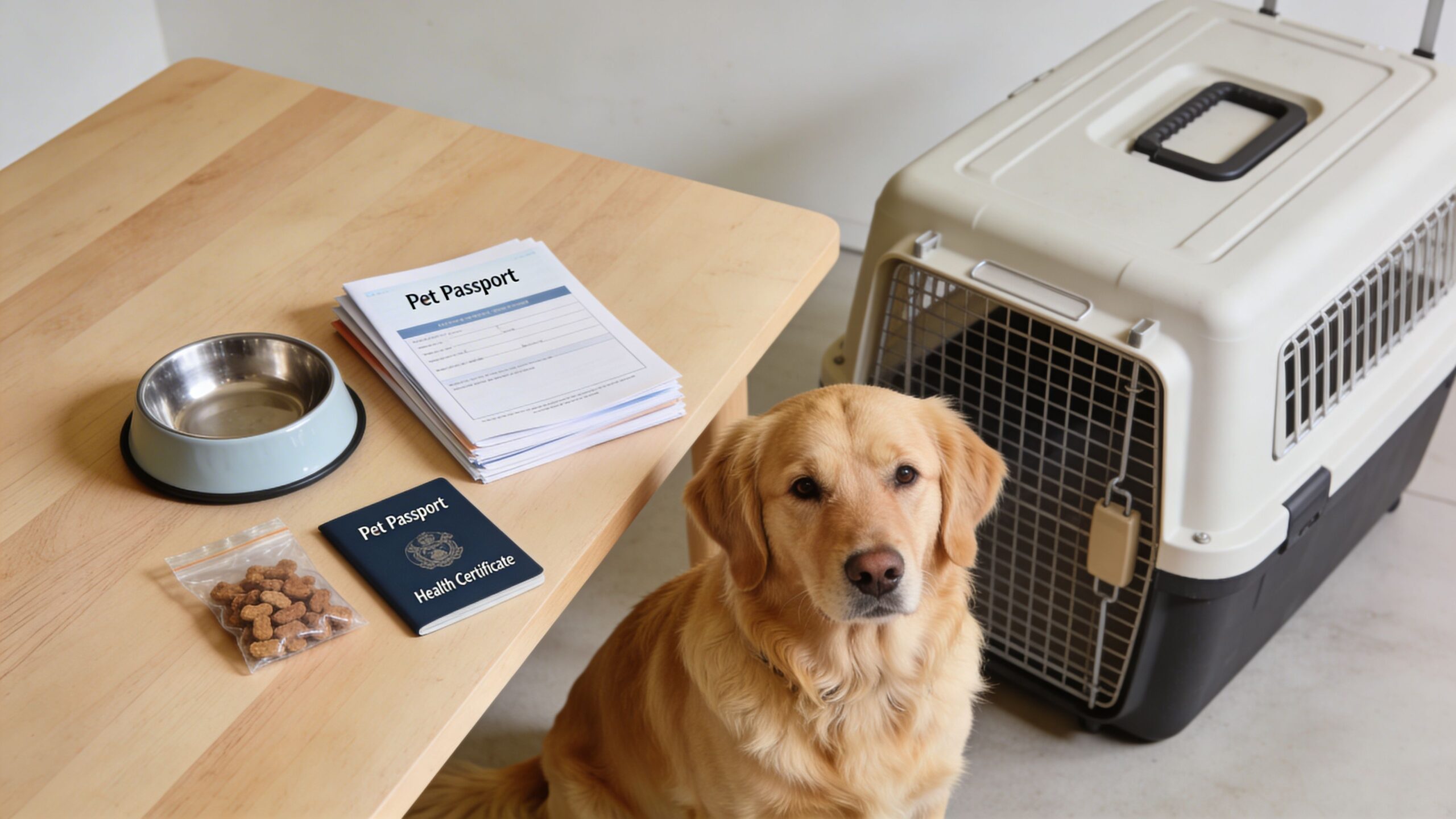
Lock down the paperwork first
Airlines and destinations can vary, but one rule stays constant. Get your documents handled early.
For checked travel, that includes the health certificate within 10 days of travel, as noted in the earlier airline cargo guidance. You should also have vaccination records organized, easy to access, and physically printed. Don’t rely on a bad cell signal at the counter.
Your rabies documentation needs to be current and clear. If you need a refresher on routine vaccine expectations before travel, review guidance around dog rabies shots well ahead of your trip so you’re not scrambling near departure.
Keep everything in one folder. Hard copies. No loose papers in a backpack.
Crate training is not optional
A travel crate should feel familiar before airport day. If your dog only sees the crate when something stressful is about to happen, the crate becomes a warning sign.
Build positive association over time:
- Leave the crate open at home: Let your dog enter on their own. Add bedding that smells familiar.
- Feed near it, then inside it: Don’t force the door at first.
- Build duration gradually: Start short and quiet. Extend only when your dog stays settled.
- Add motion: Short car rides help bridge the gap between home training and transport reality.
- Practice calm exits: Bursting out of the crate is not the goal. Controlled recovery is.
The point isn’t obedience theater. The point is reducing stress during confinement.
Grooming before travel is part of the safety plan
Many guides fail owners by focusing on airline forms and skipping physical comfort.
A dog with overgrown nails, packed undercoat, mats, dirty ears, or irritated skin is already carrying avoidable discomfort into a stressful environment. Add dry cabin air, longer confinement, and reduced movement, and you’ve made the trip harder than it had to be.
Pre-flight grooming should focus on comfort, cleanliness, and coat control.
- Trim nails: Long nails change stance and make crate footing less stable.
- Brush out tangles: Mats trap moisture, create friction, and can worsen skin irritation.
- Clean ears carefully: Dirty ears plus stress and temperature change can turn into avoidable trouble.
- Bathe on the right schedule: Clean coat, clean skin, no heavy product buildup.
Build a pre-flight routine
Your dog should head into travel on a stable routine, not chaos.
Try this structure in the days before departure:
- Consistent meals: Don’t introduce new food right before a flight.
- Steady exercise: Keep activity normal and purposeful.
- Carrier time daily: Short sessions beat one long miserable session.
- Grooming check: Inspect paws, coat, ears, and nails.
- Paperwork review: Confirm every item is packed and current.
A clean dog with a settled routine usually handles travel better than a dog who’s overstimulated, overdue for grooming, and rushed into the crate.
What to pack
Keep your packing practical.
- Documents folder: Health certificate, vaccination records, reservation details.
- Absorbent liner or bedding: Familiar scent helps.
- Water setup: Travel-safe bowl or airline-appropriate water attachment if required.
- Leash and backup leash: Keep control simple.
- Cleaning supplies: Wipes and waste bags.
- Small amount of food: Only what you need for the travel window and arrival.
Skip overpacking. Travel gear should solve problems, not create clutter.
Your final prep standard
By the end of prep, your dog should be able to enter the carrier without a fight, rest inside it with reasonable calm, and arrive at the airport clean, comfortable, and documented.
That’s the benchmark. If you’re not there yet, delay the trip or tighten the prep. Don’t lower the standard to match the calendar.
Navigating the Airport and In-Flight Safety
Travel day rewards discipline. If your home prep was sloppy, the airport exposes it fast.
You need extra time, a clean sequence, and a dog who isn’t absorbing your panic. Move like you planned this day on purpose.
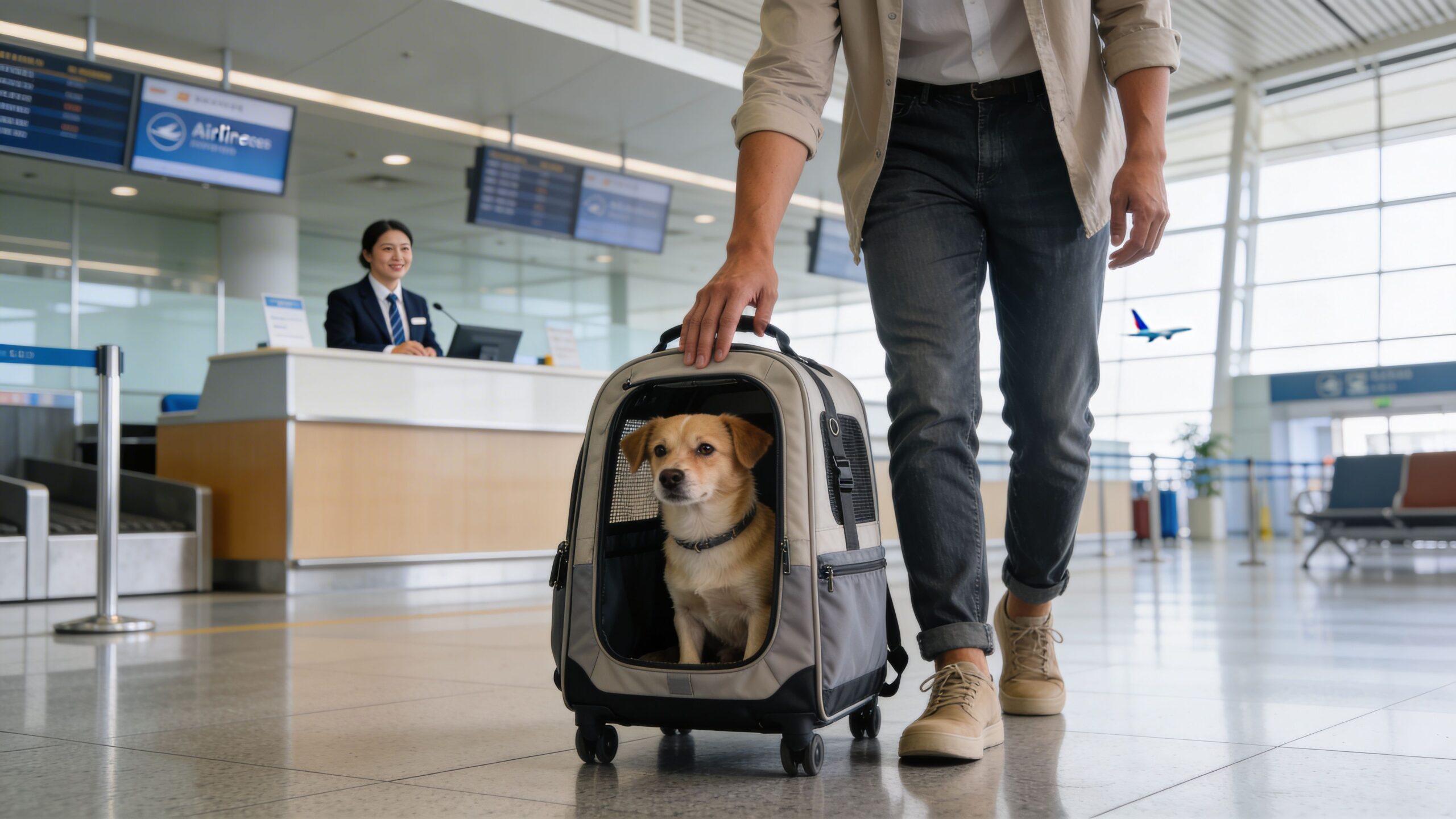
Before you leave home
Start with the basics.
For checked travel, the earlier guidance matters here most. A proven method includes booking direct flights to avoid temperature extremes, using IATA-compliant crates, crate-training for 2 to 4 weeks, obtaining a health certificate within 10 days, withholding food 4 to 6 hours pre-flight, and checking in at the airline’s dedicated pet desk. With proper preparation, USDA benchmarks indicate a 99% safe arrival rate, according to Tailwind Global Pet’s air travel guide.
That last stretch before departure should be controlled.
Your departure checklist
Use a tight sequence:
- Exercise with purpose: Give your dog enough movement to settle, not so much that they arrive overheated.
- Offer water: Keep hydration steady.
- Do a final potty break: Don’t skip this because you’re running late.
- Check the crate or carrier: Latches, bedding, tags, paperwork pocket.
- Leave early: Pet travel and rushed driving do not belong together.
At the airport counter
If your dog is flying in the cabin, confirm the pet reservation immediately and verify that the carrier still meets the airline’s current requirement. Don’t assume the phone rep and the counter agent will say the same thing. Get clear answers while you still have options.
If your dog is checked, go straight to the designated pet or special handling area if the airline uses one. Be professional, calm, and specific.
Ask direct questions:
- Has the dog been tagged correctly?
- Is the crate accepted as compliant?
- Where is pickup at arrival?
- Can the team confirm loading procedure?
For cargo-style handling, details matter. Labels should be legible. Contact information should be visible. The bedding should be secure and not excessive.
Security without drama
TSA-style screening with a dog requires control, not speed. Usually, you’ll remove the dog from the carrier while the carrier is screened separately. Your dog should already be comfortable being handled in a busy environment.
Use a secure leash. Keep your dog close. Don’t let strangers crowd the interaction.
Field advice: A dog that can hold a sit or stand calmly for one minute in a noisy hallway is far easier to manage at security than a dog that only behaves in the living room.
In-cabin handling
Once onboard, your job is simple. Keep the dog contained, quiet, and settled.
That means:
- Carrier stays properly placed: Don’t push boundaries with crew.
- No unnecessary opening: Reassurance is fine. Constant handling usually isn’t.
- Use familiar scent items: A lightly used blanket can help.
- Stay calm yourself: Your dog reads your tension faster than your words.
If there’s a layover, find the pet relief area first. Don’t wander the terminal and handle the dog’s needs last.
This short video gives a useful visual sense of airport flow and travel rhythm with a dog:
Checked dog handling
If your dog is traveling below, your focus shifts from direct management to verification.
Before boarding, ask the gate agent if there’s a process for confirming your pet has been loaded. Some owners feel awkward asking. Don’t. This is your dog, not a suitcase.
A solid cargo checklist looks like this:
- Crate door secured: Test it yourself one last time.
- Dog identified clearly: Name, your contact details, destination.
- Absorbent bedding in place: Not bulky, not loose.
- Water setup handled properly: Follow the airline’s instructions exactly.
- Dog checked in with enough time: Late arrivals create preventable stress.
Then tell a flight attendant your dog is traveling as checked pet cargo on your flight. Keep it brief and professional. You’re not asking for a favor. You’re making sure the crew is aware.
During delays and disruptions
Weak plans fall apart during these times.
If a delay starts stretching, ask the airline specific questions about your dog’s status and handling. If your dog is in the cabin, reassess water, potty timing, and crowd exposure. If the dog is checked, stay on top of whether the dog remains in a safe holding process and whether rebooking changes anything operationally.
Don’t get passive. Delays are when owners need to be sharpest.
A practical standard for travel day
A good airport day with a dog looks boring. That’s a compliment.
You arrive early. The paperwork is ready. The dog is clean. The crate is correct. The counter process is smooth. Security is controlled. Boarding is uneventful. Your dog lands with no drama.
That’s what you’re aiming for. Smooth is not luck. Smooth is preparation.
Post-Flight Recovery and Essential Care
Landing is not the finish line. It’s the handoff to recovery.
A lot of owners relax too early. They pick up the dog, see a wagging tail, and assume everything’s fine. Then the dehydration, shedding, dirty coat, skin irritation, or stress behavior shows up later.
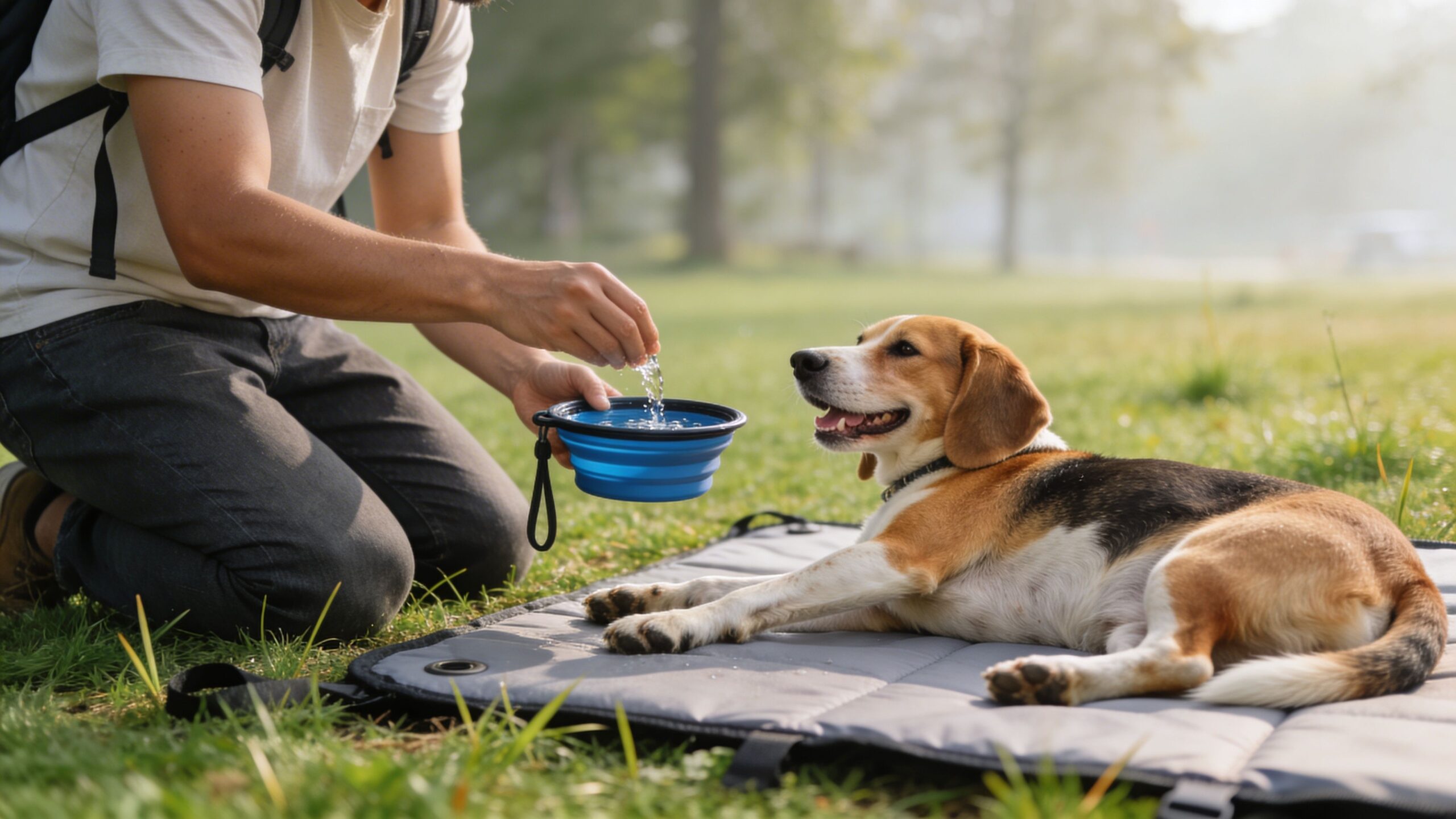
What to do immediately after landing
Keep the first hour simple.
- Find a relief area first: Let your dog decompress and reset physically.
- Offer fresh water: Don’t force it, but make it available right away.
- Check posture and movement: Look for stiffness, hesitation, or agitation.
- Inspect the coat and paws: Dirt, urine, dampness, and friction matter.
If your dog flew in cargo or on a longer route, this first check matters even more.
Read the dog, not your assumptions
Some dogs act excited when they’re stressed. Others go quiet. Neither response should be ignored.
Look for practical signs:
| Area | What to check |
|---|---|
| Hydration | Dry gums, unusual thirst, sluggishness |
| Skin and coat | Excess shedding, tangles, damp spots, irritation |
| Behavior | Pacing, clinginess, shutdown, jumpiness |
| Mobility | Stiff walking, awkward footing, reluctance to move |
If something looks off, respond early. Don’t wait for it to “probably pass.”
Grooming after travel is not cosmetic
This is one of the most overlooked parts of flying with a dog.
Many travel guides overlook post-flight recovery, yet a 2025 USDA report noted a 15% increase in post-travel vet visits for airline pets due to coat and hygiene issues. Stress from travel can cause increased shedding and skin irritation, making professional grooming upon arrival a key part of ensuring your dog’s health, as summarized in this discussion of common flying-with-dogs questions.
That lines up with what experienced handlers already know. Travel leaves residue. Dry air, confined time, dirty crate flooring, and stress can leave the coat rough and the skin reactive.
Don’t wait until mats tighten or irritation spreads. Reset the dog early.
What a post-flight reset should include
You don’t need a complicated ritual. You need the right one.
A solid recovery groom includes:
- Hydrating bath: Helps lift travel grime and refresh the coat.
- Thorough brush-out: Removes loose coat before shedding gets worse.
- Paw cleanup: Airport and travel surfaces are not clean.
- Skin check: Look for redness, hotspots, or rubbing.
- Nail and ear review: Confirm nothing got overlooked before departure.
For El Paso owners, this matters even more. Dry regional conditions don’t do a stressed coat any favors. If your dog already trends dry or flaky, travel can push that further.
Give recovery the same discipline as departure
Keep the first day after travel light. Easy walk. Water available. Normal food routine. Quiet rest.
Don’t stack the dog’s schedule with a loud gathering, an outdoor marathon, and a missed bath. Recovery should feel controlled and clean, not chaotic.
That’s the difference between a dog that bounces back well and a dog that carries travel stress for days.
Handling Contingencies and The Concierge Option
Even a strong plan can run into delays, cancellations, heat restrictions, or paperwork confusion. That doesn’t mean the system failed. It means you need backup actions ready before the problem shows up.
The biggest mistake is thinking the flight is the whole trip. It isn’t. The trip starts at your front door.
According to AAA/Kurgo survey data, 84% of dog owners who drive with their pet do not use a proper restraint, even though 83% agree that having an unrestrained dog in a moving car can be dangerous, as reported by Kurgo’s dog travel statistics. If you’re driving to the airport in El Paso without securing your dog, you’re taking a known risk before the airline even gets involved.
Build a contingency plan before travel day
Keep your backup plan practical.
- For delays: Know how you’ll manage water, relief breaks, and rebooking questions.
- For cancellations: Have a pet-friendly overnight option in mind.
- For weather restrictions: Be ready to shift dates, especially for larger dogs.
- For paperwork issues: Carry hard copies and know who issued each document.
- For ground transport: Use proper restraint to and from the airport.
If your route or dog profile is complicated, door-to-door coordination becomes more valuable. Not because owners are incapable, but because travel has enough moving parts that one missed detail can affect the whole chain.
When concierge support makes sense
Some owners can handle the planning alone. Some shouldn’t.
If you’re managing a large dog, a tight schedule, a demanding work calendar, or travel that includes grooming coordination and pickup logistics, it makes sense to use a service built for that level of detail. One option is a pet transportation service that coordinates the movement itself and keeps the process organized from departure through arrival.
Glo More Grooming also offers a Concierge Service that coordinates pet travel by car or air, along with related support such as veterinary advocacy and post-travel care scheduling. That kind of setup is useful when you want one controlled workflow instead of managing separate vendors and hoping they communicate well.
Why this matters in El Paso
El Paso owners deal with real logistics. Long drives. Heat. Busy work schedules. Family travel demands. That’s why a one-on-one, standards-based approach beats chain-style volume thinking.
Chains are built to process. Boutique care is built to pay attention.
That difference matters when your dog is boarding a flight, landing tired, and needing careful handling instead of generic check-in talk. It also matters when you want strong service without losing sight of value. A disciplined shop can still create practical opportunities like an affordable grooming promo. Glo More Grooming’s monthly Snip & Style Saturday is a clear example. It gives local owners a lower-cost full-groom option without dropping standards.
For owners searching for El Paso dog grooming, premium pet grooming, and veteran-owned grooming, the key question isn’t who can do the most. It’s who will follow through with the highest level of consistency.
If you want your dog’s travel handled with the same discipline as their grooming, book with Glo More Grooming. Reserve your grooming appointment, ask about Concierge support, or claim a spot in the monthly affordable grooming promo before the schedule fills.