
Your dog’s health is a mission. As a veteran-owned grooming studio in El Paso, Glomore Grooming operates on discipline, precision, and an unwavering commitment to your pet’s well-being. Ear infections are more than a minor annoyance; they are a common, painful condition that, if ignored, can lead to chronic suffering and serious complications. The unique El Paso climate, with its dust and dry heat, can exacerbate these issues.
This guide is a strategic briefing designed to empower you with actionable insights. We'll equip you to recognize both subtle and overt signs your dog has an ear infection, understand when to seek veterinary care, and see how our premium grooming standards provide a first line of defense. Our disciplined workflow and one-on-one, calm environment ensure we get to know your dog's unique needs, making us a key partner in their long-term health—a stark contrast to impersonal chain stores like PetSmart and Petco. Let’s dive into the 8 critical signs, reinforcing our veteran-owned vision for a community of healthy, happy pets.
1. Excessive Head Shaking and Ear Scratching
Persistent head shaking is one of the most visible and common signs your dog has an ear infection. While an occasional shake is normal, a repetitive, almost frantic motion indicates significant discomfort. This behavior is a direct response to the inflammation, pain, and itching caused by bacteria or yeast overgrowth deep within the ear canal. The dog is instinctively trying to dislodge the debris or fluid that is causing the irritation.
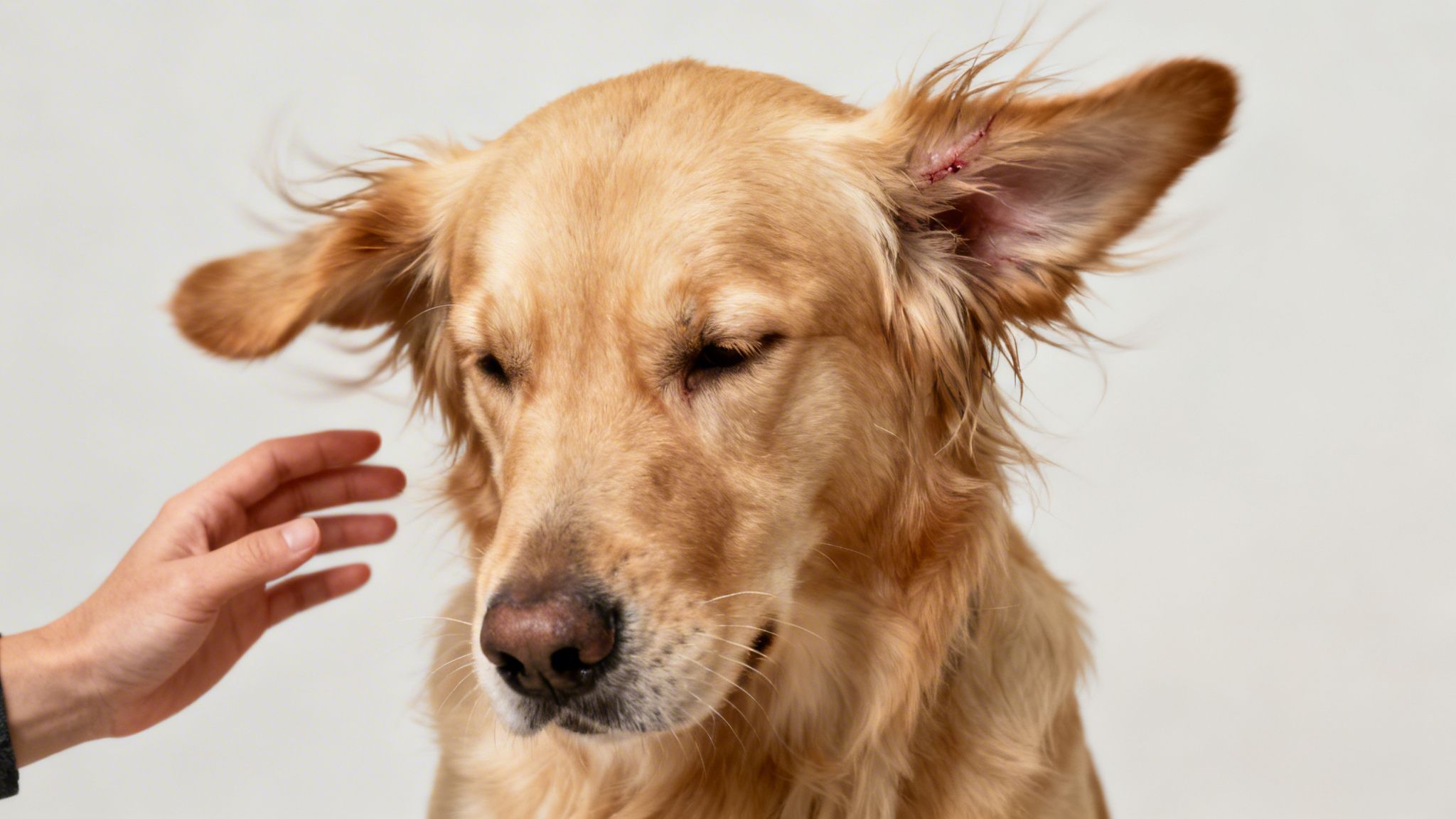
This intense shaking is often paired with vigorous scratching. You might see your dog pawing at their ear, rubbing it against furniture, or trying to scratch the area with their back legs. This scratching can be so aggressive that it leads to secondary problems, including raw spots, bleeding, and painful skin abrasions around the ear flap.
Why This Action Demands Attention
Ignoring persistent head shaking can lead to more severe complications. The violent motion can cause blood vessels inside the ear flap (pinna) to rupture, leading to an aural hematoma. This is a painful, fluid-filled swelling that often requires veterinary drainage or surgery to correct.
At-Home Observation and Professional Care
Keep a close eye on your dog's behavior, especially after activities that introduce moisture. Here are some actionable tips for pet owners:
- Note the Timing: Does the head shaking increase after a bath or a run through the sprinklers? This could point to trapped moisture, a common trigger for infections, especially in our warm El Paso climate.
- Inspect After Grooming: A dog that immediately starts shaking its head or scratching after a groom might be signaling discomfort. At Glomore Grooming, our veteran-owned discipline means we follow a meticulous process, including gentle ear cleaning post-bath to remove excess moisture and debris. We observe your pet’s behavior throughout the groom to catch early signs of irritation.
- Regular Professional Cleaning: For breeds prone to ear issues (like Cocker Spaniels and Basset Hounds), scheduling regular ear cleaning with a professional groomer is a key preventive measure. This is a standard part of our premium pet grooming services, ensuring hygiene standards that set us apart from big-box chains.
Key Insight: Persistent head shaking is not just a quirky habit; it’s a clear cry for help. Addressing it early can prevent painful complications like aural hematomas and chronic infections, saving your dog from unnecessary suffering and you from costly vet bills.
2. Redness and Swelling Inside the Ear Canal
A healthy dog's ear should have a pale, light pink color and a clean appearance. One of the clearest visual signs your dog has an ear infection is visible redness and swelling of the tissues inside the ear. This inflammation is the body's direct response to an overgrowth of yeast, bacteria, or even ear mites. The skin becomes irritated and engorged with blood, appearing bright red, and the surrounding tissues may swell, sometimes narrowing the ear canal opening.
This symptom often progresses from a mild pinkish hue to a deep, angry red as the infection worsens. In some cases, especially with allergies, you might notice this localized redness before other symptoms like odor or discharge appear. Catching this early visual cue is key to preventing a minor irritation from becoming a full-blown, painful infection.
Why This Action Demands Attention
Redness and swelling are not just cosmetic issues; they are direct indicators of active inflammation and discomfort. If left untreated, the swelling can become so severe that it closes off the ear canal, making it difficult to administer medication and trapping debris inside. This creates a perfect breeding ground for the infection to worsen, potentially leading to chronic conditions, hearing loss, or more severe systemic infections.
At-Home Observation and Professional Care
Regularly checking your dog's ears, especially breeds with floppy ears, is a vital part of pet ownership. Here are actionable tips for El Paso pet owners to monitor for these signs:
- Create a Weekly Routine: Once a week, gently lift your dog's ear flaps for a quick visual check in a well-lit area. This simple routine helps you establish a baseline for what's normal, making it easier to spot changes.
- Trust Your Groomer's Eyes: During every El Paso dog grooming session at Glomore Grooming, our professionals perform a deliberate visual check of the ears. Because we see your dog regularly, we're in a unique position to notice subtle changes and can alert you to early-stage redness before it becomes a major problem.
- Mindful Seasonal Care: In El Paso, the dry, dusty seasons can introduce more irritants into the ear. Be extra vigilant during these times. Our disciplined workflow includes careful techniques to protect the ear canal during baths, a standard of care that sets our veteran-owned grooming business apart from high-volume chains.
Key Insight: Redness is a direct warning sign from your dog’s body. Viewing it as an early alert and seeking professional input, either from your vet or a detail-oriented groomer, can stop an ear infection in its tracks, preventing pain and the need for more aggressive treatments.
3. Foul Odor Emanating from the Ear
A distinct, unpleasant smell coming from the ear is a hallmark sign your dog has an ear infection. A healthy dog ear should have little to no odor. When bacteria or yeast proliferate in the warm, damp environment of the ear canal, their waste byproducts create a foul smell, often described as musty, sweet, or yeasty. This is a primary indicator that something is wrong.
This symptom is often one of the first things a professional groomer will notice. The odor becomes more apparent when the ear flap is lifted for cleaning or inspection. The intensity of the smell can also hint at the severity of the infection; a stronger odor often points to a more advanced problem. A foul smell from only one ear can indicate a localized infection that needs targeted treatment.
Why This Action Demands Attention
Ignoring a foul ear odor allows the underlying infection to worsen, causing increased pain and inflammation for your dog. A persistent infection can travel deeper into the ear, potentially affecting your dog's balance and hearing. What starts as a simple yeast overgrowth can become a complex, painful bacterial infection requiring aggressive and costly veterinary intervention. This is not just a hygiene issue but a clear medical warning sign.
At-Home Observation and Professional Care
Regularly smelling your dog’s ears at home is a simple yet effective way to monitor their health. For El Paso pet owners, here are some actionable tips:
- Establish a Baseline: When your dog's ears are healthy, take a gentle sniff to learn what "normal" smells like. Any deviation from this baseline is a cue to inspect further and potentially call your vet.
- Trust Your Groomer's Nose: During a grooming session, your groomer is up close and personal with your pet's ears. At Glomore Grooming, our veteran-owned discipline includes meticulous checks for abnormalities. We are trained to recognize the specific odors associated with infections and will always alert you to our findings.
- Act on Feedback Immediately: If your groomer notes a bad smell, it's not just a casual comment; it’s a professional observation that requires action. Schedule a veterinary appointment right away to get a proper diagnosis and treatment plan. This proactive partnership sets our services apart from impersonal, high-volume chains.
Key Insight: A bad smell from your dog’s ear is a direct signal of an infection brewing. Addressing this early symptom prevents the infection from escalating. While we can help identify the problem during a groom, a veterinarian is needed for diagnosis and treatment. This is another area where a professional dog odor remover for the body is different from a medical issue within the ear.
4. Ear Discharge (Waxy, Crusty, or Purulent)
Visible discharge from your dog’s ear canal is a major red flag and one of the clearest signs your dog has an ear infection. This substance is not normal earwax; it’s a byproduct of inflammation and infection. The appearance of the discharge can offer clues about its cause: a brown, waxy, or crusty buildup often points to a yeast infection, while a yellow or greenish, pus-like (purulent) discharge typically signals a bacterial infection.
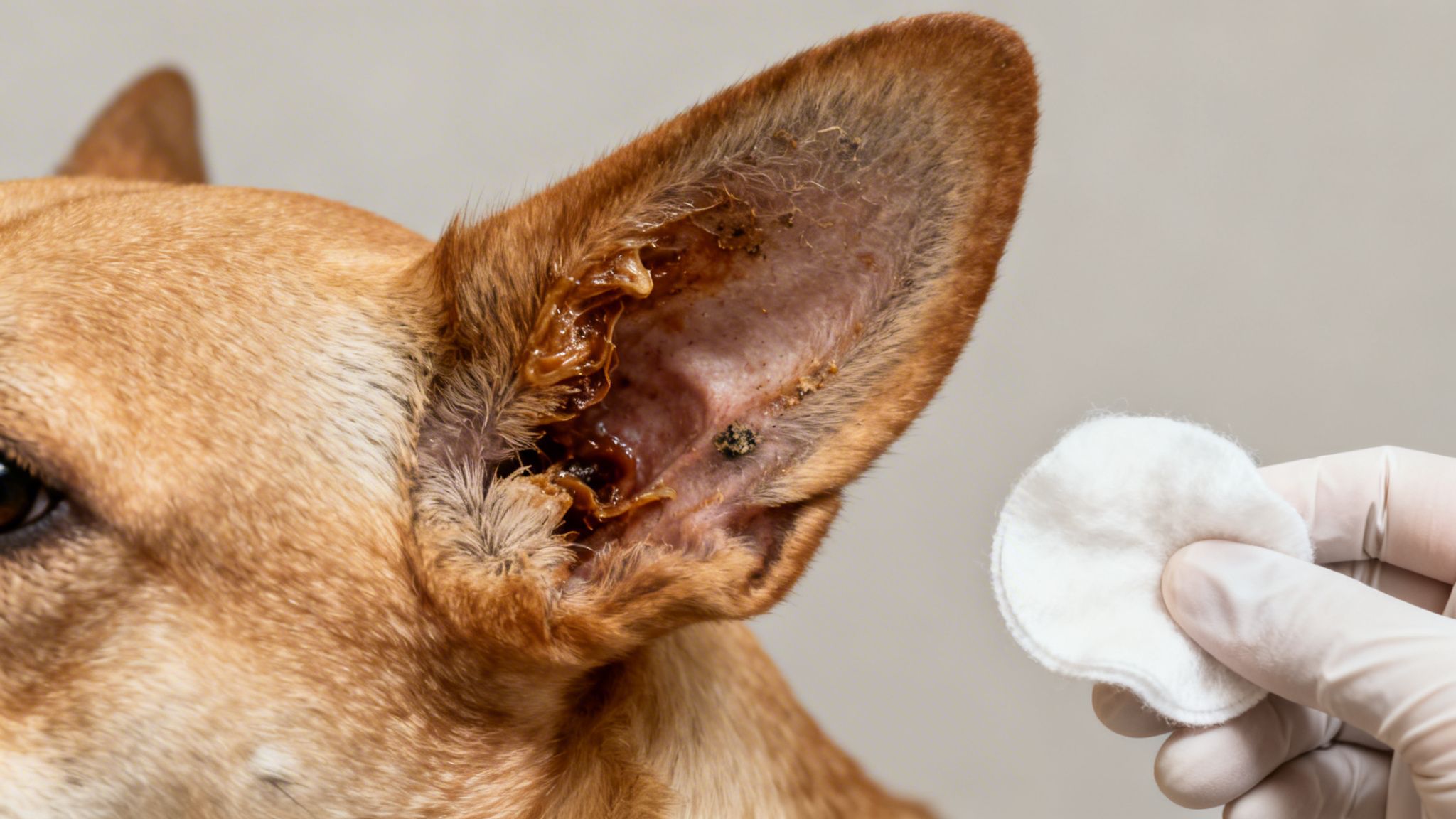
This material accumulates deep in the ear canal and can become visible on the ear flap, especially after your dog has been shaking its head. You might notice a dark, crusty substance around the ear opening or a foul-smelling, wet discharge. Any discharge, regardless of color or consistency, indicates a problem that needs immediate attention.
Why This Action Demands Attention
Ear discharge is a direct sign that the ear's natural environment is out of balance. If left untreated, the infection causing the discharge can worsen, potentially leading to chronic pain, hearing loss, or even damage to the middle and inner ear. Attempting to clean out thick discharge at home without a veterinarian's guidance can push the debris deeper, making the problem worse or even risking damage to the eardrum.
At-Home Observation and Professional Care
Observing the type of discharge can help your vet, but treatment should always be left to professionals. Here are some critical tips for El Paso pet owners:
- Document and Consult: If you see discharge, take a photo to show your veterinarian. This visual record is helpful, especially if you can’t get an immediate appointment. Never insert anything into the ear canal to clean it yourself.
- Professional Assessment During Grooms: At Glomore Grooming, our disciplined workflow includes a visual ear inspection. If our groomers spot discharge, we will inform you immediately. While our professional dog ear cleaning service is excellent for routine hygiene, the presence of discharge means a veterinary visit is necessary before any further cleaning.
- Follow Veterinary Advice: Your vet may take a sample of the discharge to identify the specific pathogen. Always use prescribed medications for the full duration recommended, even if symptoms seem to improve. Do not use over-the-counter cleaners on an infected ear without your vet’s approval, as they can cause pain and interfere with medication.
Key Insight: Ear discharge is a direct symptom of an underlying infection, not just a cleanliness issue. Proper diagnosis from a vet is essential for effective treatment. Partnering with a groomer who knows when to clean and when to refer you to a vet ensures your dog receives the right care at the right time.
5. Pain or Sensitivity When Ears Are Touched
A sudden aversion to being touched around the head or ears is a significant behavioral clue that points to an ear infection. A dog that normally enjoys affection may suddenly flinch, yelp, or even show aggression when you try to pet them. This reaction is a direct response to the intense pain caused by inflammation and pressure building up within the sensitive tissues of the ear canal.
This sensitivity can range from a subtle head tilt or pulling away to an overt cry of pain. You might notice your dog becoming defensive or anxious, especially during routine handling or grooming. This change in behavior is one of the most direct signs your dog has an ear infection because it clearly communicates physical discomfort.
Why This Action Demands Attention
Pain is a serious indicator that the infection is causing significant inflammation and distress. Ignoring this sensitivity not only prolongs your dog's suffering but can also damage the bond between you and your pet, as they may start to associate your touch with pain. Furthermore, a dog in pain may react defensively, which is a safety concern for families, especially those with children.
At-Home Observation and Professional Care
Observing how your dog reacts to touch is crucial. A change in their typical affectionate behavior is a red flag that warrants closer inspection and professional care.
- Communicate with Your Groomer: If you notice any ear sensitivity at home, inform us. At Glomore Grooming, our disciplined, one-on-one appointments allow us to adapt our handling techniques to minimize your dog’s discomfort. We operate with pride and resilience, ensuring a safe, calm experience.
- Never Force Handling: If your dog yelps or pulls away, do not force an inspection or cleaning. Let a professional assess the situation safely. Our experienced groomers are trained to recognize pain signals and will always recommend veterinary care when an infection is suspected.
- Seek Veterinary Diagnosis: Mentioning this specific sign to your vet helps them pinpoint the problem. After a diagnosis, you may need to administer medication. If you're unsure about treatment options, you can learn more about dog ear infection medication to better prepare for your vet visit.
Key Insight: A painful reaction to touch is your dog's most direct way of telling you something is wrong. Trust this signal. Prompt communication with your groomer and veterinarian is essential for a safe, effective diagnosis and treatment plan that restores your dog's comfort and well-being.
6. Visible Hair Loss or Skin Damage Around the Ear
When an ear infection goes untreated, the secondary damage often becomes the most obvious sign. Persistent scratching and head shaking can traumatize the delicate skin around the ear, leading to visible hair loss, raw patches, scabs, and even bleeding. This is more than just a rash; it’s a physical injury your dog is inflicting upon itself in a desperate attempt to relieve the deep, internal discomfort. The damage is often concentrated on the outer ear flap and the sides of the head, where your dog's paws can do the most harm.
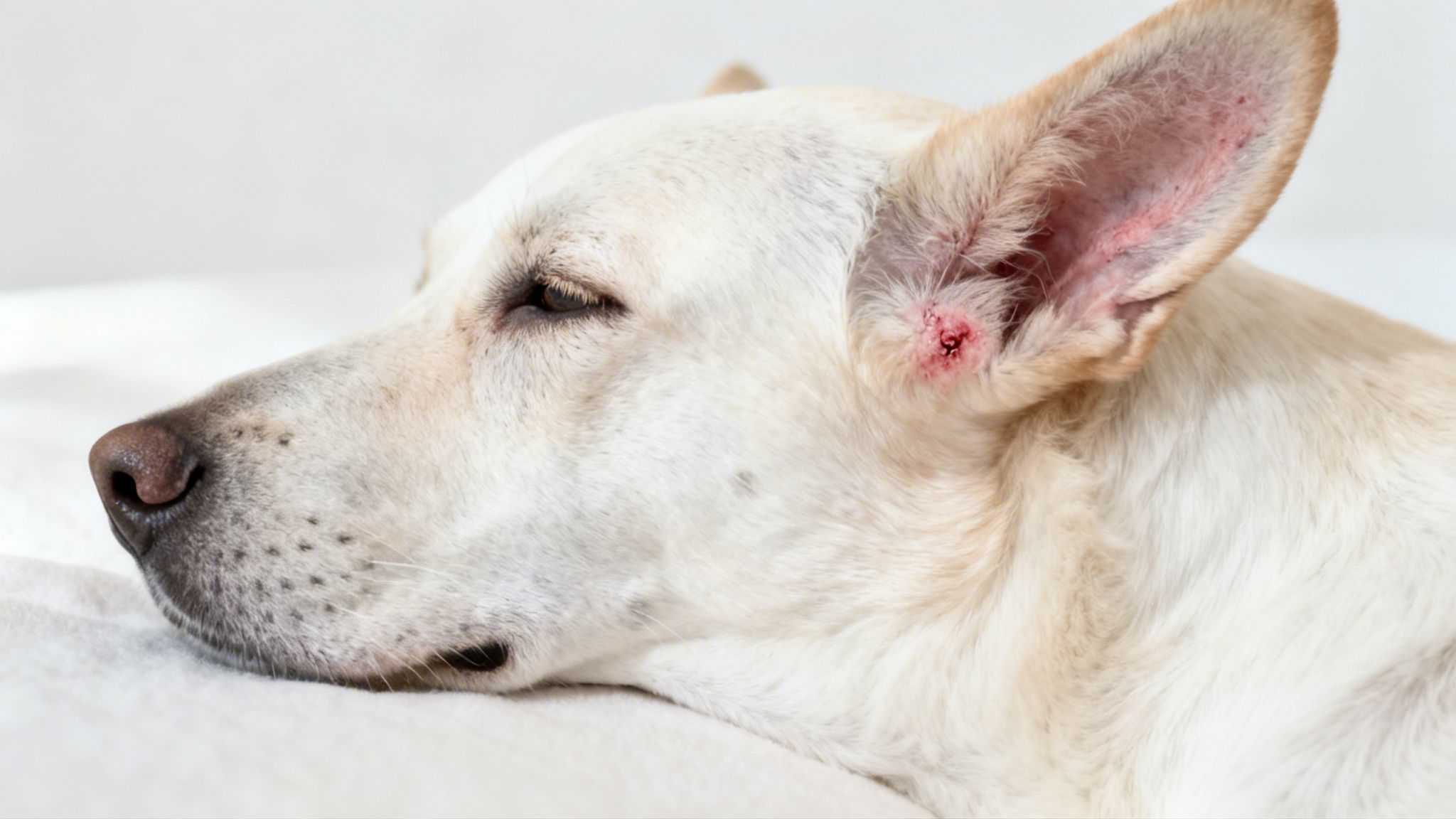
This level of self-trauma indicates the infection has been present long enough to cause significant, prolonged pain. The resulting open wounds are highly susceptible to secondary bacterial infections of the skin, compounding the problem and requiring more complex treatment. Spotting this is a clear signal that the underlying issue has become severe and needs immediate attention.
Why This Action Demands Attention
Visible skin damage is a late-stage sign that points to a chronic or severe ear infection. Ignoring these wounds not only allows the primary infection to worsen but also risks the development of a secondary skin infection (pyoderma). This can lead to a painful, difficult-to-treat cycle of itching, scratching, and worsening skin damage that requires both ear medication and skin treatments.
At-Home Observation and Professional Care
If you notice sores or hair loss, it's a veterinary issue first and foremost. Here are the actionable steps to take for El Paso dog owners:
- Immediate Vet Appointment: Do not wait or try to treat the wounds at home. Skin damage is one of the most serious signs your dog has an ear infection and requires a veterinarian's diagnosis and prescription medication.
- Post-Treatment Grooming Assessment: Once your vet has cleared your dog, our groomers at Glomore Grooming can help. During a full-groom service, our premium grooming standards dictate that we carefully assess the healing progress of the skin and can gently clean around the area. We will never apply grooming products to damaged or unhealed skin.
- Protective Measures: Your vet may recommend a protective cone (an "e-collar") to prevent your dog from scratching during treatment. This is crucial for allowing both the ear and the surrounding skin to heal properly.
- Pain Management: If the wounds appear very painful, discuss pain relief options with your veterinarian. Managing the pain will make your dog more comfortable and can reduce the urge to scratch.
Key Insight: Hair loss and scabs around the ear are not a skin problem; they are the external evidence of a severe internal ear problem. This is a critical sign that your dog is in significant pain and needs immediate veterinary intervention to treat the infection and prevent further self-injury.
7. Balance Issues, Head Tilting, or Incoordination
When an ear infection progresses beyond the outer ear and into the middle (otitis media) or inner ear (otitis interna), it can trigger alarming neurological symptoms. A persistent head tilt, stumbling, or general incoordination are serious signs your dog has an ear infection that has become severe. These symptoms occur because the inner ear structures are essential for maintaining balance and spatial awareness. When inflamed and infected, they send faulty signals to the brain, disrupting your dog's equilibrium.
This isn't just a minor issue; it's a medical emergency. You might see your dog lose balance when turning, walk in circles, or seem profoundly disoriented. These are not subtle signs and indicate the infection is affecting critical structures deep within the skull, requiring immediate medical intervention to prevent permanent damage.
Why This Action Demands Attention
A head tilt or loss of balance signals that the infection is no longer a simple outer ear problem. It has reached the delicate nerves and structures responsible for hearing and equilibrium. Left untreated, otitis media/interna can lead to permanent hearing loss, facial paralysis, and chronic neurological deficits. This is one of the most severe complications of an untreated ear infection.
At-Home Observation and Professional Care
If you observe these symptoms, your priority is immediate veterinary care, not grooming. Here are the necessary steps for El Paso pet owners facing this critical situation:
- Seek Emergency Care: Do not wait. A head tilt or stumbling requires an emergency veterinary visit. This is a clear call for decisive action.
- Postpone All Grooming: At Glomore Grooming, your pet’s health is our top priority. We would insist on postponing any grooming appointment until a veterinarian has diagnosed the issue and provided a clear recovery plan. Attempting to groom a disoriented and pained dog is unsafe and shows a lack of discipline.
- Create a Safe Recovery Space: While your dog is recovering, create a safe, confined space free of stairs or obstacles to prevent falls and injuries. Recovery can be slow, and patience is crucial as the neurological symptoms gradually resolve with aggressive medical treatment.
Key Insight: Head tilting and balance issues are not quirky behaviors; they are signs of a deep, serious infection threatening your dog's long-term health. Immediate veterinary action is non-negotiable. It is a clear indicator that the infection has progressed to a dangerous stage.
8. Behavioral Changes and Lethargy
An ear infection doesn't just affect the ear; its impact can ripple through your dog's entire demeanor. When the discomfort becomes chronic or severe, you may notice significant behavioral changes. These shifts are clear signs your dog has an ear infection that is affecting their overall quality of life, turning a happy, active companion into one that is withdrawn, irritable, or unusually quiet.
The pain and inflammation can cause dogs to lose interest in their favorite activities. A dog that usually loves to play fetch might suddenly seem reluctant, or a social butterfly might start avoiding interaction with family members. This lethargy and depression indicate that the infection is more than a minor annoyance; it's a systemic problem causing genuine distress.
Why This Action Demands Attention
Behavioral changes are a serious red flag because they signal that the pain is significant enough to alter your dog's personality and daily routines. Ignoring these signs can lead to a dog suffering in silence. In some cases, a dog might become irritable or even snap when their head or ears are touched, which is a defensive reaction to chronic pain. Promptly addressing the underlying ear infection is crucial to restoring their comfort and normal, happy temperament.
At-Home Observation and Professional Care
Paying attention to your dog's mood and energy levels can provide critical clues. These observations are valuable for both your vet and your groomer.
- Track Behavioral Shifts: Keep a simple journal of your dog's energy levels, appetite, and sociability. Did the changes start suddenly? This actionable insight can help your vet diagnose the issue more effectively.
- Inform Your Groomer: If you notice your dog is acting differently, let your groomer know. At Glomore Grooming, our one-on-one attention allows us to notice subtle changes in your pet’s behavior from one appointment to the next. A dog that was once energetic during a groom becoming lethargic or sensitive is a detail we take seriously as part of our long-term vision for pet wellness.
- Provide Comfort During Treatment: While your dog is recovering from an ear infection, provide a quiet, comfortable space for them to rest. We can work with you to schedule gentle grooming sessions that maintain hygiene without causing additional stress during their treatment period.
Key Insight: A change in your dog's behavior is often a direct communication of their physical discomfort. Don't dismiss lethargy or irritability as just a "bad mood" or old age. It's often one of the most telling signs your dog has an ear infection that requires immediate veterinary care.
Comparison of 8 Canine Ear Infection Signs
| Symptom | 🔄 Assessment Complexity | ⚡ Resource Requirements | 📊 Expected Outcomes / Clinical Impact | ⭐ Diagnostic Reliability | 💡 Ideal Action / Use Case |
|---|---|---|---|---|---|
| Excessive Head Shaking and Ear Scratching | Low — easily observed | Owner/groomer observation; vet exam if persistent | Early indicator; risk of self‑trauma or hematoma if untreated | ⭐⭐ | Monitor timing around baths; seek vet if persistent; groomer ear cleaning preventive |
| Redness and Swelling Inside the Ear Canal | Medium — requires close inspection | Groomer/vet inspection; otoscope to assess canal | Sign of active inflammation; prompts veterinary evaluation | ⭐⭐⭐ | Avoid deep water in ears; request groomer inspection; schedule vet assessment |
| Foul Odor Emanating from the Ear | Low — readily noticeable during handling | Groomer detection; veterinary exam; possible culture | Strong indicator of bacterial/yeast overgrowth; often correlates with severity | ⭐⭐⭐⭐ | Keep ears dry; ask groomer to report odor; seek vet for diagnosis and treatment |
| Ear Discharge (Waxy, Crusty, or Purulent) | Low — visibly apparent | Groomer/vet exam; laboratory culture to identify cause | Clear sign of infection; guides treatment choice | ⭐⭐⭐⭐ | Do not self‑remove; document photos; vet culture and appropriate therapy |
| Pain or Sensitivity When Ears Are Touched | Medium — behavioral assessment needed | Groomer/vet handling; pain assessment | Indicates active discomfort; can complicate grooming and handling | ⭐⭐⭐ | Gentle handling; inform vet/groomer; postpone invasive grooming until treated |
| Visible Hair Loss or Skin Damage Around the Ear | Low — obvious on inspection | Groomer/vet assessment; wound care resources | Sign of chronic or advanced self‑trauma; risk of secondary infection | ⭐⭐⭐ | Seek urgent vet care; avoid topical products without vet approval; monitor healing |
| Balance Issues, Head Tilting, or Incoordination | High — neurological assessment required | Emergency veterinary care; imaging (CT/MRI) and aggressive therapy | Severe — suggests middle/inner ear involvement; urgent intervention needed | ⭐⭐⭐⭐ | Seek immediate emergency vet care; postpone grooming until cleared |
| Behavioral Changes and Lethargy | Medium — non‑specific, may be subtle | Owner/groomer observation; veterinary workup if persistent | Indicates systemic impact or pain; supports need for treatment | ⭐⭐ | Track behavior in a journal; consult vet if changes persist; maintain gentle grooming routines |
Execute the Mission: Partner with Glomore for Proactive Pet Care
Understanding the signs your dog has ear infection is the first critical step in protecting their health. From excessive head shaking and scratching to more subtle clues like balance issues or behavioral shifts, your vigilance as a pet owner is your dog's first line of defense. This article has equipped you with the knowledge to identify these red flags, empowering you to act swiftly and prevent minor discomfort from escalating into a serious health crisis.
Your dog’s well-being depends on a partnership between your at-home observations and professional expertise. This is where a dedicated grooming partner becomes essential. Proactive care is not just about reacting to problems; it's about establishing routines that prevent them.
Your Partner in Proactive Health: The Glomore Difference
In El Paso, pet owners have a choice. You can opt for the high-volume, often impersonal, experience of large chain stores like PetSmart or Petco, or you can choose a partner invested in your pet’s long-term health. Glo More Grooming was founded on a veteran-owned vision of discipline, meticulous standards, and a one-on-one connection. We see grooming as a vital component of your dog's overall wellness, not just a cosmetic service.
Our disciplined workflow ensures that every groom includes a thorough check of the ears, skin, coat, and paws. Because we work with one dog at a time, we notice the small things that can be easily missed in a chaotic environment, such as:
- A faint, yeasty odor that could signal the start of an infection.
- Slight redness or warmth inside the ear flap.
- A subtle wince when we gently handle the ear area.
This attention to detail is the core of our mission. We provide premium pet grooming that actively contributes to your dog’s health, giving you peace of mind and saving you from potential emergency vet visits down the line.
Take Decisive Action with Affordable, Premium Care
Waiting for obvious signs of pain means your dog is already suffering. The best strategy is prevention. By integrating regular professional grooming into your dog’s routine, you ensure their ears are cleaned correctly and inspected by a trained eye. We proudly serve the El Paso community by making this high standard of care accessible.
Take advantage of our affordable grooming promo, like our monthly "Snip & Style Saturday," to establish a consistent wellness schedule for your companion. This is more than a haircut; it's a comprehensive check-in that supports their health from nose to tail. Your dog shows you loyalty every day. It's our collective responsibility to return that loyalty with proactive, dedicated ownership of their care. Let us be your trusted partner in that mission.
Ready to partner with a groomer who prioritizes your dog's health as much as you do? Book an appointment with Glo More Grooming and experience how our meticulous, one-on-one approach can help you stay ahead of issues like ear infections. Visit Glo More Grooming to reserve your promo slot and join a community dedicated to exceptional pet care.