
You've probably heard the buzz around fresh food for dogs. It’s gone from a niche idea to a major topic of conversation among dog owners, and for very good reason. So, what are we really talking about?
At its simplest, fresh dog food is all about gently cooked meals made from whole, human-grade ingredients. These recipes are carefully formulated to give your dog the exact nutrition they need. It’s a world away from the highly processed, shelf-stable kibble that has dominated pet food aisles for decades.
What Defines Fresh Food for Dogs
More and more, we're looking at our dogs' food bowls with the same critical eye we use for our own plates. This has really pushed the movement toward fresher, more recognizable ingredients. Think about it this way: you could get calories from a highly processed protein bar or from a fresh, vibrant salad. Both give you energy, but their long-term impact on your health is completely different. It's the same logic for our dogs.
This shift is as much about what’s left out as what’s put in. Fresh diets skip the artificial preservatives, cheap fillers, and intense high-heat processing that are standard for making kibble. That aggressive cooking can actually destroy some of the nutrients, making them less available for your dog's body to use. Fresh food, on the other hand, is much more bioavailable, meaning your dog can easily absorb and benefit from all those good vitamins and minerals.
The Core Components of Fresh Food
So what really sets fresh food apart? It boils down to three key things. Each one is essential for delivering the quality and nutrition that makes this diet so different.
This diagram shows how these three principles work together.
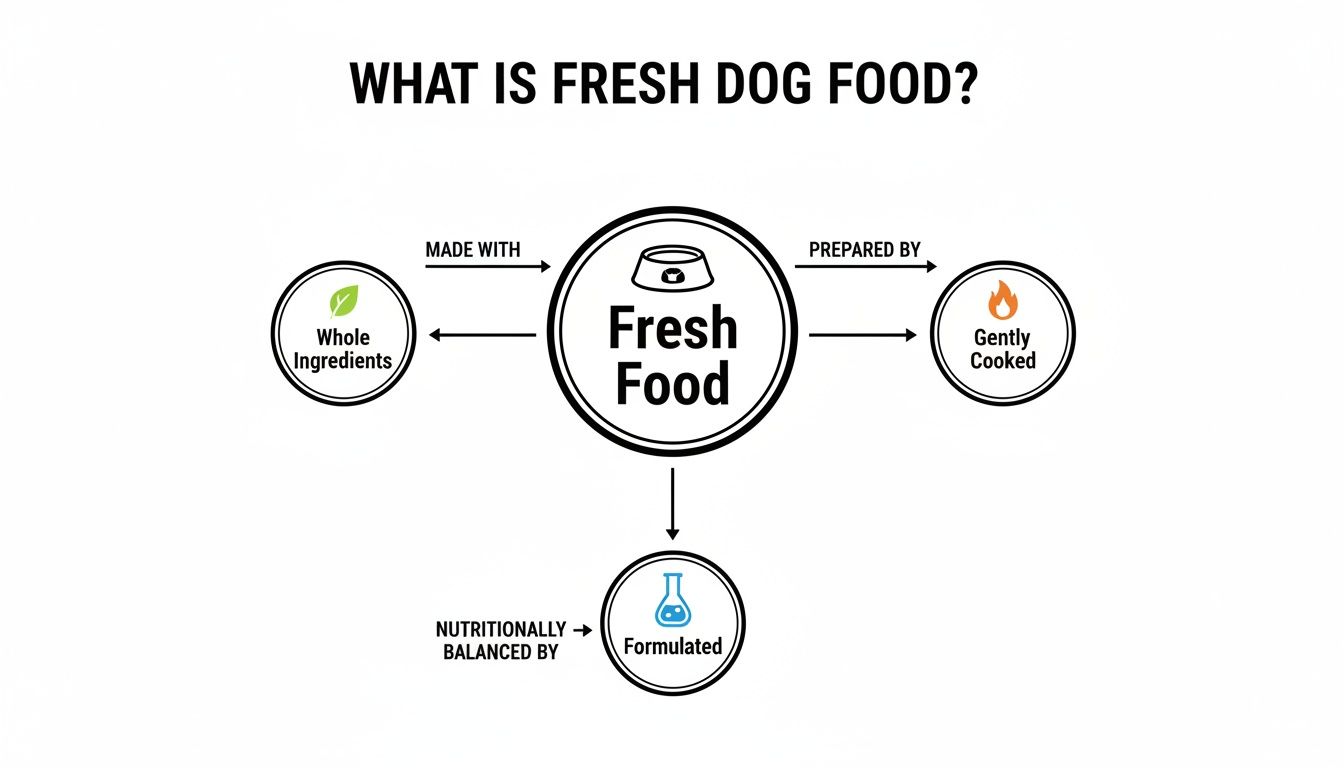
As you can see, the whole philosophy is a combination of real ingredients, gentle cooking, and science-backed nutritional formulation. It all comes together to create a truly complete and balanced meal.
With this approach, your dog gets the maximum benefit from every single ingredient. We see the connection between a great diet and a pet’s appearance every day. Just like our disciplined workflow at Glo More Grooming brings out a dog's natural beauty, a fresh diet builds health from the inside, leading to a shinier coat, brighter eyes, and healthier skin. If you want to learn more about the link between what your dog eats and how they look and feel, you can explore our other articles on dog nutrition.
A high-quality diet is the foundation of a healthy pet. The benefits often manifest visually—in a shinier coat, healthier skin, and more vibrant energy—which are the very same results we aim to highlight with our premium pet grooming services.
Fresh vs. Kibble vs. Raw
To really get a feel for fresh food, it helps to see how it stacks up against the other main options. Each one has a totally different approach to ingredients, processing, and safety.
Let's put them side-by-side for a quick comparison.
Dog Food Types at a Glance
| Food Type | Processing Level | Ingredient Quality | Moisture Content |
|---|---|---|---|
| Fresh | Gently cooked | Typically human-grade | High (around 70-80%) |
| Kibble | Highly processed (extrusion) | Varies widely | Low (around 10%) |
| Wet | Cooked and canned | Varies widely | High (around 75%) |
| Raw | Unprocessed | Typically human-grade | High (around 70%) |
As the table shows, each diet makes different trade-offs.
- Fresh Food is gently cooked to preserve nutrients while killing off harmful bacteria. It’s made with high-quality ingredients and has a lot of moisture, which is great for hydration.
- Kibble (Dry Food) is made using extreme heat and pressure. This makes it convenient and long-lasting, but it can make nutrients harder to absorb and it’s very low in moisture.
- Raw Food uses uncooked ingredients to mimic what dogs might have eaten in the wild. Supporters love its unprocessed nature, but it comes with a serious risk of bacteria like Salmonella and E. coli for both your dog and your family.
Ultimately, choosing the right food is about balancing nutrition, safety, and what works for your lifestyle. The growing popularity of fresh food for dogs shows a clear desire from owners to give their pets the best possible start for a long, healthy, and happy life.
How Fresh Food Compares to Kibble and Raw Diets
Walking down the pet food aisle feels overwhelming, doesn't it? You’re faced with a wall of choices: crunchy kibble, soft canned foods, and even frozen raw meals. To make the best decision for your dog, you have to look past the marketing and understand what really separates these diets.
At Glo More Grooming, we know that true health starts from within. Our premium pet grooming services create that beautiful outer glow, but it's high-quality nutrition that builds the foundation. Let's look at how fresh food for dogs really measures up against the other options out there.
Kibble: The Convenient but Compromised Choice
Dry food, or kibble, is hands-down the most popular choice for dog owners, mostly because it’s easy and lasts forever on the shelf. That convenience, however, comes at a nutritional cost.
Kibble is made using a process called extrusion, where ingredients are cooked and formed under intense heat and pressure. While this makes the food shelf-stable, the high temperatures can damage or destroy delicate nutrients like vitamins and essential fatty acids. The ingredients themselves are often pulverized and reconstituted, a far cry from their original whole-food form.
Kibble is also incredibly dry, with a moisture content of only around 10%. This forces your dog to drink a lot more water to stay hydrated, which isn't always easy, especially in a warm climate like ours here in El Paso.
The high-heat extrusion process can reduce the bioavailability of nutrients. In simple terms, even if a vitamin is listed on the label, your dog’s body might not be able to absorb and use it as efficiently as it would from a gently cooked food.
Canned Food: The Hydrating Alternative
Canned food’s biggest win is its moisture content. At about 75% water, it’s a fantastic way to boost your dog's hydration, which is especially helpful for pups who aren't great drinkers or those with urinary health concerns.
The downside? Canned food is often so tasty that it can create picky eaters or encourage overeating. Its soft, mushy texture also does nothing to help with dental hygiene and may even contribute to plaque buildup more quickly than foods that require some chewing. And just like kibble, the ingredient quality can be all over the map.
Raw Diets: The Natural but Risky Path
Raw food diets are built on the idea of feeding dogs like their wild ancestors: uncooked meat, organs, and bones. The main argument here is for "biologically appropriate" nutrition, where no nutrients are lost to heat, making them fully available to your dog's system.
While the theory sounds good, raw feeding comes with very real safety concerns. Raw meat is a common carrier for dangerous bacteria like Salmonella, E. coli, and Listeria. These pathogens are a risk not just to your dog but to every person in your home, particularly children and anyone with a weakened immune system.
Properly handling a raw diet requires strict, consistent food safety protocols—the same kind you'd use for raw chicken in your own kitchen. A single slip-up can lead to cross-contamination and illness.
Fresh Food: The Balanced Middle Ground
This is where fresh dog food really shines. It perfectly bridges the gap between over-processed kibble and risky raw diets by using whole, human-grade ingredients that are cooked just enough.
This gentle cooking method is the secret sauce. It heats the food sufficiently to kill off any harmful bacteria, making it completely safe for your dog to eat and for you to handle. At the same time, it’s low enough to preserve the nutritional integrity and bioavailability of the ingredients. Plus, its high moisture content provides the same hydration benefits as wet food.
As a veteran-owned grooming business, Glo More Grooming is founded on discipline, safety, and a long-term vision for pet wellness. We see fresh food as a natural fit with that philosophy—it’s a deliberate, safety-first approach that delivers transparent nutrition without the drawbacks of kibble or the dangers of raw.
Choosing what to feed your dog is one of the biggest health decisions you’ll ever make for them. By understanding these core differences, El Paso dog owners can feel confident they’re making a choice that truly reflects their standards for care.
The Real-World Benefits You'll Actually See with a Fresh Food Diet
When you decide to put better food in your dog’s bowl, you expect to see real, tangible results. It’s not just about feeling good about the ingredients; it’s about watching your dog transform for the better. The payoff from a fresh diet isn't some abstract concept—it’s a foundation for a visibly healthier, happier life.
Here at Glo More Grooming, we're obsessed with getting that perfect, head-turning result. We live for the shine in a dog’s coat after a grooming session. But we know from experience that a truly deep, lasting gloss starts from the inside. Think of a fresh diet as the internal groundwork for the beautiful finish we create on the outside.
Healthier Digestion and Firmer Stools
Honestly, one of the first things most owners notice is a huge improvement in the poop-scooping department. Fresh food is made from whole, recognizable ingredients—no weird fillers or by-products. This makes it so much easier for a dog's system to break down and use.
The natural moisture and fiber from ingredients like sweet potatoes and brown rice get the gut working properly. The result? Smaller, firmer, and far less stinky stools. It’s a quality-of-life upgrade for everyone involved.
A healthy gut really is the cornerstone of a healthy dog. Owners often tell us that after making the switch, problems like gas and bloating practically vanish, leaving them with a much more comfortable companion.
This isn't just about your dog feeling better, either. When digestion is efficient, their body is soaking up more of the good stuff from their food. That’s the fuel for all the other positive changes you're about to see.
A Shinier Coat and Healthier Skin
Is your dog’s coat looking a little lackluster? Does their skin seem dry and flaky? A fresh food diet can make a world of difference. These meals are packed with unprocessed essential fatty acids, like Omega-3s and Omega-6s, which are absolute powerhouses for skin and coat health.
Kibble is made using high-heat processing, which can destroy these delicate oils. With gently cooked fresh food, those nutrients stay intact and ready for your dog's body to use. This means they can finally:
- Build a Stronger Skin Barrier: This is key to reducing itchiness and irritation, a common complaint for dogs living in El Paso’s dry climate.
- Produce Natural Oils: These are what give a dog’s coat that soft, brilliant shine we all love.
- Reduce Shedding: A seasonal care tip: nourishing hair follicles from within can help manage seasonal shedding. You’ll see less breakage and less fur all over your house.
This "inside-out" approach is the perfect partner to premium pet grooming. While we provide that stunning finish, a fresh diet gives your dog the building blocks for that signature "Glo More" shine. In fact, if you're dealing with stubborn odors, a diet change can work wonders. For more immediate help, you can also check out our guide on how to choose a safe dog odor remover.
Sustained Energy and a Healthy Weight
Does your dog seem to run out of steam halfway through a walk? The kind of fuel they get from their food is everything. Fresh food provides steady, long-lasting energy from real, whole food sources, not the sugar rush and subsequent crash that often comes with high-carb processed kibble.
What you get is a more vibrant, playful dog with consistent energy all day long. It's the difference between a quick candy bar fix and the sustained power of a balanced meal.
On top of that, managing your dog's weight becomes so much easier. Fresh food is portioned precisely, and because it’s so satisfying and nutrient-dense, dogs are less likely to beg between meals. This makes it simpler for you to maintain their ideal body condition—a critical factor for protecting their joints and ensuring a long, active life. Watching a sluggish dog become energetic again is one of the most rewarding parts of getting their nutrition right.
Safely Transitioning Your Dog to a New Diet
So you've decided to upgrade your dog's diet to fresh food for dogs—that's a great move for their health! But before you dive in, remember that a dog's digestive system can be surprisingly sensitive. An abrupt change, even to better food, can cause an upset stomach. Think of it like this: you wouldn’t go from eating salads every day to a three-course spicy meal overnight without your stomach protesting. Your dog is the same.
As professional groomers, we’ve learned that patience and a gentle, disciplined workflow are key to a dog's well-being. That same mindset is crucial here. We help El Paso dog owners understand that the goal is a smooth, stress-free switch that puts their pet's health first.
Your Step-by-Step Transition Plan
The secret to a successful switch is to take it slow, typically over a period of 7 to 10 days. This grace period gives your dog’s gut microbiome—the tiny organisms that help with digestion—time to adjust to the new ingredients. Rushing it can lead to vomiting or diarrhea, which is unpleasant for everyone and might make your dog wary of their new, delicious meals.
A gradual introduction makes all the difference. We've seen this actionable routine work wonders for countless dogs:
- Days 1–3: Start with 75% old food and just 25% new food. Mix it all together well.
- Days 4–6: Move to a 50/50 split of old and new food.
- Days 7–9: Now you can shift to 25% old food and 75% new food.
- Day 10: You’ve made it! It's time for 100% new food.
This measured process is all about setting your dog up for success. Just like we never rush a nervous dog during a groom, you shouldn't rush their digestive system.
The goal is a seamless changeover. Remember, patience is your best tool. Watch your dog’s cues, adjust the pace if needed, and celebrate the small wins along the way. This is a journey toward better health, not a race.
Monitoring Your Dog and Making Adjustments
During this transition week, you'll need to become a bit of a detective, especially when it comes to your dog's poop. Their stool is one of the most honest indicators of how their system is handling the new diet. Ideally, you want to see firm, well-formed stools.
Don't panic if you notice some minor gas or slightly softer stools in the first few days—that’s pretty normal. However, if your dog experiences persistent diarrhea, starts vomiting, or loses their appetite, that’s a clear signal to slow down. Simply dial it back to the previous ratio (for example, go from 50/50 back to 75/25) for another couple of days before trying to move forward again. This close attention to detail is what separates standard care from truly excellent care, whether in grooming or nutrition.
Food Safety in the El Paso Climate
Living in sunny El Paso means we have to be extra vigilant about food safety, and fresh dog food is no exception. Unlike a bag of kibble you can leave on the counter, fresh food needs to be treated just like the fresh food you buy for yourself.
Here are a few simple rules to follow, especially in our warm climate:
- Store Properly: Always keep the fresh food sealed and refrigerated until you’re ready to serve it.
- Serve and Remove: Once you put the bowl down, don't let it sit out for more than 15-20 minutes. The El Paso heat can cause bacteria to grow surprisingly fast.
- Clean Bowls Thoroughly: After every single meal, wash your dog’s bowl with hot, soapy water to kill any lingering germs.
This simple routine is non-negotiable for keeping your dog safe and healthy. It’s the same level of care we bring to Glo More Grooming, where we stand apart from big-box chains like PetSmart or Petco by ensuring every tool is sanitized and every dog gets our full, undivided attention.
Making this switch is a true act of love for your dog. If you're looking for a grooming experience that reflects that same commitment, we invite you to book an appointment with us. We even offer an affordable grooming promo with our monthly Snip & Style Saturday. Contact Glo More Grooming to schedule your appointment. and reserve a spot.
Choosing Between Commercial and DIY Fresh Food
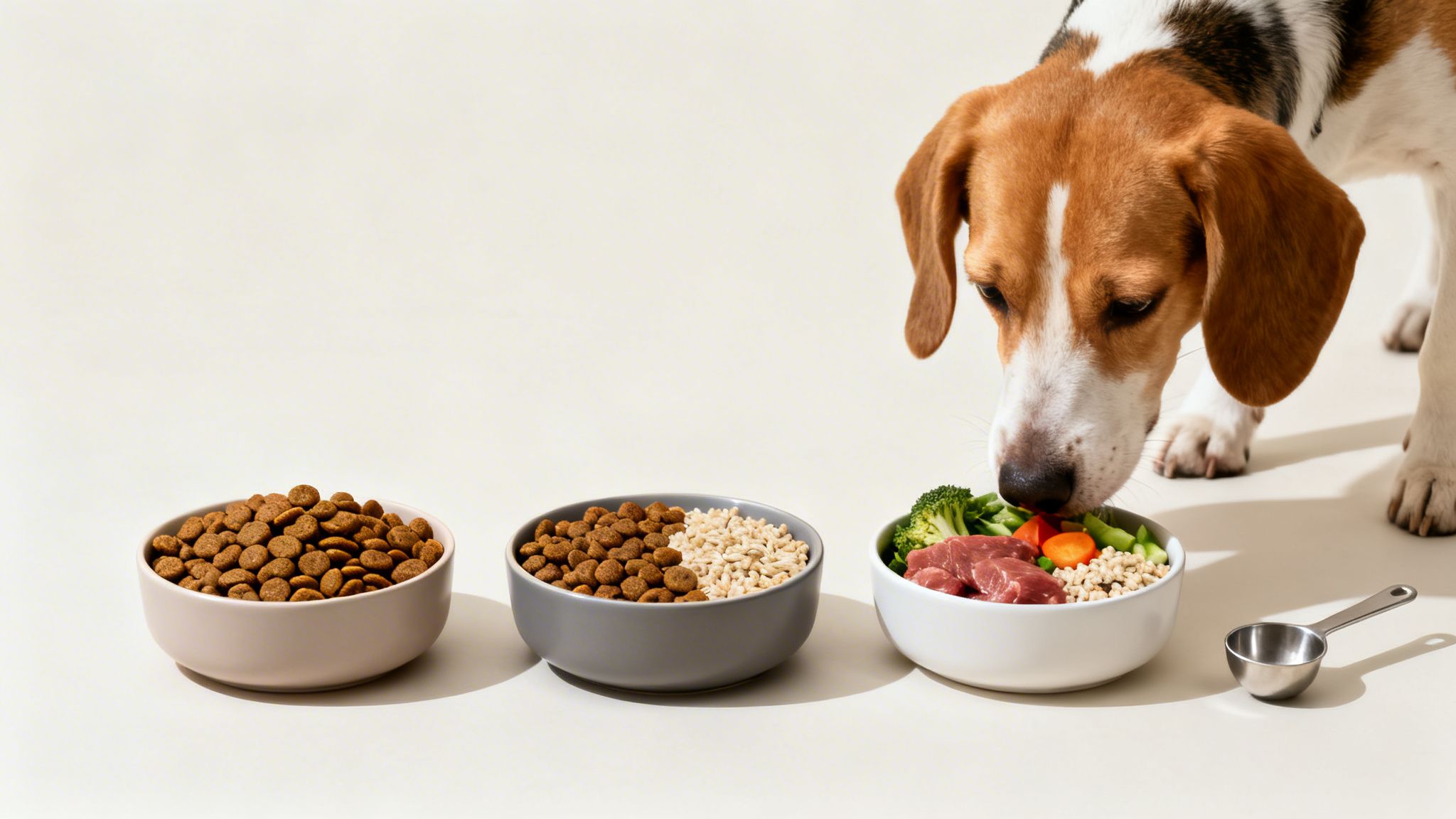
So, you're ready to give fresh food a try. That’s fantastic! The next big question is: do you sign up for a convenient commercial service or roll up your sleeves and go the Do-It-Yourself (DIY) route? Both are great options, but they demand very different things from you in terms of time, money, and knowledge.
Here at Glo More Grooming, we see this choice as being similar to choosing a groomer. You're looking for what’s best for your dog, but it also has to fit your own life. Let's break down the pros and cons of both paths so you can make a confident decision.
The Commercial Route: Convenience and Guaranteed Balance
The explosion of commercial fresh food services really comes down to one thing: they make it incredibly easy. These companies ship pre-portioned, nutritionally complete meals right to your doorstep, completely taking the guesswork out of feeding your dog.
It’s basically a high-end meal kit subscription, but for your four-legged family member. The recipes are developed by veterinary nutritionists, which means every meal is perfectly balanced with the right amounts of protein, fat, vitamins, and minerals. This is a huge plus because it eliminates the real danger of nutritional gaps that can pop up in homemade diets.
Key Benefits of Commercial Services:
- Nutritional Assurance: Formulated by experts to meet AAFCO standards, so you know the diet is complete and balanced.
- Ultimate Convenience: Meals are pre-cooked and pre-portioned. This saves a ton of time on shopping, cooking, and clean-up.
- Customization: Most services create meal plans based on your dog’s specific age, weight, breed, and activity level.
The main downside is the price tag. Premium, pre-made fresh food is the most expensive way to feed your dog. That said, many owners feel it's an investment in their dog's long-term health. It's like how our premium pet grooming helps prevent skin problems—a little investment now can help reduce bigger vet bills down the road.
The biggest selling point for commercial fresh food is the peace of mind it offers. Knowing that every meal is backed by experts and perfectly balanced takes a huge weight off your shoulders.
The DIY Approach: Control and Cost Savings
For the pet owner who loves to be hands-on, making fresh food at home gives you complete control over every single ingredient in your dog's bowl. This is a game-changer for dogs with severe allergies or tricky health issues because you can hand-pick every protein and vegetable you know is safe for them.
Making your own fresh food for dogs can also be much easier on the wallet than a subscription, especially if you buy in bulk or source locally. Here in El Paso, hitting up a farmers' market is a fantastic way to find quality produce for your dog's meals while supporting local growers. It's a rewarding process that really connects you to your dog's well-being.
But this path comes with a serious responsibility. It's not as simple as just boiling some chicken and rice.
The Critical Need for Expert Guidance in DIY Diets
If you decide to make your dog’s food yourself, working with a board-certified veterinary nutritionist is non-negotiable. I can't stress this enough. Without professional guidance, it's dangerously easy to create an unbalanced diet that can lead to severe, sometimes permanent, health issues. Countless studies have found that the vast majority of recipes you find online are nutritionally incomplete.
A veterinary nutritionist will help you:
- Create a recipe that is perfectly balanced for your individual dog.
- Pinpoint the exact supplements needed to fill any nutritional gaps.
- Adjust the diet over time as your dog's age or health needs change.
At Glo More Grooming, a veteran-owned grooming business, discipline and high standards are in our DNA. We believe pet nutrition deserves that same no-shortcuts approach. The risk of accidentally harming your dog with a well-meaning but unbalanced diet is just too high.
As a trusted name in the El Paso dog grooming community, we see ourselves as more than just stylists—we're advocates for your pet’s total health. Whether you choose a commercial service or a properly formulated DIY diet, your commitment to fresh food is a huge step toward a healthier, happier life for your dog.
If you appreciate this kind of detailed, safety-first care, you’ll love the Glo More Grooming experience. To make top-tier care more accessible, we offer an affordable grooming promo with our Snip & Style Saturday. Contact Glo More Grooming today to book an appointment and give your dog the meticulous care they deserve.
Your Questions About Fresh Dog Food Answered
Switching up your dog’s diet is a big decision, so it’s only natural to have a lot of questions. As a trusted local resource for El Paso dog grooming and overall pet wellness, we get asked about this all the time. We're here to give you the straight scoop so you can feel confident you're doing what's best for your dog.
Let’s dig into some of the most common questions we hear from dog owners thinking about moving to fresh food for dogs.
Is the Higher Cost of Fresh Food Really Worth It?
This is usually the first thing on a pet owner's mind, and for good reason. Fresh food does cost more upfront than a bag of kibble, but it helps to think of it as an investment in your dog’s long-term, preventative health. When your dog gets high-quality, bioavailable nutrition, you're supporting everything from their immune system to their joints and organ function.
It’s a bit like car maintenance—paying for regular oil changes is always cheaper than replacing a blown engine. Many owners find that a fresh diet helps them avoid extra vet visits for chronic problems like skin allergies or digestive troubles. It’s the same philosophy behind our premium pet grooming services, which prevent painful matting and skin infections. A great diet works from the inside out to keep your dog healthy, potentially saving you money and stress down the road.
A fresh diet is proactive wellness. By investing in high-quality nutrition now, you are supporting your dog's health for years to come, which is the most valuable return of all.
Can Puppies and Seniors Eat Fresh Food?
Absolutely! In fact, fresh food is fantastic for dogs at every age because the recipes can be dialed in to meet their specific needs as they grow and change. A growing puppy and a senior dog have completely different nutritional requirements, and a fresh diet can be tailored for each stage.
- For Puppies: Their meals are packed with high-quality protein and essential fatty acids to help build a healthy brain, strong bones, and lean muscle.
- For Seniors: Recipes are often made with fewer calories to help manage weight. Many also include added support like glucosamine for stiff joints or specific fibers to keep their digestion regular.
This personalized approach makes sure your dog gets exactly what their body needs, when it needs it most. It's a core principle here at Glo More Grooming, where our premium grooming standards mean every service is adjusted for the individual dog in front of us.
Will a Fresh Diet Help My Dog's Allergies?
If you have a dog that struggles with food sensitivities, a fresh diet can be a game-changer. So many of the common allergens, like beef, chicken, or wheat, are hidden in heavily processed kibbles. Fresh food diets often use simpler recipes with fewer ingredients and "novel" proteins (like venison or fish), which makes it much easier to figure out and remove what’s causing a bad reaction.
Because the ingredients are unprocessed, you also skip the artificial additives, colors, and preservatives that can sometimes trigger skin problems. Plus, the naturally high levels of omega fatty acids in fresh food help build a stronger skin barrier, leading to less itching and that glossy, healthy coat we all love to see. While a diet change is a great start, some foods can be tricky. For instance, you can learn more about whether dogs can eat cashews in our other guides.
How Do I Know the Right Portion Size?
Getting portions right is key to keeping your dog at a healthy weight, and fresh food companies make this part incredibly simple. Forget trying to get that measuring scoop perfectly level; most commercial fresh food plans arrive in pre-portioned packs designed for your dog's specific calorie needs, based on their age, weight, and how active they are.
If you're making the food yourself, a general guideline is to feed about one cup of food for every ten pounds of body weight per day. But remember, that's just a starting point. It’s always best to work with a veterinary nutritionist to get the portions just right. Making sure your dog isn't overfed is one of the most important things you can do for their long-term health.
At Glo More Grooming, our disciplined, veteran-owned grooming approach means we never cut corners on your pet’s health or safety. If you’re looking for a groomer who shares your high standards, we invite you to experience the Glo More difference. Book now to reserve a spot for our popular and affordable grooming promo, Snip & Style Saturday!